
Per F. Andersson
@perfandersson
Followers
256
Following
830
Media
8
Statuses
75
Comparative Politics, Institutions, and Taxation. Postdoc at Stockholm University.
Joined January 2020
In a new paper with Jan Teorell, published in the Journal of Conflict Resolution, we present theory and evidence of how state capacity is linked to regime change. A thread (1/8)
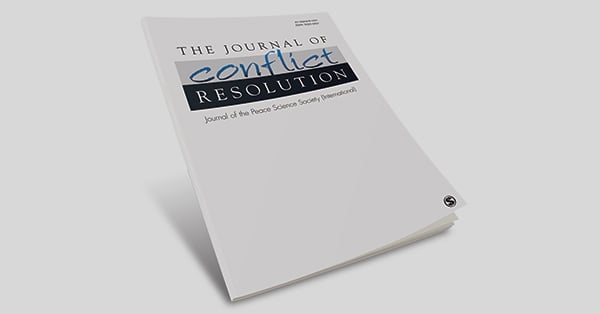
journals.sagepub.com
This paper is concerned with state capacity and autocrat survival. We argue that state strength in autocracies increases leader tenure but reduces the stability...
2
11
53
I agree, fantastic opportunity to get feedback on work in progress!

🚨 Danish Historical Political Economy Workshop 🚨 Do you work on HPE? If you do, check out Lasse Aaskoven's Danish HPE Workshop, scheduled for Feb. 21, 2025. I had a fantastic experience at a previous one! Several travel + hotel grants available. Deadline: Dec. 31, 2024 ‼️
0
1
2
Deadline for applying to this postdoc coming up! @JStuckatz and I are hiring a postdoc for a revolving door project at @CBScph. 2 years in Copenhagen with our group of political economists. Start: summer '25. No teaching. Deadline: January 5 '25 Link:

🚨Job🚨 Interested in working 2 years in beautiful Copenhagen with an excellent group of political economists? @JStuckatz and I are hiring a postdoc for a revolving door project at @CBScph. Start: summer '25. No teaching. Deadline: January 5 '25 Link to job ad in next tweet
2
10
24
Key takeaway: Investing in state capacity can help an autocrat survive longer, but it may ultimately hasten the regime’s downfall as it pushes elites toward democratic change. From the point of view of an autocrat, state capacity is a strategic gamble. (8/8)
0
1
1
Autocrats who build state capacity to secure their rule inadvertently plant seeds of regime change. A strong state facilitates organized, nonviolent democratic movements. In strong states autocrats survive, but autocracies die. (7/8)
1
1
1
Military strength nuances the picture with respect to coups. When the military is powerful, state capacity doesn't affect leader survival. But in states with weaker militaries, strong civilian capacity boosts autocrat resilience against coups. (6/8)
1
1
0
Empirical analysis of 47 autocracies from 1800 to 2012 confirms: 1) High state capacity reduces coups. 2) Stronger states are more likely to democratize, especially through peaceful popular mobilization. (5/8)
1
1
0
Case in point: South Africa. The apartheid state’s strength deterred violent rebellion, pushing opposition towards peaceful protests. The result? A transition to democracy in the 1990s. Similar patterns emerged in Spain post-Franco. (4/8)
1
1
0
Why? A capable state weakens challengers by centralizing power and reducing reliance on elites. But this strength prompt regime challengers to shift to support peaceful opposition movements, making democratic transitions more feasible. (3/8)
1
1
0
Our main argument is that state capacity in autocracies is a double-edged sword. It prolongs a leader's tenure but increases the likelihood of democratization. A strong state reshapes elite strategies: coups decline, while support for democracy rises. (2/8)
1
1
0
What impact does the state have on the prospects of democratization? This new paper argues that an increase in state capacity under autocracy makes democratization more likely. It provides food for thought. Open access: https://t.co/E8HyBYO5IL
0
36
92

📣The Call for Max Weber Post-doctoral Fellowships 2025-2026 is now open ❗️ 📍European University Institute ⏰Deadline: 18 October 2024 at 14.00 pm CEST! 🔗Read more about it below ⤵️ https://t.co/fhaN4Y2AUG
5
284
484
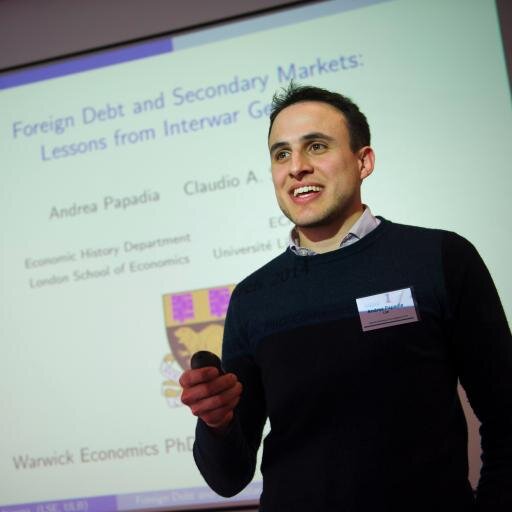
Very excited to attend the workshop on Cities and the Wealth of Nations organized by my colleagues @ThiloHuning and Matthias Flückiger at @EconomicsatYork. @perfandersson will present our work on the role of aqueducts in the process of cultural assimilation in the Roman Empire.
0
5
28
Friends in Sweden, Oriol Sabaté and I are hiring a part-time research assistant for our project on "The Politics of State Building". We are looking for a Spanish-speaker already based in Sweden. Please share in your networks!
lu.varbi.com
Project assistant for the project “The politics of state building: Studying investments in state capacity through legislative debates”. The Department of Political Science at Lund University , is
1
13
13
Happy to see this in print! Many thanks to @AntoniSavoia and @kunalsen5 for putting it together!

The paper behind the blog is now part of a @CambridgeUP Journal Special Issue: https://t.co/veEUNal9Zh
@kunalsen5 @AntoniSavoia #FiscalStates #SDG16 #DRMprogramme @noradno
0
0
6
How have different states developed their abilities to tax during the last two centuries? See this intriguing look into history by @perfandersson
https://t.co/DUmHVauIIh
#FiscalStates #SDG16 #DRMprogramme
1
2
7
Potentially dumb question for #econtwitter #econhist: I started working with the Galor-Özak caloric suitability index (pre Columbian exchange), and noticed some things that do not make sense to me. Example 1: zero caloric suitability in the Nile valley.
1
1
8

Excited to have brought together a panel on "Historical Taxation & Representation" accepted for @APSAtweets 2023 in LA with Jim Mahon, Ryan Saylor, @perfandersson, and @TinePaulsen for experts of state-building and new perspectives on measuring cause/effect of state capacity! :)
1
1
15
Many thanks to colleagues and reviewers who gave invaluable feedback on earlier drafts! 12/12.
0
0
0