
Kira Westaway
@lumilicious
Followers
393
Following
155
Media
50
Statuses
223
Timing is everything - I date events that define our humanity - Ass/Prof geochronologist and Director of OSL Facility - School of Natural Sciences at MQ
Macquarie Park, Sydney
Joined April 2009
Extinction vs Adaption - Finalist, 2024 Eureka Prize for Excellence in Interdisciplinary research - so proud of our team - the threat of extinction affects all of us so good to see palaeo being recognised!! https://t.co/b4KhfHaxrX via @YouTube
1
0
6

Fabulous talk by @lumilicious Kira Westaway tonight at the annual Ruth and Vincent Megaw Lecture in #Archaeology. A/Prof Westaway spoke about timing and drivers for hominin species in Southeast Asia. Thanks @dr_marpol and @FLINArchaeology - nice to visit the spiffy new campus!
1
3
6

A/Prof Kira Westaway is our honoured speaker this evening for the annual Ruth and Vincent Megaw lecture at @flinders in the city. Tonight her public lecture is entitled ‘Primate extinction: Exploring the timing and drivers.’
1
4
12
Such a pleasure to be sampling at the beautiful Callao Cave in north Luzon Philippines- a massive thank you to Mandy and his hard working Callao team for a great experience!
0
1
15
We used some techniques discussed in our piece below to contextualise Gigantopithecus teeth for our recent @Nature paper. Microanalytical techniques provide nuanced environmental data stored in cave and rockshelter sediments Please read the paper here: https://t.co/zhBHsxo2OO

Please read and cite our paper in which we advocate for the use of micro-scale techniques to generate high quality data that strengthen interpretations of the human evolutionary record! #micromorphology #microarchaeology
@FLINArchaeology @Flinders
https://t.co/YbhInW8dKO
1
5
20

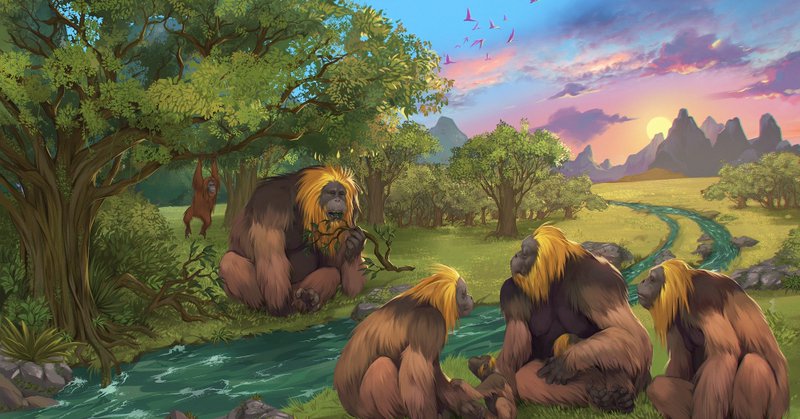
Giant 'kings of apes' once roamed Southern China, standing 3m tall and weighing around 250 kg. Southern Cross geoarchaeology experts @PalaeoGARG join a team of international researchers to solve the mystery of their extinction. https://t.co/opJj5QBEdJ
@archgeobails
scu.edu.au
Giant ‘kings of apes’ once roamed southern China. These scientists have solved the mystery of their extinction.
1
1
5
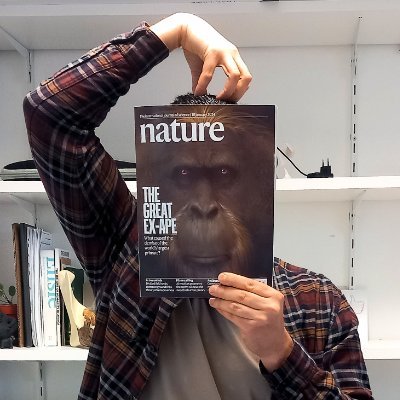
Official copy! My #PhD, as part of the #GigantoProject, on the cover 🦧Besides the bulk of my results the article also includes some of my art...though not as beautiful as the reconstruction by #GarciaPaleoart Thanks @nature @lumilicious @PalaeoGARG @FlindersPalaeo @SuSaMiGroup
4
7
73

Dating dirt unearths the truth about why the world's biggest ape disappeared: https://t.co/o5TnV3tZ1f
#MacquarieUniversity | @lumilicious
2
1
3
Just in case you missed it - my foray into science short documentaries - The Rise and Fall of a Vulnerable Giant - including all footage, models, interviews and editing - I love explaining science in this medium - stand aside Michael Moore!! @MQSciEng
https://t.co/VxyvmcgwVb
0
0
3

@lumilicious @archaeobails @MQSciEng Pleasure was mine. Looking forwards to the next scientific adventure
0
1
2

The extinction of the largest known primate, a giant ape from China, resulted from its struggle to adapt to environmental changes, according to a study in @Nature. https://t.co/5Qjcha639E
3
8
58
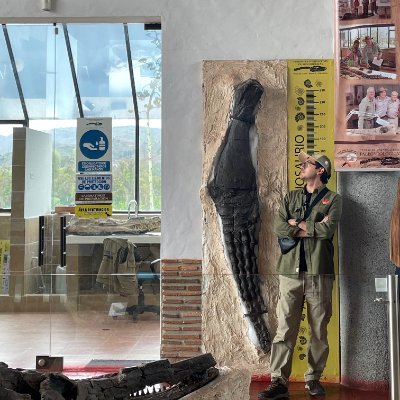
It's been a beautiful day for paleontology. Besides the paper about a new Tyrannosaurs species (T. Mcraeensis), there is new information about the extinction of Gigantopithecus 👇🏻🦧

@Goji_Saurus rip big monkey https://t.co/RX0YyLpQDW
0
1
1

Gigantopithecus: a gigantic orang that persisted from 2 million years mysteriously becoming extinct between 295,000 to 215,000. The regular orangs some how made it through: https://t.co/ncto6tmmca
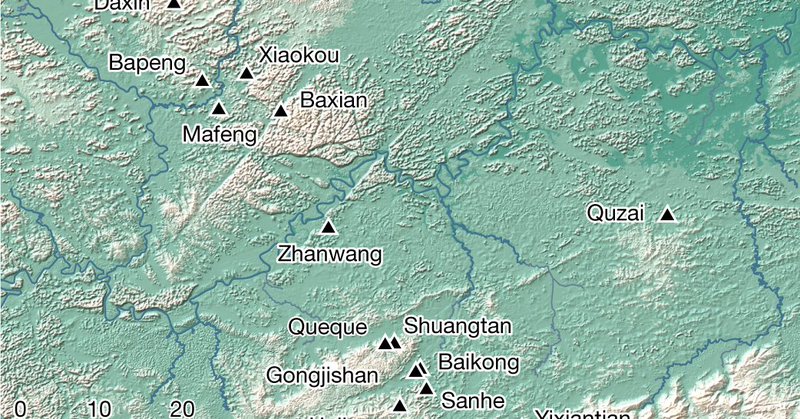
nature.com
Nature - A multiproxy record of Gigantopithecus blacki provides insights into the ecological context of this species, which became extinct around 250,000 years ago, when increased seasonality led...
0
3
5
@muchtoocommon @NBCNews If you want to know what something is eating, teeth are really useful. But no, they did more. They were also able to determine what the overall ecosystem was, and how it changed over time, and what their cousins were eating. I sat down and read the paper.
nature.com
Nature - A multiproxy record of Gigantopithecus blacki provides insights into the ecological context of this species, which became extinct around 250,000 years ago, when increased seasonality led...
0
1
0
Paper da copertina, proprio, gratis. https://t.co/1JsCulxk7I Per 2 milioni/anni il Gigantopithecus blacki era vissuto tra foresta e prateria, mangiando frutta. Poi 295 mila anni fa sono cambiati clima e vegetazione, gli oranghi si sono adattati al nuovo ambiente e lui no.
nature.com
Nature - A multiproxy record of Gigantopithecus blacki provides insights into the ecological context of this species, which became extinct around 250,000 years ago, when increased seasonality led...

This week in Nature: The Great Ex-Ape - What caused the demise of the world's largest primate? Browse the full issue: https://t.co/MLkTF7ebsW
0
4
8

Stunning cover in @Nature featuring a fascinating detective fossil research that sheds light on the reasons why the earth's largest ever primate went extinct 2.6 million years ago. Zhang, Westaway et al. Nature https://t.co/olJrEOgVIO
0
8
32
How history's largest ape met his end - a great chat on Quirks and Quarks CBC Canadian radio @MQSciEng
https://t.co/vXOcmKld9V

cbc.ca
Octopuses tell us about Antarctica and geologic hydrogen’s enormous potential
0
0
0
Pollen analysis played a crucial role in understanding the changing environments that caused such a problem for Gigantopithecus blacki in southern China - massive thanks to @thatpollenguy pictured here sitting outside one of the youngest G. blacki caves - Shuangtan @MQSciEng
0
2
11
My contribution to #FossilFriday the 4th Gigantopithecus blacki mandible ever found in Yanliang Cave in southern China - held by Zhang Yingqi at the IVPP in Beijing - what magnificent teeth! @Macquarie_Uni @MQSciEng
2
10
33
"Show me the light!!" Searching for Gigantopithecus blacki remains in the island of Hainan in southern China - great shot @PalaeoGARG !! @Macquarie_Uni @MQSciEng @mqnatsci
0
1
11