Jake Graving
@jgraving
Followers
721
Following
2K
Media
17
Statuses
361
Interested in behavior and computation. Research Scientist @MPI_animalbehav
Konstanz, Baden-Württemberg
Joined March 2009

When I talk about "causal salad", this is what I mean: no consideration of how the covariates relate to one another or the treatment.
4
27
196
Awesome finale that @JTKerby's image made the @AnimalEcology cover in support of our method using drones to study animals in their natural social and physical landscapes! @adwait_d @jgraving @BlairRCostelloe @icouzin great team!

🔥JAE July Issue! On the cover: Many animals behave in the context of dynamic social and physical landscapes. This is certainly the case in a band of gelada monkeys at the Guassa Community Conservation Area in Ethiopia. 📸by Jeff Kerby Full issue 👉 https://t.co/h6MmtGB42G
0
6
18
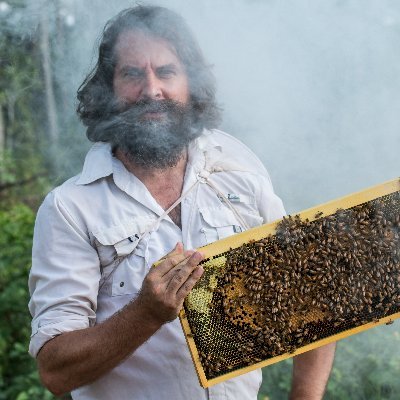
I'm really proud of this work published today in Proc B with @SmithBeeLab & @ben_koger on the importance of the 3D nest structure and building strategies in developing honeybee colonies https://t.co/fAVEUUw83B We observe, manipulate, and model 3D nest construction - see below.
16
113
370

The #ImagingHangar @UniKonstanz is abuzz with the sound of 60k #locust feet. More than 4k locusts have been tagged with reflective markers for tracking with the Motion Capture System. Researchers from @CBehav and @MPI_animalbehav aim to understand the behaviour of locust swarms.
0
20
90
Out now in @AnimalEcology! A general approach for using drones to study animal behavior in the wild. Record the location and posture of many animals simultaneously at sub-second sub-meter resolution, plus reconstruct their 3D landscape: https://t.co/2u4jtEzha2
5
117
323

Our drone-based method for tracking the (geo-referenced) location and body-postures of free-roaming animals, including 3D landscape models and social context - out now! https://t.co/Hcb3E46Bm5
@ben_koger @BlairRCostelloe @CollectiveBehav @MPI_animalbehav @UniKonstanz @CBehav
1
31
128

New blog post: Collective Intelligence for Deep Learning Recently, @yujin_tang and I published a paper about how ideas like swarm behavior, self-organization, emergence are gaining traction in deep learning. I wrote a blog post summarizing the key ideas: https://t.co/S644KjM20e
60
458
2K
The #CASCB is super excited: Currently we are running an experiment on locust swarms in the #ImagingHangar @UniKonstanz. Normally #locusts are studied in the lab in small groups of 200 animals in small arenas despite swarming in groups of millions of individuals in the wild.
1
11
38

Come join our team as one of 12 PhD students in the new #WildDrone network! Visit https://t.co/UZVQLrJeNr for project descriptions and application information

12 PhD positions: We are looking for 12 Doctoral Candidates to join the WildDrone MSDN, which aims to revolutionize wildlife conservation practices across European and African countries using aerial robotics, computer vision, and wildlife ecology. See
0
2
8

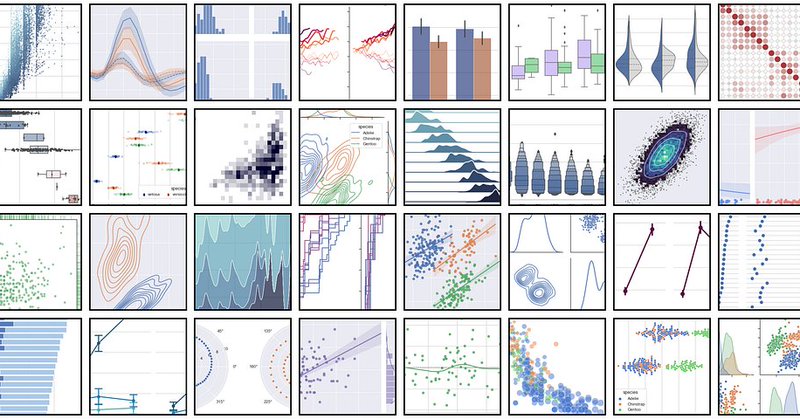
Happy to announce the final release of seaborn 0.12.0, a major update with new features that I'm really excited about. Check out the highlights: https://t.co/RMoE2k7rkH Read the full release notes: https://t.co/KUe1j1okNw pip install seaborn==0.12.0 I hope you find it useful!
michaelwaskom.medium.com
Introducing an entirely new way to make statistical graphics in Python
14
282
1K
If you have behavioral videos and want to try out keypoint discovery, we've open-sourced B-KinD: https://t.co/iL7CjcSACr You can train and run B-KinD on videos without human annotations! Thanks to Serim Ryou for working with me on the code😊 Let us know if you have questions!
github.com
Behavioral Keypoint Discovery. Contribute to neuroethology/BKinD development by creating an account on GitHub.

Annotating keypoints is expensive! We introduce B-KinD, a keypoint discovery method that works on a variety of behavioral videos without human annotations. Tested on:🐭🪰🌳🚶 Our work will be presented @CVPR in June 2022. Paper: https://t.co/s3Am3255VW Code: Coming soon! 1/5
3
21
58

Happy to announce that our Python package for active inference, pymdp, is now published in JOSS @JOSS_TheOJ: "pymdp: A Python library for active inference in discrete state spaces" Paper: https://t.co/iZg8fbevln Code: https://t.co/Hhzsh1wOv5 Docs:
github.com
A Python implementation of active inference for Markov Decision Processes - infer-actively/pymdp
2
24
84
To summarize, off-the-shelf tools typically make bad assumptions about behavioral data, but methods exist to avoid falling into *some* but not *all* of these logical traps. Science is incredibly hard, but we think carefully about the models we're using to make inferences
1
0
2
So, then what's the solution? To make worthwhile inferences, we need methods that take causal relationships into account. For example, Shapley values, the explainability tool used in the above paper has already been adapted for causal inference:
1
0
2
Now you might be thinking "Well, that model is still missing many important features. It is also wrong." And you would be exactly right! But causal inference is not so much a method for finding the exact "true" model, but a process for eliminating *obviously wrong* models.
1
0
0
Or written out as a distribution: p(behavior | speed, turning, length, weight) p(speed | turning, length, weight) p(turning | speed) p(length) p(weight | body length)
1
0
0
We know, in fact, these variables are not just correlated but are actually *conditional* on one another in the sense that one variable may be *causing* the value of another. If we were to take these relationships into account, our DAG might look something more like:
1
0
2
Based on our prior knowledge of the real world, we know this is a *bad* assumption, which can quickly lead to equally bad inferences. A situation @rlmcelreath refers to as "causal salad" (also, everyone should read his Rethinking v2 book)
1
0
1
This assumption is also baked into the SHAP method proposed in the paper above. Which the developers discuss here:
1
0
1