

Idrees Kahloon
@imkahloon
Followers
6K
Following
3K
Media
378
Statuses
3K
Staff writer @TheAtlantic. Former Washington bureau chief @TheEconomist.
Washington, DC
Joined October 2012

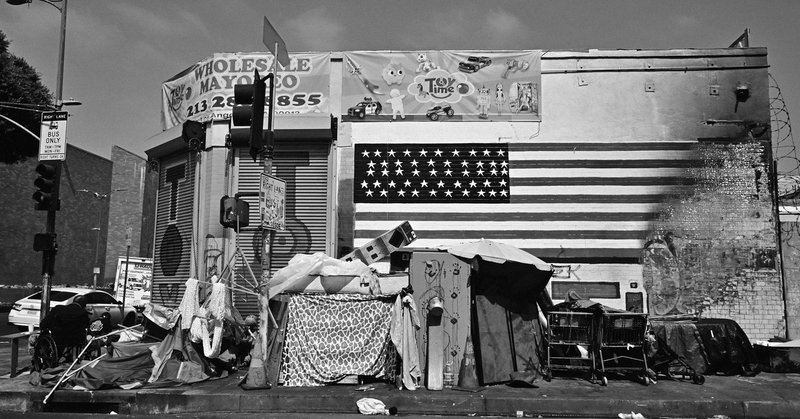
A misguided temptation has emerged, even among some scholars, to exaggerate the extent of poverty in America—and the trend could end up obscuring the problem more than helping remedy it, @imkahloon writes.
theatlantic.com
The misguided temptation to exaggerate poverty
4
8
15
Ultimately, I think Vauban Books did an important service by making this novel more available. I have my criticisms. But it is better that people have access to what is actually written.
1
0
5
What they admire is the prescience of Jean Raspail, who wrote it in 1973. Mass migration by sea (and by land) have challenged European leaders and Joe Biden, who struggled to respond. Reading the novel also helps to understand Trumpism. Consider the National Security Strategy:
1
0
1
The passages on the migrants themselves are intended to provoke disgust. But defenders of the novel say that the point is not really the migrants themselves, but the decadence of the West.
2
0
1
In September, the infamous novel The Camp of the Saints was retranslated and rereleased. It was once like samizdat. The premise is the collapse of Europe after 1 million Indian migrants arrive. I finally read it for The Atlantic. https://t.co/u7OH4tmHCb

theatlantic.com
What an apocalyptic French novel about a migrant invasion reveals about the worldview of nationalist conservatives
3
0
4
Epstein files, Marjorie Taylor Greene going off reservation, Ted Cruz selectively breaking from Trump. It’s hard not to think the MAGA coalition is cracking up. My piece: https://t.co/dm8mwpGEal
theatlantic.com
The intra-party fight over the Epstein files was only the prelude.
1
2
7
Justice Gorsuch now sounding skeptical that major questions and nondelegation doesn't apply. "What would prohibit from Congress abdicating all responsibility to regulate commerce, or for that matter, declare war?"
1
0
2

/1🚨BREAKING — AFL has filed a federal lawsuit against @BauschLomb for unlawful racial discrimination in board appointments.
74
512
3K
I don't think that means that we revert to the pre-Trump tariff landscape, though. There are simply too many alternative legal paths to imposing tariffs if the president wants to (the sleeper hit among them Section 338 of the Smoot-Hawley tariff).
0
0
4
In particular, the newly developed major questions doctrine seems built exactly for the Trump tariff scenario. No president had ever used IEEPA for tariffs in its nearly 50-year history.
1
0
5
The Supreme Court is about to hear arguments on whether Trump's unilateral tariffs are constitutional. My piece in The Atlantic on why—by the conservative justice's own past interpretations—the president should lose. https://t.co/QGu5LKuqGU

theatlantic.com
Conservative justices have worked to curb exactly the kind of power Trump is abusing in the tariff case.
1
5
11

"I think that we have expected less and less from kids. And kids have basically fallen to meet the occasion." @imkahloon discusses education outcomes with @monacharen on The Mona Charen Show:
4
4
27
These posts offer an insightful inside look on what went wrong with the Biden immigration policy. Like this point made in the most recent post: https://t.co/qd526GNUEZ

Check out part three of my series on Biden’s immigration legacy, where I examine the migration crisis that unfolded in U.S. cities and the administration’s reluctance to craft a coordinated federal response. https://t.co/gMnp8gOxEi
0
1
2
The economics of migration are positive; but the politics of it are the problem. The current restrictionism makes sense as a backlash to the Biden administration's policies, which were really a unwitting mass migration of a kind we haven't seen in more a century.
2
5
10
For the first time since the Great Depression, America might have zero net migration. Lots of past experience suggests this won't be as good for native workers as advertised. And the welfare state would be driven to the breaking point relatively quickly. https://t.co/P09e6VmAUs
theatlantic.com
This year, for the first time in nearly a century, more foreign-born people will likely leave the United States than will enter.
7
10
17

Why have US test scores dropped since 2013, after decades of gains? Smartphones/social-media is part, but @imkahloon offers a compelling complementary factor: a decreased willingness to hold students to high standards. In @TheAtlantic
https://t.co/iDzTkeLCJZ
58
183
757
To me, it's not just smartphones, though those didn't help. We also lowered our expectations in schools—and kids fell to the occasion. That helps make sense of grade inflation and big graduation-rate increases despite worsening scores.
9
2
12
My latest piece for The Atlantic looks at how American education peaked in 2013—and has been sliding to 25-year, sometimes 50-year, lows in math and reading. Why? I don't think it's the pandemic, and I don't think it's too little spending. https://t.co/EhoCEnQem6
theatlantic.com
Declining standards and low expectations are destroying American education.
11
15
29
My first piece for @TheAtlantic on the escalatory spiral of illiberalism in American politics. https://t.co/g2f1VigWUj
theatlantic.com
Republicans had real grievances with progressive orthodoxy—and are using them to justify drastic reprisals.
4
2
18
My essay on the racial wealth gap in this week's New Yorker. Reparations is neither politically possible nor a permanent solution while the black-white income gap remains as large as it is. I don't think that's a counsel of despair—but the opposite. https://t.co/khaMsZ0k4p

newyorker.com
Six decades of civil-rights efforts haven’t budged it, and the usual prescriptions—including reparations—offer no lasting solutions. Have we been focussing on the wrong things?
8
4
15
Some personal news from me: After nine wonderful years at The Economist, I'll be moving to The Atlantic as a staff writer. https://t.co/fljIXJLJxs

theatlantic.com
None
16
7
61