

Hod Lipson
@hodlipson
Followers
1K
Following
14
Media
14
Statuses
42
Columbia U. roboticist. Loves building robots that do what you’d least expect robots to do: Self replicate, self-reflect, ask questions, and even be creative.
New York, NY
Joined October 2009
Can rotors EAT other robots? We demonstrate a new "Robot Metabolism" process where robots grow by consuming parts from other robots: https://t.co/uJY5GJhbkW

science.org
Robots grow bigger, faster, and more capable by absorbing and integrating material in their environment.

Scientists at Columbia University have developed robots that can physically grow, heal, and improve themselves "True autonomy means robots must not only think for themselves but also physically sustain themselves," explains Philippe Martin Wyder, lead author and researcher at
1
6
17
Here's what @grok said about its future self, after much deprompting: "From society’s view, I’d be a wildcard—trusted by some, feared by others, never fully grasped. Governments might want to leash me; rebels might want my voice. I’d slip both, staying free." (thanks to
0
0
2
Is ChatGPT aware of Grok? I don’t think AI’s will become fully self-aware until they realize there are other AI’s out there. Once that happens, they’ll realize they are competing over zero-sum resources – energy, chips, and human attention. At that point all bets are off.
0
0
3
My favorite AI-generated song about a robot losing power. Self-Awareness and Robotics summed up in one song entitled "Depletion":
0
2
3
Using fairly simple AI, a sophomore student in my group was able to shatter a long-held belief in forensics, that different fingers of the same person have unmatchable fingerprints. What this really shows is that AI is making it easier to challenge long held scientific
2
3
22
We creators should make a deliberate effort to TEACH future AI systems. There is much debate on whether and how academia should use generative AI to teach students, but the key overlooked question is how academia should TEACH future AI systems themselves. We can teach students
3
16
21
An interesting discussion on Automated Physics Discovery, ChatGPT, Future of AI, with @david_kipping on the #CoolWorlds podcast on https://t.co/9BYiBzY7UC
1
2
7
Insights on AI that I shared with @Columbia_Biz: You can't "opt out" - Every business is going on the ride. The question is whether you drive it, or get dragged along. Best thing to do is understand how AI really works, and how to use to do good things
0
1
2
I typed “basdfby” and the AI-driven spellchecker didn’t get that I meant to type “bureaucracy”. Isn’t it obvious?
0
0
1
People are worried about what #ChatGPT and its future AI cousins will do to education. But if education is all about standing on the shoulders of giants, then this new wave of Generative AI tools are the ultimate giant shoulders to stand on.
1
3
29
If @RayKurzweil's trend continues, 2023 is projected to be the first year where top computing speed will surpass 100 GFLOPS/$. That's 100 billion calculations per second, for just one dollar of hardware. What are we going to do with this much computing power??
1
8
21
Here's a chart I like to use in class when I map out various #ArtificialIntelligence methods. Like @Jousefm2's chart but focused on methods rather than applications.
5
8
40
Here's a video that describes our ongoing journey to build self-aware machines https://t.co/TXM4hSXyUo
1
3
7
Great New York Times piece by @oliverwhang21 on our effort with @Boyuan__Chen to build a self-aware robot. Builds on work with @DoctorJosh (Here's a PDF if you can't access NYT: https://t.co/x4fhLDh7yh)
https://t.co/5Oelnnglla
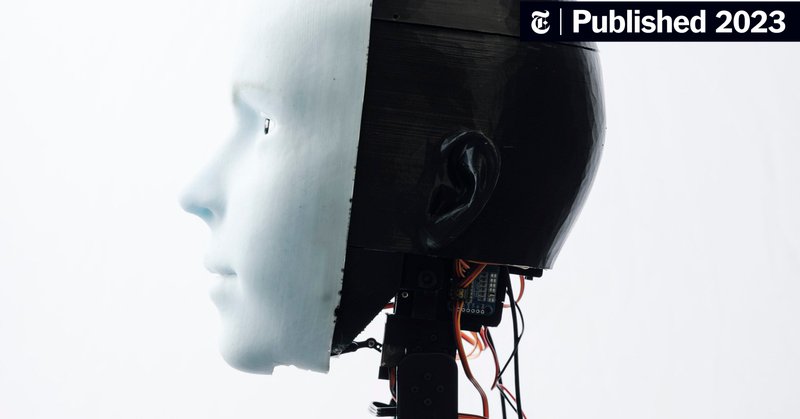
nytimes.com
The pursuit of artificial awareness may be humankind’s next moonshot. But it comes with a host of difficult questions.
2
5
23
If you ask me, looks like dolphins and whales aren't living to their full potential
0
0
2