
Nithya Kruthi
@_kruthirao_
Followers
1K
Following
70
Media
6
Statuses
31
Bioinformatics , Equestrian, Student in @Bigdatabiology group
Hyderabad, India
Joined February 2023

New version of macrel released (v1.6.0) The biggest change is internal, using a much better approach to saving and loading models (thus removing the dependency on particular versions of scikit-learn) A few other bugfixes were included https://t.co/6LScqNlBj8
github.com
Predict AMPs in (meta)genomes and peptides. Contribute to BigDataBiology/macrel development by creating an account on GitHub.
1
2
4

During #WorldAntimicrobialAwarenessWeek, let’s recognise that misuse of antibiotics is a growing global threat. Responsible use, stronger surveillance, and public awareness are key to preventing drug-resistant infections. Time to act before treatments stop working.
0
2
18
Grateful to have hosted Prof. Ami Bhatt from stanford at @TRI_info !She gave an excellent talk on phages, #microproteins 🧬, and the microbiome 🧫. Thanks to @luispedrocoelho @BigDataBiology
#science #smallproteins
0
5
18

Meet @QUT's A/Prof Luis Pedro Coelho and his team at TRI. They're using big data to develop software to identify dangerous microbial outbreaks. They're also souring the environment to find new antibiotic-resistant microbes and microbes to treat diseases. @CMR_QUT @luispedrocoelho
0
4
7

Protein Structure Informed Bacteriophage Genome Annotation with Phold https://t.co/JFVO4oAOpi
#biorxiv_bioinfo

biorxiv.org
Bacteriophage (phage) genome annotation is essential for understanding their functional potential and suitability for use as therapeutic agents. Here we introduce Phold, an annotation framework...
0
1
5
New version of argNorm! Will be available frombioconda & funcscan in the next few days NCBI genes are now handled in a fundamentally more principled way and this should fix a few corner cases (particularly if data has been run through hARMonization) https://t.co/n07IO2fGdG

pypi.org
Normalize antibiotic resistance genes (ARGs) results by using the ARO ontology (developed by CARD).
1
8
24
I am deeply saddened by the tragic incident involving Air India Flight 171. This is a black day for Indian aviation. My thoughts and prayers are with the families .Grateful to the Tata Group for standing by the victims in this moment of grief and loss. #crashairindia #RIP

We are deeply anguished by the tragic event involving Air India Flight 171. No words can adequately express the grief we feel at this moment. Our thoughts and prayers are with the families who have lost their loved ones, and with those who have been injured. Tata Group will
0
0
4
Anyone from Europe who wants to spend two years in sunny Queensland working on the global microbiome? Get in touch (even if all you have right now is a vague idea, just email early)! We also have a lot of friends in Europe for the return phase. https://t.co/a5CXWUCyPJ
marie-sklodowska-curie-actions.ec.europa.eu
MSCA Postdoctoral Fellowships enhance the creative and innovative potential of researchers holding a PhD and who wish to acquire new skills through advanced training, international, interdisciplinary...
0
25
74
Happy birthday 🎂 to our amazing guide @luispedrocoelho ! He’s the heart of the team and we had the sweetest celebration🎉!! #TeamLuis @BigDataBiology @alex_areiasc @AnPokhrel
0
3
10

Your Pacific #MVIF hosts: @Nena_ITALY, Pamela Ferretti, @Azufre451, @aroney_samuel @anna_cusco @_kruthirao_ Sayaka Mizutani & Felix Salim
0
1
1
#MVIF 37 recordings now available! Huge thanks to @tohseenn for putting together all the talks, available on both platforms: @CassyniSeminars
https://t.co/r233093Dzk
@YouTube
https://t.co/a4eCB6LYlC
youtube.com
0
7
8
We are looking for PhD students! Fully funded studentships available to work on a range of topics, from small proteins to developing computational tools to study the global microbiome
5
94
269
Excited to share a recent @NatureRevMicro article on 'Mining Microbiomes for Microproteins'! It dives into strategies for detecting small ORFs & exploring microproteins in microbiomes. Check out insights from Yiqian's paper: https://t.co/3A1gnQZKVZ
@cocodyq @BigDataBiology

nature.com
Nature Reviews Microbiology - This Genome Watch discusses strategies to detect small open reading frames and study microproteins encoded in microbiomes to understand their diversity and functions...
0
1
8
👉 Unpaywall – https://t.co/kOJYOFNLdy 👉 Open Access Button - https://t.co/n6ffTezWMi 👉 PaperPanda – https://t.co/ackj1FeAq9 👉 Zlibrary – https://t.co/cZ8eYiDEck 👉 OA[.]mg – https://t.co/SH5qZPs5Ty 👉 Core – https://t.co/NUcqKCTH4t 👉 arXiv – https://t.co/FuEEBCmPje
0
2
11
7/ Recommend reading this paper if you're interested in bacterial pathogenesis, Small proteins, virulence regulation, or therapeutic development:
onlinelibrary.wiley.com
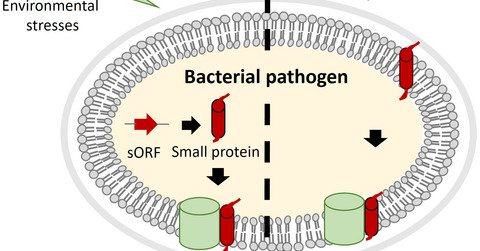
Small hydrophobic proteins, encoded by small open reading frames, contribute to the adaptation of bacterial pathogens to environmental stresses, often through the interaction with larger membrane...
0
0
5
6/ This paper highlights the need to explore the “hidden proteome” and identify novel small proteins in pathogenic bacteria. It’s a step toward better understanding bacterial pathogenesis and developing innovative therapies.
1
0
0
5/ Small proteins often respond to environmental stresses such as magnesium limitation, oxidative stress, or antibiotic exposure. Their compact size makes them precise tools for regulating bacterial survival under challenging conditions. 🔬🌍 #BacterialAdaptation
1
0
0
4/ One fascinating example is MgtR, a 30-amino acid protein in Salmonella that regulates the virulence factor MgtC. Synthetic MgtR peptides show promise in reducing bacterial survival inside macrophages—a potential antivirulence strategy! 💡 #PathogenResearch
1
0
0
The paper highlights two major categories of small hydrophobic proteins: 🔹 Regulators: These proteins modulate functions like transport and antimicrobial resistance by interacting with larger membrane proteins. 🔹 Toxins: Many are part of toxin-antitoxin systems. #Microbiology
1
0
0