
Vera Weisbecker (she/her on Kaurna land)
@WeisbeckerLab
Followers
1K
Following
2K
Media
86
Statuses
1K
Morphological Evo-Devo Lab, Marsupial Lovers, 3D Nerds, Coffee Junkies. All opinions our own
Flinders University
Joined February 2014
Basically every major rock pile in Australia has a different species of rock wallaby on it😉
0
0
2
Why is a gecko 🦎 tail like a cactus 🌵? Because their bulbous tail stores resources for uncertain times Parallel evolution of expanded tails in monsoonal tropics lineages of an Australian gecko radiation in @ZoolJLinnSoc https://t.co/QE9VUvFakW

academic.oup.com
Abstract. Ecological drivers of variation in the morphology of the lizard tail are understudied despite its important and varied functions in defence, loco
2
14
72
This Christmas, give the gift of Science by donating to Kits-Mas! For every $600 raised, DeadlyScience will send Aboriginal and Torres Strait Islander learner classrooms a deadly microscopy kit. Visit https://t.co/ZSczFYDtZ7 and donate today.
0
4
6
But this review isn't just about skulls. We show how phylogenetic tests of allometry can be a problem when size correlates with phylogeny. As one reviewer said, it's like throwing the baby out with the bathwater! @DrEmSherratt @WeisbeckerLab
https://t.co/uwul5lVshp

onlinelibrary.wiley.com
The mammalian cranium (skull without lower jaw) is representative of mammalian diversity and is thus of particular interest to mammalian biologists across disciplines. One widely retrieved pattern...
1
9
25
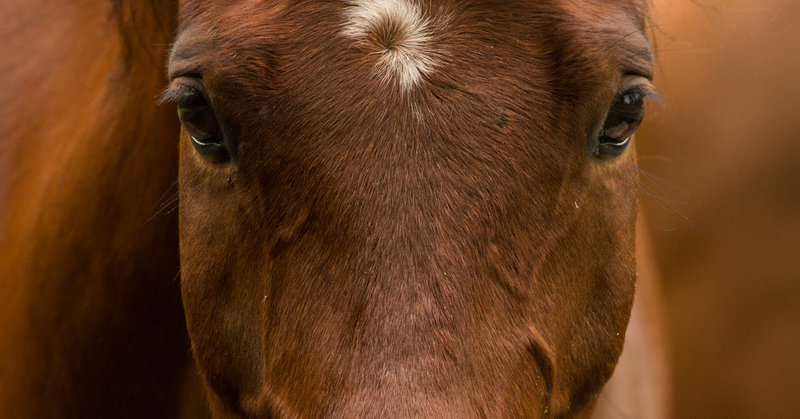
The gist of it is – long-faced mammals can afford it. Read up the long and short of it in our @TheConversation article: https://t.co/ddBtFXljlP
theconversation.com
It also explains why there are exceptions to the rule – including humans, who have strikingly short faces relative to the braincase.
0
0
1
We’ve known for a while that larger mammals often have longer faces (think of deer vs. moose), but we couldn't fully explain why. @DRexMitchell sized up the answer in our new open-access review.
onlinelibrary.wiley.com
The mammalian cranium (skull without lower jaw) is representative of mammalian diversity and is thus of particular interest to mammalian biologists across disciplines. One widely retrieved pattern...
2
13
35
Several years in the making with two of the biggest brains in the field! @WeisbeckerLab @DrEmSherratt We unpack the who, the what, the where, the when, and the how of mammalian skull proportions and how they change with size across species. https://t.co/uwul5lVshp
onlinelibrary.wiley.com
The mammalian cranium (skull without lower jaw) is representative of mammalian diversity and is thus of particular interest to mammalian biologists across disciplines. One widely retrieved pattern...
0
14
23
Ever wondered why large mammals have long faces? Biomechanics explains it 😊 Thanks for the fun discussions @DRexMitchell and @WeisbeckerLab
#allometryrules
@ConversationEDU
https://t.co/uuJ5kLUWyZ
theconversation.com
It also explains why there are exceptions to the rule – including humans, who have strikingly short faces relative to the braincase.
0
9
29
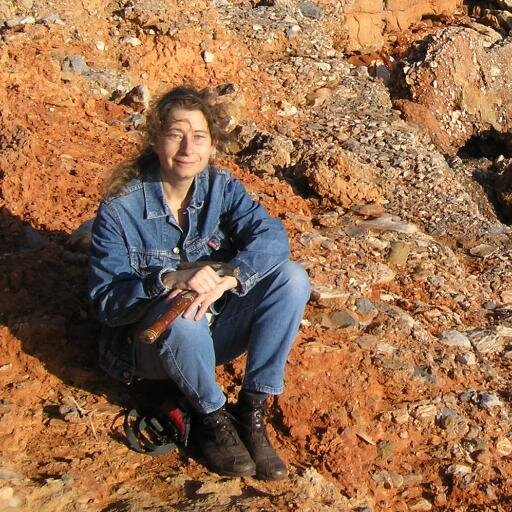
Our manuscript on island biodiversity is out! Islands today are more similar to each other than they were in a pre-human past, because of 1) extinctions, 2) introductions of the very same species everywhere @newbiogeo @naturalis @SUNY 🏝️🐘=gone🐀=new https://t.co/x59pOM0Ugo
1
15
33

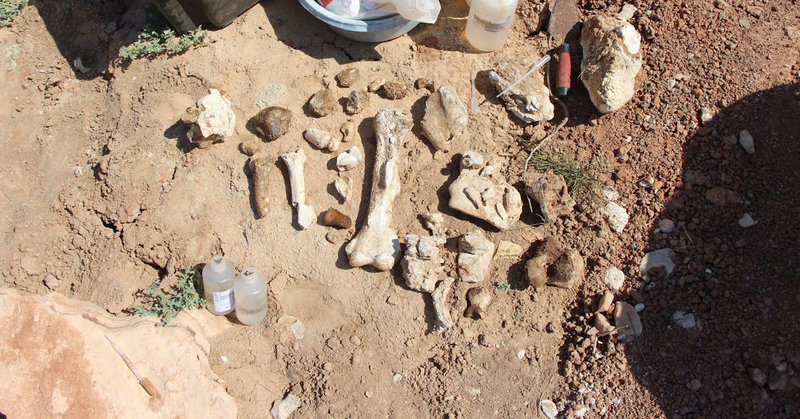
Nice article by ABC's Emma Haskin about the newly-discovered 25 million year old koala fossils that we published on! https://t.co/oXv2bRM3P1 via @ABCaustralia
0
4
11

Anatomy education is a rare academic area with more jobs than qualified people. I strongly advise grad students in my research field (biological anthropology) to get solid anatomy training. It will dramatically improve prospects for livable employment. https://t.co/PFLYqJVK4K

anatomypubs.onlinelibrary.wiley.com
Click on the article title to read more.
3
20
76

This week saw the launch of VAMP; the Virtual Australian Museum of Palaeontology. https://t.co/uDNx20CnNS
@VAMP_Palaeo
#dinosaur #dino #dinosaurus #fossil #fossilskeleton #fossilfriday #palaeontologists #paleontology #jurassicpark #vertebrates #museums #Australia
0
5
17

@VAMP_Palaeo launched tonight so now we’ve all got free digital access to hundreds of Aussie fossils 🐾🦴 huge congrats to the team @DrAliceClement @Zoelenotherium @DiprotoRon
0
5
12

In the world of #dataviz sometimes art meets science! 🖌👩🔬 We plotted parrot data in the ALA to celebrate #WorldParrotDay 🦜 using the dominant plumage shades for each genus 🌈 and created some accidental art in the process! Watch out Monet 🎨 @accidental_aRt
#rstats #Rtistry
10
129
435
Don't miss this opportunity to hear from a giant in the field of Marine Mammal Research, Dr Cath Kemper!
Join us for our next meeting on Thursday June 8th. We will hear from Dr Catherine Kemper, former mammal researcher @SAMuseum on "South Australian Museum collection: an essential resource for the study & conservation of Australia’s marine mammals" 🐋🐬🦭 https://t.co/qo3BIhPGP4
1
0
4

We are launching tonight! 🚀 🤯 Read more about VAMP ahead of our launch party tonight in our article published today in @ConversationEDU 👀 https://t.co/2DF9VYgycN
@FlindersPalaeo @wamuseum @SAMuseum @MAG_NT @FlindersCSE

theconversation.com
Digital scanning offers a new window on Australia’s unique fossil history, from early multicellular lifeforms to gigantic ‘marsupial lions’.
0
11
25
What should happen to native forests when logging ends? Ask Victoria's First Peoples https://t.co/p9upRYUkzb via @ConversationEDU

theconversation.com
The end of native timber harvesting in Victoria offers a generational opportunity for First Peoples to care for Forest Country
0
1
5
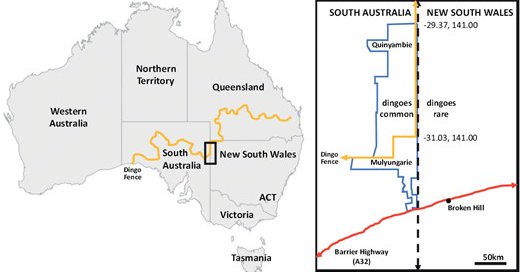
New research out! We found that red kangaroos living with dingoes grow up faster than red kangaroos that live safe behind the dingo fence 🦘🦘🦘 https://t.co/DyL0rfQ4Rw
academic.oup.com
We show that one population of red kangaroos outside the dingo barrier fence has fewer females and joeys, and also grows up faster than a neighboring popul
0
25
63