
TwilightBeasts
@TwilightBeasts
Followers
6K
Following
11K
Media
2K
Statuses
20K
Exploring the magnificent world of lost Pleistocene beasts. Blog created and written by @JanFreedman @DeepFriedDNA @JustRena https://t.co/o9chUt6w4P
The Pleistocene
Joined March 2014
If you enjoy our posts about creatures of the Pleistocene, then you can support us if you want!!! You can buy us a coffee! https://t.co/EldfD7UZBW Or take a look at some t-shirts, mugs and hoodies!! https://t.co/4tUjxfElQF
https://t.co/FvMatYzw1G
0
1
4

Just marvel at these beautiful images of teeth! A new paper describing what is likely the largest sample of a certain ancient species teeth in history.. what great work. Congrats Lucas! #Homonaledi #Neverstopexploring
https://t.co/ZEISUMSfdV
4
16
91

Look who’s finally here 👀 Our replica dire wolf, giant ground sloth, and saber-tooth cat arrived last week, and exhibit construction is underway!
1
6
68

A beautiful cast of the 41,000 year old mummified baby mammoth Lyuba, in the collections @LeMuseumParis. #FossilFriday She has quite a story to tell: https://t.co/KOrVzJz6hP
1
4
13

Bison licking its shoulder, from La Madeleine, carved in reindeer antler Photo: Don Hitchcock 2008
8
77
381

#FossilFriday Fossil tracks of the giant stork Leptoptilos falconeri (last known occurrence?) found alongside a Pleistocene lake margin in northern Kenya, together with tracks of elephants, rhinos and Homo erectus. Source: Roach et al. 2016 https://t.co/XceyA6HCrY
3
41
116

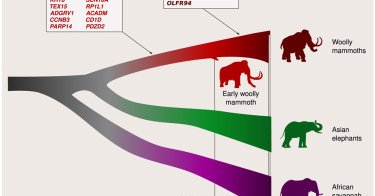
Check out👀 our latest paper from @CpgSthlm In @IndianaDiez et al. ( https://t.co/Rx9o2tZNkZ) we analysed 23 #woollymammoth 🦣 #genomes 🧬, including a ~700ka specimen, to investigate how this iconic species adapted through time to life in cold Arctic environments. A 🧵 here ⬇️
cell.com
Díez-del-Molino et al. analyze unique non-synonymous mutations in 23 woolly mammoth genomes, including a 700,000-year-old specimen. They find that woolly mammoths had highly evolved genes associated...
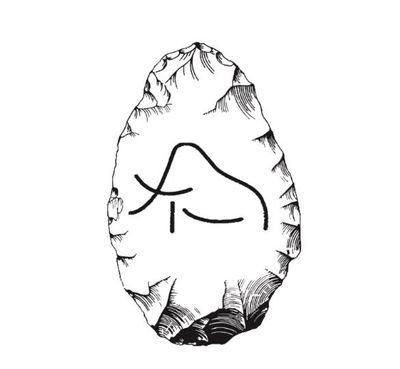
What genes make a #woollymammoth? 🦣🧬 We have analyzed the genomes of 23 woolly mammoths and compared them to 28 Asian and African savannah #elephants to discover the unique gene variants involved in the woolly mammoth's iconic looks. OA paper https://t.co/XV5oNUVhlQ 🧵1/n
0
4
13

How about #Thylacoleo carnifex for #FossilFriday? Australia's fierce Pleistocene marsupial predator. Check out the edge on that premolar. This dentary is one of the fresh specimens from our recent #WellingtonCaves work now cleaned up and ready for study.
0
12
64
This #fossilfriday while using some old #fieldnotes passed onto me, dated 1982 from a field trip led by Dr David Martill ( perhaps someone on here could ask him if he remembers ) 🤔 I've found a few pieces of #ammonites yet to describe. Going to see if I can find some more ⚒️
0
2
6

#DYK that camels once roamed the Arctic? Fossil evidence shows that two species of camels once called the Yukon home, the Yukon giant camel (Paracamenlus) and the western camel (Camelops hesternus). Learn more here: https://t.co/V471boZEjH
#FossilFriday
0
8
16
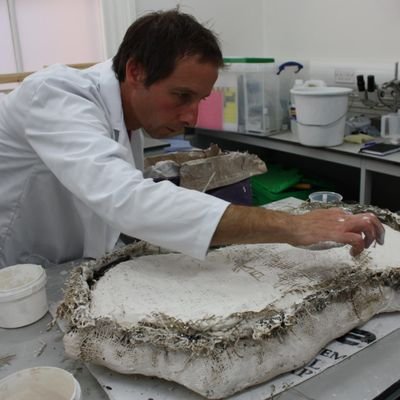
Happy #FossilFriday! This week, Conservator Alex worked on creating a fossil jacket for a mammoth hip bone removed from the Bonebed. Check out this video of some of the process!
0
3
4

A lovely but sad piece. Glad to have read it.
Our 2nd least read post of 2022 is about the beautiful story of one of the most incredibly preserved baby mammoths found! (Image Ford Motors) https://t.co/EWASQQcbR3
1
2
2
Our 2nd least read post of 2022 is about the beautiful story of one of the most incredibly preserved baby mammoths found! (Image Ford Motors) https://t.co/EWASQQcbR3
0
2
7
Our least read post of 2022 may be about the smallest beasts we have written about, but they are extremely important! Discover more about the gorgeous single celled foraminifera! (Image USGS) https://t.co/78NJGksFzJ
1
1
7
A very happy and healthy 2023 to everyone!! Have a glance at our most read and least read of posts of 2022! More beasts coming in 2023!!!! https://t.co/GgtTHIMmyH
1
4
8
Have a nice, summery #TBT on day three of this blizzard warning to remind you that summer does, in fact, exist.
0
4
9

"Moving beyond the adaptationist paradigm for human evolution, and why it matters" https://t.co/zVVUNq3Fz7
3
26
63
Early [hominins] may have first walked upright in the trees
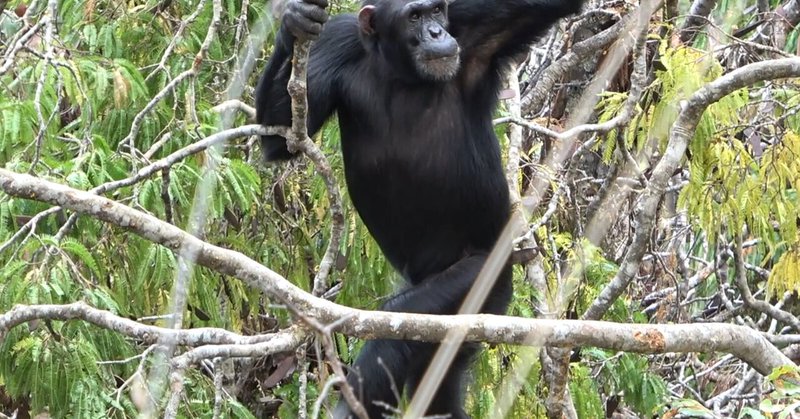
phys.org
Human bipedalism—walking upright on two legs—may have evolved in trees, and not on the ground as previously thought, according to a new study involving UCL researchers.
4
19
53