

Stuart Jenkins
@StuartAJenkins
Followers
185
Following
716
Media
0
Statuses
318
Postdoc at Oxford Net Zero, University of Oxford. Studying climate science and policy, trends in RFs, carbon budgets, CTBO. Views my own.
Oxford, England
Joined October 2012

@stv_smth answers: Is carbon capture and storage a crucial climate technology? #OxfordatCOP28 @CO2REhub @OxfordNetZero @NetZeroTracker
6
15
24
its funny how few lessons have been learned...
Shocking that if you build the infrastructure people will use it. Lessons for high speed rail @RishiSunak? https://t.co/Itxl9CSUZD
0
0
0
Who pays for net zero? Carbon Gap and Carbon Balance have written a report on the EU's Net Zero Industry Act. Plenty of "The EU should..."s in there to ensure CO2 storage is delivered on time and paid for by those who benefit from the fossil fuel industry https://t.co/MU9VAT7raX
carbongap.org
The NZIA proposes producer responsibility for reaching net zero, but these previsions need to be strengthened to ensure support for CDR
1
0
2
Shocking that if you build the infrastructure people will use it. Lessons for high speed rail @RishiSunak? https://t.co/Itxl9CSUZD
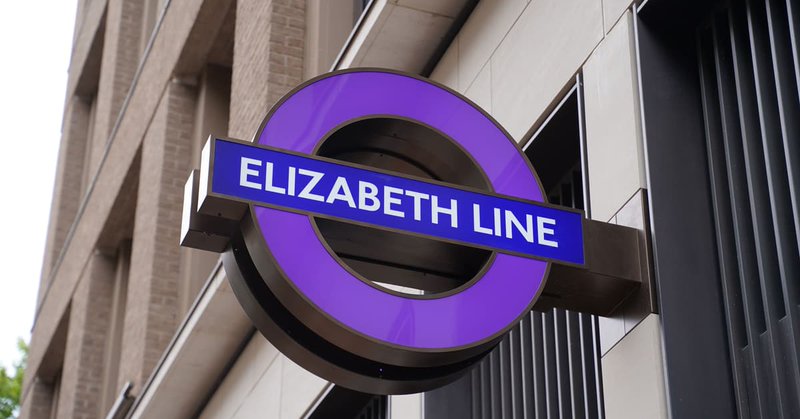
standard.co.uk
One in six of all UK rail journeys are now made on the £20bn cross-London line
0
0
0

Wow! the EU is proposing to make producers responsible for developing storage capacity on time!! Sounds a lot like.....Carbon Takeback Obligation. @janpaulvansoest @myrtleboat @HughHelferty @paul_zakkour @StuartAJenkins

5) Perhaps most significantly the NZIA makes a big push on the Oil and Gas sector, directly targeting producers in 🇪🇺 to develop CO2 storage. This is done by forcing producers in 🇪🇺 to contribute on a pro rata basis to the 2030 target based on their production between 2020-2023
0
2
3
Petition to dub music behind this 🙋♂️ Stairway to heaven? Road to hell is probably more appropriate...

If it is not literally the warmest year ever, someone will complain that global warming has stopped. Year-to-year fluctuations are a normal part of the ongoing global warming trend. Don't be distracted by the noise.
0
0
3

NEW – Tonga volcano eruption raises ‘imminent’ risk of temporary 1.5C breach | @AyeshaTandon w/ comment from @StuartAJenkins @linosellitto Read here: https://t.co/6lyzzMMubq
3
24
39

Climate goals can be achieved at affordable cost, if fossil fuel producers pay for carbon clear up Read this new study led by Oxford Net Zero's Myles Allen and @StuartAJenkins, with @PACEmissions
https://t.co/Tn1QwyQxwA

ox.ac.uk
Climate change could be constrained by implementation of policies to ensure fossil fuel producers pay for carbon clear-up, or capture, according to new Oxford-led research, published today in
0
3
3


Another debunking of the climate change denial and blatant misrepresentation of a scientific study by @NetZeroWatch.
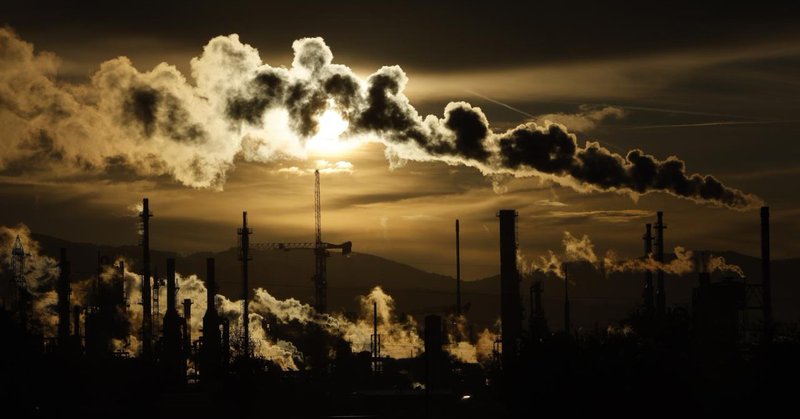
aap.com.au
Social media users misrepresent a scientific study in an attempt to disentangle human-led emissions from global warming.
1
10
24
@ecioxford @oxmartinschool @OxfordPhysics @oxfordgeography @OxClimateSoc @ClimateOxford @AnnualReviews Great work by authors Myles Allen, @PFriedling, @cecilegirardin, @StuartAJenkins, @ymalhi, @EliMLarson, @Peters_Glen, and Lavanya Rajamani 👏 https://t.co/mNiXNVardZ
netzeroclimate.org
New research paper by Myles Allen explains the science, origins and implications behind the drive for net zero and why it's needed to halt temperature rises
0
4
3
We can do better than a windfall tax. We must decarbonise fossil fuels. Demand fossil fuel companies recapture and store a rising fraction of the CO2 associated with the use of their products. They make the profit, they should invest in the solutions. https://t.co/OjNM28ZjsW
1
2
3
In the final moments of COP26 @AlokSharma_RDG's speech before banging the gavel reflected anger felt by many vulnerable parties left outside the room. In the end the text passed, but one wonders how much tolerance is left for deals made like this. https://t.co/Ak3li7kMIT
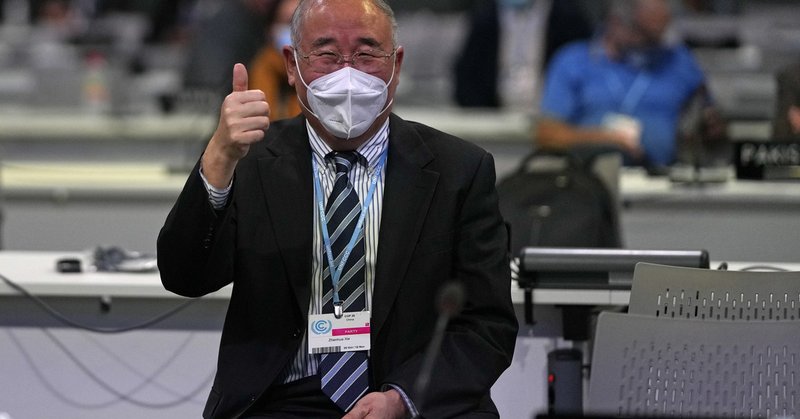
politico.com
At issue was a late push from China and India.
0
1
1
Agree with this, and of course it leads to important and nuanced discussions of what the signatories to the Paris Agreement actually meant when they signed up. Now thats a topic I love** to discuss with climate scientists 🙄 **Loathe

There is a pretty strong claim here that anything without a 50/50 chance of avoiding 1.5C is "not compatible with the Paris Agreement". Well-below 2C was the main Paris goal with an aspirational goal of limiting warming to 1.5C, but this seems to conflate the two a bit.
0
0
0
Fantastic article from @civiltalker, offering a clear and honest review of the methane pledge. 30% methane emissions reductions by 2030 is great, but... Ambition on methane must not distract from the long term goal - net zero CO2 emissions.
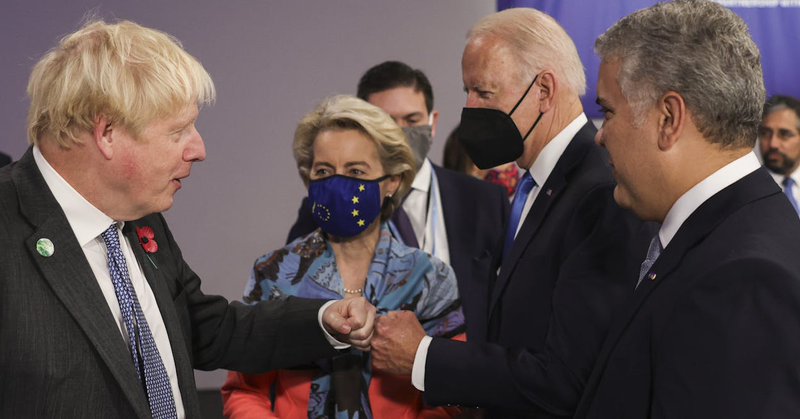
theconversation.com
Cutting methane emissions by 30% will help slow climate change in the short-term but could compromise longer-term goals.
1
0
3
But unlike the carbon pricing discussed in the FT article above, in a world with a CTBO the $100/tCO2 carbon price remains constant through the 21st century, and the CTBO drives us to a net zero energy system instead of ever rising carbon prices [4/4]
0
0
0
And interestingly enough, we find a Carbon Takeback Obligation is most efficiently discharged when combined with modest demand-reduction measures, taking the form of (you guessed it!) a constant $100/tCO2 carbon price. [3/4]
1
0
0
A CTBO, where the regulation is applied only to O&G industry, provides a cost-effective policy to encourage decarbonisation without the challenge of applying a global uniform, and ever increasing, tax on carbon. [2/4]
1
0
0