

Strong Towns
@StrongTowns
Followers
99K
Following
18K
Media
5K
Statuses
26K
We're changing *everything* about the North American pattern of development. You can help make it happen by becoming a member today!
All Across America
Joined October 2009
This is just the beginning of Stacked Against Us, our new podcast on the housing crisis. Join host Asia Mieleszko as she explores how a national gamble broke housing, and why local resilience is the only way forward.
3
0
8
Read more in "Complete Streets in Name Only: How Federal Transportation Policy Undermines Local Outcomes" on our site: https://t.co/mkSDYZEyhx
0
0
2
By aligning itself with federal funding mechanisms, proponents allowed its priorities to be diluted. Instead of producing streets that are safe, human-scaled, and integrated into neighborhoods, we’ve ended up with expensive projects that serve as compliance exercises.
1
0
0
A citizen-led Crash Analysis Studio examining the crash found that the crossing itself is shadowed by poor lighting, flanked by signage that obstructs visibility, and surrounded by traffic traveling well above the posted 30 mph speed limit.
1
0
0
Despite these accolades, a pedestrian — Hellen Jorgensen — was killed at the only designated crossing along the corridor.
1
0
0
Take Ager Road in Hyattsville, Maryland as an example, less than 7 miles away from Washington D.C. The Ager Road project cost approximately $15 million and was heralded as a model of the "Green-Complete Streets" approach.
1
0
0
The Complete Streets movement began with a compelling, people-first vision: streets designed to be safe, accessible, and welcoming to everyone, not just cars. But as this vision was absorbed into the federal transportation bureaucracy, it became a hollowed-out shell.
1
3
10
Learn more about how incremental development can help us escape the housing trap in the fourth episode of Stacked Against Us!
strongtowns.org
How a national economic gamble broke housing, and why local resilience is the only way forward.
0
0
2
They’re local to the community. They have skin in the game. They build the things that they—and the community—want to live, work, and shop in.
1
0
2
And he continues to live and work by that idea: during an interview for Stacked Against Us, he was actually *in* a retail center he was rehabbing. This dedication to place is part of what sets incremental developers apart.
1
0
1
“To do the experiment, I have to live in it.” That’s what Monte Anderson told The New York Times when his work refitting his home into a multigenerational “roommate house” was spotlighted.
1
0
13
Leawood can follow their example. Read more in “Low Crime, High Risk: The Deadly Streets of Kansas City’s Safest Suburb” on our site. https://t.co/Ep2Tkw7DHt
1
0
3
While some of the deadly corridors are getting a redesign, it’s worth asking what can be done sooner or in the interim. Other cities like Charlottesville, Jersey City, and Indianapolis are already making changes to their streets using insights from the Crash Analysis Studio.
1
1
3
At least 15 times in the past 5 years, someone walking or riding a scooter or bicycle has been struck by a moving vehicle in Leawood, Kansas. Many of those struck were children. The parents intuitively recognize that street design is a contributing factor. And it’s time to act.
1
2
6

To kick off this week of giving thanks, we like to express our gratitude this for our wonderful plenary speakers at the 2025 Kansas Housing Conference--Johnson County Commissioner, @JaneeHanzlick, KHRC Executive Director, Ryan Vincent, Chris Allen of @StrongTowns, and Dan Meers
0
1
2
Anyone who is trying to debate in the replies whether or not suburbs are indeed highly subsidized (they definitely are) needs to watch this video. There’s lots more evidence than this, decades of it. Look it up. HT @notjustbikes @UrbanThree @StrongTowns.
1
11
45
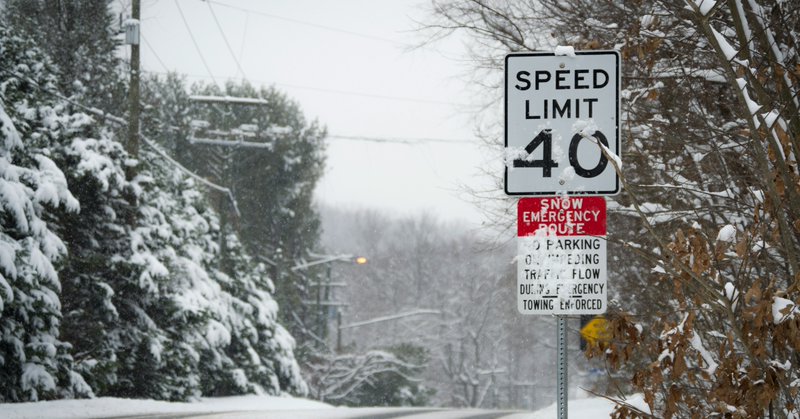
It wasn’t the exact plan the community had hoped for, but it’s still progress. Families are already walking along streets that feel safer, and the Local Conversation isn’t stopping here. They’ll keep pushing for additional improvements so every child can travel safely to school.
1
1
8
Advocates proposed a simple, $300 fix to slow traffic: paint and flexible delineators that would make streets safer for kids and families. When the city finally responded, they chose a more conventional solution: new pavement markings and signage that raised the cost to $1,500.
1
1
4
Not every advocacy effort ends perfectly, but progress counts. Strong Towns Hallowell helped reduce traffic speeds near a local school, showing what a committed community can achieve. They’re hoping that next time, the city will act faster.
1
1
4
Walking to school shouldn’t be a death defying stunt. That’s why Strong Towns Hallowell, a group of advocates in the historic Maine city of less than 3,000 people, is working with the city to make it safe. If it’s safe for children, it’s safe for everyone.
1
3
29