

Berkeley Rausser College of Natural Resources
@NatureAtCal
Followers
3K
Following
3K
Media
1K
Statuses
5K
The UC Berkeley Rausser College of Natural Resources focuses on applied sciences related to food, agriculture, sustainability & conservation of the environment.
Berkeley, California
Joined October 2011
Approximately 5,500 hazardous sites across the United States are at risk of coastal flooding by 2100, according to a recent study led by researchers from @ESPM_Berkeley, @ERGBerkeley, @UCLAFSPH, and the nonprofit @ClimateCentral. https://t.co/6vdjRv3gMo
0
3
0
Eight Rausser College faculty were recently named among the world’s most influential researchers, according to a new report from analytics firm @Clarivate. Learn more about the methodology and see who made the list: https://t.co/e4fFg7xrgO
0
2
7
An interactive, open-source tool developed by @SchmidtDSE experts and @UNEP delegates provides global policymakers with unprecedented analytical and computational power to achieve environmental and climate goals. Read more about the new tool: https://t.co/ERfbc9Gh4y
0
0
1
⏰ Giving Tuesday ends at midnight! Stand with Rausser College students and faculty by supporting vital teaching and research in climate change, biodiversity, and conservation. 💛 Please support Rausser before the Giving Tuesday ends tonight at midnight: https://t.co/RIFrw0Plia
0
0
0
🚀 Giving Tuesday starts now! Join the global movement of generosity and help ensure Rausser College can continue leading in climate change, biodiversity, and conservation research. 💛 Please support by donating today. https://t.co/RIFrw0Plia
0
0
1
Our Fall issue of Breakthroughs looks inland to California's rural and agricultural areas, highlighting the Rausser College researchers advancing science and solutions to support communities and ecosystems across the Golden State. Read the full issue at https://t.co/eEmOqCAsrN.
0
2
1

Very happy that VoxDev covered our recent Economic Journal paper on audits and clientelism in Brazil! @vox_dev @NatureAtCal

🆕 Can anti-corruption campaigns reduce vote buying? Lessons from Brazil’s municipal audits Today on VoxDev w/ Gustavo Bobonis (@econuoft), @paul_gertler (@BerkeleyHaas), @marcogleznav (@AreBerkeley) & Simeon Nichter (@UCSDPoliSci):
0
3
15
Alexandra Hill, an @AreBerkeley professor of Cooperative Extension, recently spoke with Ag Alert about challenges in the farm labor market and how California farmers are working to support their farmworkers amid fears of deportation. https://t.co/FKr4czS7cD
0
1
0
The ecological impacts of drought on California's Sierra Nevada are far more complex and context-dependent than previously understood, according to a recent study led by alum @KyleWLeathers and ESPM Professor Albert Ruhi. Learn more about their findings: https://t.co/mPCMYjibJ2
0
1
2
A collaborative study of cannabis policy and land use led by @berkeleycrc found that cultivation in CA threatens Tribal cultural resources. Read more about the findings and explore new tools that support Tribal control of the consultation process. https://t.co/tc4BwxZfG0
0
0
0
CA officials recently announced that they euthanized four wolves, an act @UCBerkeley researchers Arthur Middleton, Justin Brashares, and Kaggie Orrick say exposes major shortcomings of America’s efforts to reintroduce predators. Read more in @nytopinion.
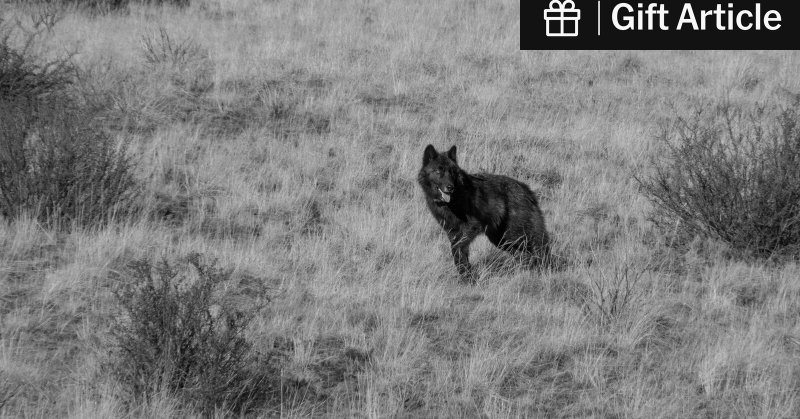
nytimes.com
Recent conflicts between wolves and people expose major shortcomings of America’s efforts to bring back predators.
2
4
7
Earlier this month, marine biologist and author @ayanaeliza spoke with Dean @ucbdavid and @theASUC senator Bella Santos about climate solutions, hope, and her New York Times bestselling book, “What If We Get It Right?" Watch their full conversation: https://t.co/kG2p7EBp5L
0
5
7
Other agencies and landowners near Fresno have successfully conducted prescribed burns, but @ESPM_Berkeley Professor Scott Stephens says the Forest Service's lack of treatments could contribute to the collapse of the Sierra Nevada ecosystem.
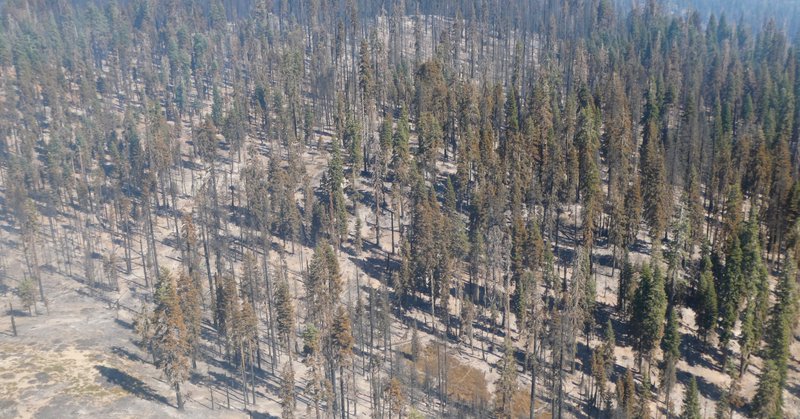
fresnoland.org
Years of inaction by the US Forest Service station near Fresno put one of the agency’s last stands of old growth forests in California on the brink of
0
0
2
Congratulations to @ESPM_Berkeley Professor Rodrigo Almeida, who was named a @calacademy fellow in recognition of his experimental and modeling work on the ecology, evolution, and management of insect-transmitted plant pathogens. https://t.co/CDSCZy9sxc
0
2
2

Fourth-year genetics and plant biology major Yaeko Long has explored the fungal world, cultivated a passion for photography, and performed with the Cal Band across California. Learn more about their UC Berkeley experience: https://t.co/fRie1tCdHw
0
1
1
Earlier this year, marine biologist Jane Lubchenco spoke at UC Berkeley and emphasized the importance of changing the narrative about the ocean from being too big to fail to endlessly bountiful. Revisit her lecture:

news.berkeley.edu
Marine ecologist Jane Lubchenco explains how the story of the ocean as endlessly bountiful and resilient has led to its degradation, and why we need to embrace a new narrative: that it's too big to...
0
1
1
A recent study led by Drew Terasaki Hart, PhD '22 @ESPM_Berkeley, and researchers in the lab of @ianjwang shows that seasonal cycles can be out of sync, even between nearby locations. The study was featured on the cover of a September issue of @Nature. https://t.co/A20CrQ6rzl
0
1
0

A comprehensive review of urban biodiversity research co-authored by Associate Professor @dronova_iryna and ESPM alumni researchers showcases how nature can support the health and wellbeing of people in cities. Learn more: https://t.co/A1RhXGNC2I
0
2
2
There's still time to register for Monday's (10/6) Albright Lecture in Conservation. Marine biologist and @UrbanOceanLab founder @ayanaeliza discusses her new book “What If We Get It Right?" and speaks with Dean @ucbdavid and @theASUC senator Bella Santos. https://t.co/JuAshtMuuj
0
1
1

Growing the crops we eat requires a massive web of infrastructure and resources, each of which can have serious downstream implications. From pesticides to groundwater contamination, the ways we make our food can damage the environment, surrounding communities and human health —
2
5
9