

MsEmilyHunt
@MsEmilyHunt1
Followers
620
Following
5K
Media
124
Statuses
2K
Today @EduPolicyInst, funded by Unbound Philanthropy and the Sequoia Trust, published new research investigating the drivers of the disadvantage gap:
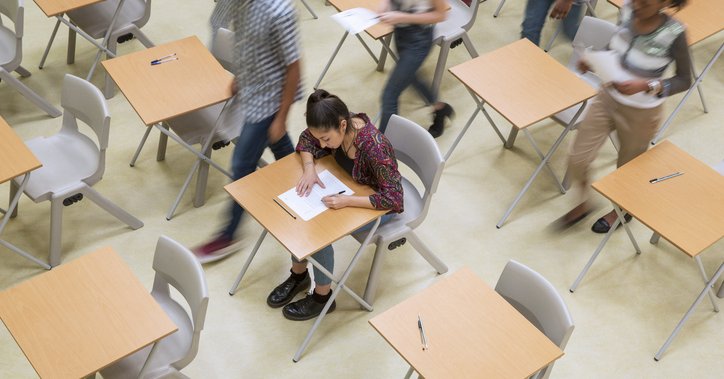
epi.org.uk
The latest report by EPI investigates the drivers of the disadvantage gap and calls on the government to address the underlying causes of school absences, as it identifies higher levels of absence to...
1
3
5
The ever brilliant @timleunig on @BBCRadio4 WATO just now on the politics and economics of forthcoming SR. It's gonna be a biggie
0
0
1

There’s been growing concern about boys falling behind in school. We previously reported that the GCSE gender gap is narrowing, but new data paints a more complex picture. In this thread, we explore what’s behind the shift—and why it may be too soon to celebrate. 🧵
3
6
14

Disadvantaged kids are absent from school more often, increasing the ‘disadvantage gap’ in results. Important research from @EduPolicyInst out today. 👇

theguardian.com
Thinktank says unauthorised absence is ‘a leading cause’ of performance gap between disadvantaged pupils and peers
0
1
2

Is there a better decomposition of what's going on with the gap in educational disadvantage? Brilliant visualisation by @DavidR0bins0n.
We find that by age 16, disadvantaged pupils are almost 19 months behind their peers. But this gap would reduce to 15 months of learning if school attendance was the same for all pupils. And when we look at changes over 2019-2023, absence fully explains the gap-widening over time
0
1
5

A really interesting piece of research
Today @EduPolicyInst, funded by Unbound Philanthropy and the Sequoia Trust, published new research investigating the drivers of the disadvantage gap:
0
2
2
@guardian @BBCr4today @BBCNews @BBCPanorama And full @EduPolicyInst report can be found here - it's a big un: https://t.co/MZGxShMgq6
epi.org.uk
The latest report by EPI investigates the drivers of the disadvantage gap and calls on the government to address the underlying causes of school absences, as it identifies higher levels of absence to...
0
0
2
Thanks to @guardian @BBCr4today @BBCNews @BBCPanorama for covering, further highlights here: https://t.co/OFTNsB5K3y
https://t.co/sBcrARPRi5
bbc.co.uk
Those from the lowest income families are now up to 19 months behind peers by the age of 16.
1
0
1
Recommendations inc: 🔹Raise early years pupil premium to match primary schl rates 🔹A national absence strategy with improved SEND identification, better MH support & more inclusive schools 🔹Child poverty strategy with autoenrolment of FSM 🔹Better teacher training in SEND
1
0
0
Key takeaways: 🔹importance of intervening early 🔹tackling root causes of absence crisis as a driver of wider edu inequalities 🔹studying with more lower-attaining peers makes it harder for disadvantaged students to catch-up 🔹drop-off in girls' progress at sec since 2019
1
0
0
The 16-19 disadvantage gap has changed little since 2019 but disadvantaged students have become less likely to continue into post-16 education
1
0
0
Another stark finding: girls’ lead at GCSE has markedly narrowed over 2019-23. This is partly a gd news story of boys catching-up but also reflects declining attainment among girls. Need more research to understand if related to girls’ declining MH & schl engagement at secondary
1
0
0
Looking at gaps for other vulnerable groups, we find that the gap is widening for the youngest pupils with SEND, with pupils on SEN support in reception year falling 0.7 months behind their peers over 2019-2023. This is one of the biggest gap-increases we find across all groups
1
0
0
We also find that disadvantaged students in schools and colleges with lower-attaining peers fall even further behind. This 'peer effect' adds over 1 month to the GCSE gap in 2023 and a third of a grade to the 16-19 gap.
1
0
0
Looking at other drivers of the gap we find that, at each stage, the biggest driver is how well a student attains at the previous stage. Nearly 60% of the 10 month gap at age 11 has already emerged by age 7. Early intervention isn't a soundbite, it's crucial to narrowing the gap
1
0
0
We find that by age 16, disadvantaged pupils are almost 19 months behind their peers. But this gap would reduce to 15 months of learning if school attendance was the same for all pupils. And when we look at changes over 2019-2023, absence fully explains the gap-widening over time
1
0
1
We've taken a detailed look at what might be driving the gap including, for the first time, the role of pupil absence. In doing so, we establish a clear link between how much children from the lowest income families attend school, and how far behind other pupils they have fallen
1
0
0
We've produced an in-depth assessment of educational inequalities in England, looking at how attainment gaps for disadvantaged children and other vulnerable groups have changed post-pandemic
1
0
0

Highlighting need to support year 8 with 6/7 as part of key takeaways from @EduPolicyInst “Cannot have a meaningful attendance strategy without addressing systemic challenges necessitating multi agency working’ #McrAttendanceConf @OneEducation @mcr_education
0
1
3

A fascinating keynote led by Emily Hunt from the @EduPolicyInst 🧠💭 Diving into the latest research on attendance, offering valuable statistics and insights to shape data-driven decisions in schools.
0
1
3