
Max Aifer
@MaxAifer
Followers
3K
Following
7K
Media
82
Statuses
578
Theorist @NormalComputing. Thermodynamic computing for efficient AI.
New York, NY
Joined July 2021
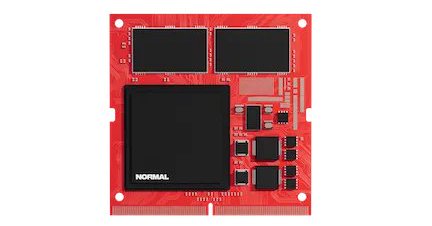
Thermodynamic computing is here. Check out our video on the first thermo computing chip.

In June, we taped out CN101, the world’s first thermodynamic computing chip. We’re now sharing early bring-up results from the first thermodynamic ASIC, showing how a physics-based approach can enable stochastic, stateful, and asynchronous computation directly in silicon.
0
0
7

i was the lead architect of this chip! extremely proud of everybody involved making CN101 a reality ❤️
In June, we taped out CN101, the world’s first thermodynamic computing chip. We’re now sharing early bring-up results from the first thermodynamic ASIC, showing how a physics-based approach can enable stochastic, stateful, and asynchronous computation directly in silicon.
13
16
411

From Scott Aaronson's slides: “ 'No fast solution to NP complete problems' feels not that dissimilar to ‘no superluminal signaling or ‘no perpetual motion’” I think this kind of maneuver has potential to lead to more useful and more precise formulations of second-law-like results
Interesting slides from Scott Aaronson on the interplay between computational complexity and physics. Anyone have a recording of the talk? https://t.co/ANPFC1nVQe
4
1
28
Interesting slides from Scott Aaronson on the interplay between computational complexity and physics. Anyone have a recording of the talk? https://t.co/ANPFC1nVQe

scottaaronson.blog
Last week, I gave the Patrick Suppes Lecture in the Columbia University Philosophy Department. Patrick Suppes was a distinguished philosopher at Stanford who (among many other things) pioneered rem…
0
14
78
Thermodynamic computing in short: move below digital abstraction layer, turn physical tradeoffs of speed ↔ energy ↔ error into a tunable knob, take advantage of AI workload symmetries to optimize encoding for noise robustness. Then crank the noise up.
0
1
14
After a long hiatus the thermo AI discussion group space is back. Starting in 30 minutes to talk about recent advances in generative modeling https://t.co/wcZ3HfUodr
14
1
11
After a long hiatus the thermo AI discussion group space is back. Starting in 30 minutes to talk about recent advances in generative modeling https://t.co/wcZ3HfUodr
0
1
12

Time-condition-free generative model that estimates a gradient which vanishes to 0 for real samples. Thus, sampling can be done using gradient descent. Interesting.
1
21
129

OK super narrow hiring post for a high-prio role (actually, there may not be anyone in the world who fits this) but if you: - have some familiarity with both RL+agents, and have gone deep on at least one - have experience with hardware engineering, device verification in
1
7
27
Me and @krzysztofwos in a late-night twitter space

5
3
17
Lattice Random Walk Discretisations of Stochastic Differential Equations Stochastic differential equations (SDEs) are foundational in statistical physics, finance, and generative modeling. Our paper introduces a new method of solving SDEs, where both time and space are
7
38
261

New paper on arXiv! And I think it's a good'un 😄 Meet the new Lattice Random Walk (LRW) discretisation for SDEs. It’s radically different from traditional methods like Euler-Maruyama (EM) in that each iteration can only move in discrete steps {-δₓ, 0, δₓ}.
3
45
336

The latex typist in this demo is so frustratingly slow. This is like watching a race between a snail and a worm.

2
0
14
Cool new thermodynamic chip from Normal Computing.
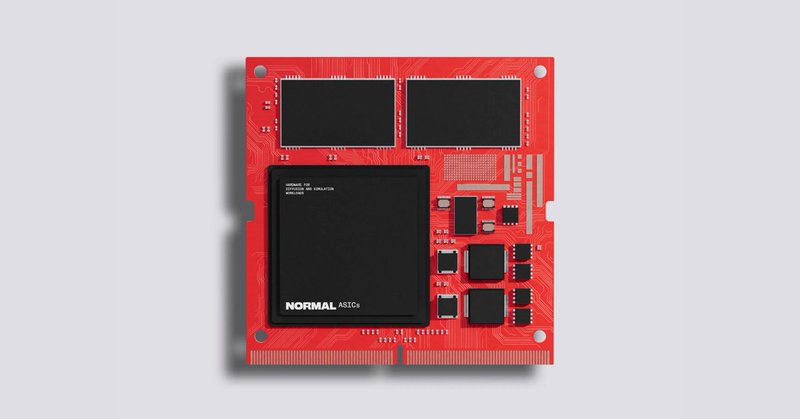
tomshardware.com
CN101 forgoes deterministic logic to train more AI at lower energy budgets
0
9
66
> “real analog stochastic thermo or digicel fake thermo” I think people can read between the lines, but just in case there’s any confusion: Analog vs digital is about how numbers are encoded as voltages. Or in other words, it’s about how we assign numerical labels to the
2
4
54