
Sandy Marshall
@MarshallSandy
Followers
1K
Following
16K
Media
462
Statuses
7K
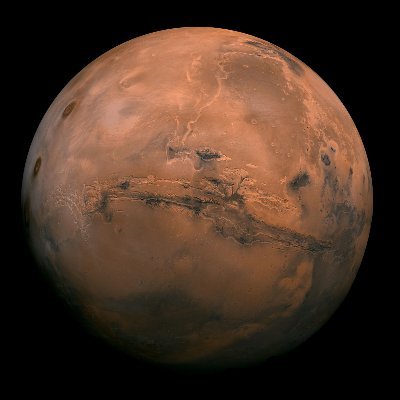
Hopefully you're taking some time off during the holidays. Our fleet of robotic explorers at Mars will have a break in their usual routine, too, but for a very different reason: about every two Earth years, the Sun blocks the view between Earth and Mars. 1/3
44
164
895

Apollo 17 reached lunar orbit on this day in history in 1972. The crew consisted of: 👨🚀 CDR Gene Cernan 👨🚀 CMP Ron Evans 👨🚀 LMP Harrison Schmitt Cernan was a veteran astronaut but it was the first spaceflight for both Evans and Schmitt. More on the mission:
17
97
584
Dec 9, 1978: Four probes released from NASA's Pioneer Venus spacecraft reach Venus's thick atmosphere, collecting valuable data during descent. Two probes survive their landing on Venus's hellish surface. One sends back data for over an hour. How understanding Venus helps us
9
66
278
This photo of Earth, dubbed the Blue Marble, was taken by the Apollo 17 crew #OTD in 1972 as they traveled to the Moon. It soon became one of the most widely-distributed photographs in history.
77
575
2K
“Fly me to the Moon. Let me play among the stars. Let me see what spring is like on a-Jupiter and Mars.” Pioneer 10 became the first spacecraft to fly by Jupiter today in 1973. 📷: Artist rendering by Rick Guidice
6
69
332
Today we salute astronauts Jim Lovell and Frank Borman who launched into orbit for Gemini VII #OTD 60 years ago. Their mission would last for 14 days—the longest crewed space flight in U.S. history until 1973—and would be part of the first rendezvous of two crewed spacecraft.
15
134
957

Does the Moon look a little extra bright tonight? It's not just you! 🌕 Tonight's full Moon is a "supermoon." It's slightly closer to Earth than average, so it appears just a bit bigger and brighter than usual. Here's how it works: https://t.co/Wmc7t6BE1A
33
200
1K
Ever wonder how we talk with our spacecraft at the Moon, Mars, and beyond? We have an array of antennas around the Earth that track them 24/7—and you can follow along as they stay in touch. Watch our Deep Space Network in real time: https://t.co/OiOiNDD046
211
676
4K
You can see Voyager 1's current position, and retrace its odyssey through the solar system, at https://t.co/mCNfUZOB0y

Voyager 1 distance check: Currently 15.79 billion miles from Earth. ✅ This time next year, Voyager 1 will be one light-DAY away – meaning it will take light a whole 24 hours to travel between Earth and the spacecraft. For comparison: Mars is usually ~12 light-MINUTES from
33
432
2K
“First light” for NASA’s ESCAPADE mission! 🚀 📸 These images, taken on Nov. 21, 2025, are ESCAPADE’s “first light,” or first images taken from space. Just about a week after launch, one of the two Mars-bound spacecraft took these images as part of the commissioning process,
52
224
1K

Artemis II is stacked, communication systems have been tested, and now we are gearing up for a launch day dress rehearsal. Learn more about our next steps as we prepare to launch and fly our first crewed mission under the Artemis campaign >> https://t.co/IsqU3fRi5Y
116
498
3K

Comets Lemmon and Swan soar millions of miles away from Earth beaming with auroras and airglow in these celestial images from the orbital outpost captured in October.
95
332
1K
The Mars rovers keep right on rolling.🛞 See the latest updates from Perseverance: https://t.co/bOsKIJndFW and Curiosity: https://t.co/I9F8jCZL5b
50
276
2K
Artemis I's Orion spacecraft captured this view of our planet from 57,000 miles away #OTD in 2022. It was the first human-rated spacecraft to fly around the Moon since Apollo 17, nearly 50 years earlier. We can't wait to see the Artemis II crew's photos!
40
200
1K
Launch success 🚀👏 Teams have received full acquisition of signal from Sentinel-6B, indicating that we are communicating with the satellite and it is functioning nominally. Congratulations to the Sentinel-6B mission teams! https://t.co/lMUhFdarwD
Liftoff! The latest in a long line of satellites to monitor sea level change, Sentinel-6B, successfully launched at 12:21am ET (0521 UTC) on Monday, Nov. 17 from Vandenberg Space Force Base. 🚀🌊
43
168
1K

Launching tonight: Sentinel-6B 🛰️ 🌊 This new satellite will extend a record of 30+ years of sea level data to improve weather forecasts, keep ships safe at sea, and protect coastal communities.
19
166
647
The ocean affects our daily life – through weather, shipping, even national security. 🌊 Launching tonight, Sentinel-6B will measure sea levels across 90% of Earth’s ocean to improve forecasts, keep ships safe at sea, and protect coastal communities.
8
55
245
On this day in 1976, the Viking lander's primary mission ended, though the spacecraft continued to operate for another six years. Take a closer look at the technology that made Viking a success: https://t.co/HcODqo6W4p
6
46
216
LIVE: Sentinel-6B, a new satellite that will help measure Earth's sea levels, is set to launch soon! Listen to agency leaders and mission partners discuss the mission and answer media questions: https://t.co/fDaLzMmRp9
317
1K
5K

Saw the northern lights this week? Report your aurora sightings with @NASA's Aurorasaurus project. Your data helps scientists track auroras in real time and improve space weather forecasts: https://t.co/8j3dcJTFSC
11
96
477