

NASA Solar System
@NASASolarSystem
Followers
3M
Following
10K
Media
3K
Statuses
9K
Join us as we explore the worlds of our solar system.
Milky Way Galaxy
Joined June 2008
How does NASA prepare to explore the Moon, Mars and Ocean Worlds? For scientists like Bethany Theiling, it starts by venturing into Earth’s most extreme spots. Join NASA Science Live on Dec. 10 at 3pm ET & ask your questions using #AskNASA! ➡️ https://t.co/i18F7dJvwe
20
118
425
NASA's Galileo probe arrived at Jupiter, 30 years ago on Dec 7, 1995, becoming the first to orbit the planet. More than 6 years after the mission had been launched from space shuttle Atlantis, it was ready to get to work exploring the Jupiter system in detail! 📷 Jupiter's 4
27
246
1K
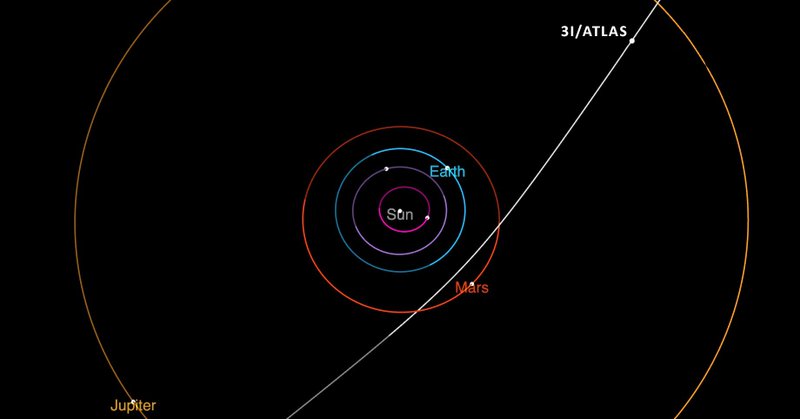
More about comet 3I/ATLAS and what we're learning so far:
science.nasa.gov
NASA missions are working together to track and study this rare, interstellar comet as it passes through our solar system.
5
12
84
Interstellar comet updates ☄️ On Nov. 30, the @NASAHubble space telescope captured a new look at comet 3I/ATLAS: https://t.co/54BBApP1pr Our #MissionToPsyche asteroid explorer also joined the effort to track the comet’s path: https://t.co/g4HPJ9CfvV
24
131
694

Small businesses are stretched thin this season – health coverage shouldn’t add to the burden. Many can’t afford plans & must send workers to Obamacare. Congress should strengthen the small business tax credit so employers can compete, grow & give workers coverage they deserve.
0
1
3

BREAKING: @NASA has selected two science instruments, designed for #Artemis IV astronauts to set up on the lunar surface, that will advance space exploration. ⬇️ 🔗: https://t.co/erYQtyFTxO
89
276
2K
Does the Moon look a little extra bright tonight? It's not just you! 🌕 Tonight's full Moon is a "supermoon." It's slightly closer to Earth than average, so it appears just a bit bigger and brighter than usual. Here's how it works: https://t.co/Wmc7t6BE1A
33
203
1K

Ever wonder how we talk with our spacecraft at the Moon, Mars, and beyond? We have an array of antennas around the Earth that track them 24/7—and you can follow along as they stay in touch. Watch our Deep Space Network in real time: https://t.co/OiOiNDD046
210
719
4K
More exciting news today from NASA's OSIRIS-REx mission!

A new paper led by a @NASA_Johnson scientist reveals asteroid Bennu has six times the amount of supernova dust than any other astromaterial studied before. Read more on what we’ve learned and how it’s helping us understand Bennu’s formation: https://t.co/7xWAqR2uSt
9
49
491
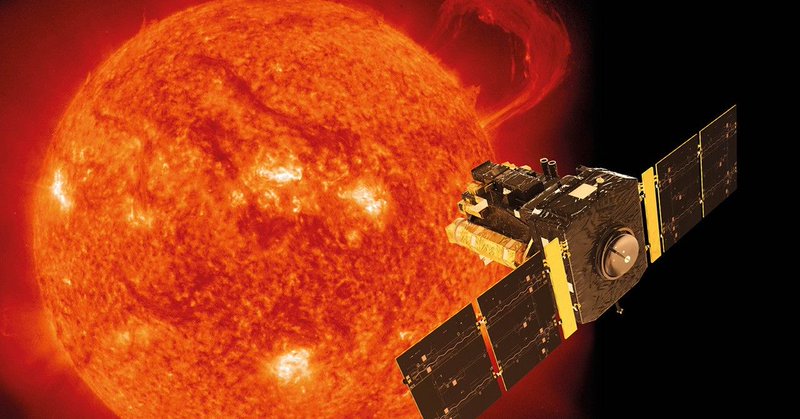
Happy 30th to ESA/NASA’s SOHO — the Sun-watcher that never blinks! ☀️👀🎉 Launched on Dec. 2, 1995, the SOHO spacecraft has stood lookout between Earth and the Sun, catching solar storms, spotting 5,000+ comets, tracking nearly three full solar cycles, and revealing everything
science.nasa.gov
As ESA (European Space Agency) and NASA’s SOHO (Solar and Heliospheric Observatory) turns 30 on Tuesday, a lot has changed in how we understand our Sun
16
96
430
This discovery of ribose and other chemical building blocks of life in Bennu wouldn’t have been possible without the strong international partnership between scientists at @NASAGoddard, @JAXA_En, and multiple universities in Japan.
44
172
5K
Because OSIRIS-REx samples were collected and analyzed free of earthly contamination, these findings give strong evidence that crucial ingredients for life’s chemistry were readily available on asteroids throughout the solar system.
22
410
6K
While ribose was present, deoxyribose (the DNA sugar) was not. This suggests RNA may have been more prevalent than DNA in the early solar system – supporting the “RNA world” hypothesis that DNA was not necessary for the origin of life.
26
496
8K
Scientists identified ribose (used in RNA) and – for the first time in any extraterrestrial sample – glucose, a major energy source for life. These sugars join nucleobases and phosphates previously found, demonstrating the full suite of RNA building blocks were present on the
272
4K
34K
BREAKING: Sugars essential for life have been found in pristine asteroid Bennu samples collected by NASA’s OSIRIS-REx spacecraft. Combined with previous detections of amino acids and nucleobases, we see that life’s ingredients were widespread throughout the solar system:
745
11K
51K
Hey stargazers, what's up in December? ✨ - Dec. 7: Moon and Jupiter conjunction - Dec. 13-14: Geminid meteor shower peak - Dec. 19: Comet 3I/ATLAS closest approach to Earth More: https://t.co/CF8UX7ZWxK
30
191
792
Planets are born in dusty disks around stars, and you can help find them. Uncover clues to how planetary systems form, evolve, and end with the Disk Detective Citizen Science project. 🔗: https://t.co/A8Xma39KBt
17
150
648
This Thanksgiving, we're grateful for you. 💛 The Wolf-Rayet stars seen here by @NASAWebb are surrounded by shells of dust. We hope you find yourself wrapped in the warmth of love and support today, too.
23
122
618
You can see Voyager 1's current position, and retrace its odyssey through the solar system, at https://t.co/mCNfUZOB0y

Voyager 1 distance check: Currently 15.79 billion miles from Earth. ✅ This time next year, Voyager 1 will be one light-DAY away – meaning it will take light a whole 24 hours to travel between Earth and the spacecraft. For comparison: Mars is usually ~12 light-MINUTES from
33
439
2K
We love a good cameo 📹 En route to study Jupiter's icy moon Europa, NASA’s Europa Clipper spacecraft captured this image of a starfield that includes the planet Uranus from a distance of about 2 billion miles (3.2 billion kilometers) away! Read more about it here:
19
95
490