

Miquel Llompart
@M_Llompart
Followers
874
Following
3K
Media
53
Statuses
1K
Phonetician-Psycholinguist | 'Beatriz Galindo' Research Fellow at @UPFBarcelona | Postdoc: @UniFAU, PhD: @LMU_Muenchen, MA: @uarizona | Hobbies: ⚽️🏂🏀🎮🍺☕️
Barcelona
Joined July 2015
Huge win for perceptual learning/recalibration fans: just learned my 2024 paper was named Journal of Phonetics' “Best Early Career Scholar’s Article of the Year.” It asks how sound difficulty + variable input shape perceptual flexibility in L2 listening. https://t.co/Y0d3UcdP9J
1
2
9
Hear, hear! 😃
"the ISL effects were most pronounced early on, whereas the [explicit learning] effects increased over time." Kenanidis et al. (in press). Cognitive abilities underlying the earliest stages of second language acquisition: an artificial language study https://t.co/Jcmm5tzNft
0
0
0
🚨 Two AEI calls open soon! 🔹 Ramon y Cajal 2025 (PhD 2015–2023, 5 yrs + funds) 🔹 Juan de la Cierva 2025 (PhD 2024–2025, 2 yrs + funds) Get in touch if you’d like to explore applying through UPF! https://t.co/l9TwPwl00P
0
0
1

“2nd Call for Papers: LabPhon 20 will be held in Montréal, Québec, Canada from June 26–28, 2026, with pre-conference workshops and a keynote lecture on June 25” https://t.co/GasWezWuVw
0
5
14

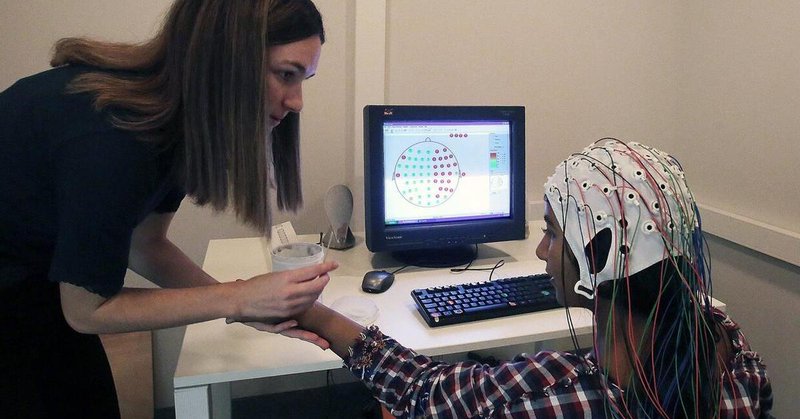
🗣️@EffieKapnoula (@bcbl_):"Cuando dormimos, una parte de nuestro cerebro reactiva las memorias recientes y hace que aprendamos información nueva". 🧠El centro está desarrollando un estudio y busca personas de entre 18 y 40 años. 🔴#Konekta con #OndaVasca
https://t.co/mM8qgcjJVq
ondavasca.com
Escucha el podcast Efthymia Kapnoula, BCBL: "Cuando dormimos, una parte de nuestro cerebro reactiva las memorias recientes y hace que aprendamos información nueva" y disfruta...
0
2
2

📌 Club de lectura UPF de traduccions al català 📚📚📚 🗓️ Curs 2025-2026 https://t.co/xZ3M3FkPvj
2
12
46

✨ New OASIS Summary! ✨ ▶️Sound identification vs. word recognition in a second language https://t.co/Y6awlTD3a0
0
2
1
It's out!! 🕺💃 Link below: https://t.co/8Ojej86GzC

cambridge.org
Revisiting the link between second-language sound identification and word recognition with an eye on methodological similarity
You can hear the sounds, but can you distinguish the words? 🤔 Here's the postprint version of our new, soon-to-be SSLA paper! https://t.co/VtHCdUBlzq Celia Gorba, Pilar Prieto and I revisit the tricky link between L2 sound & word recognition—with a fresh look at methods
0
0
6

SAVE THE DATE! Join us in Lisbon next year for the International Word Processing Conference (6–8 July 2026)! WoProc continues the legacy of MoProc―a conference that, since 1999, has brought together researchers working on morphological processing. https://t.co/qaw3BE0j0F
woproc2026.com
Join WoProc 2026, the 13th International Word Processing Conference, in Lisbon, Portugal, from 6–8 July 2026.
1
5
14
The second paper of my superstar supervisee, Sara Fernández Santos, is out in @LangCognition. Love this work because it incorporates an acoustic analysis and speech perception tasks to the study of relative-clause processing 🔥⚡️🧐 https://t.co/zB4sx0iOhz
0
2
9

Expected, but now confirmed: if available, the speech of other children may play an important role in language acquisition https://t.co/IaLGTEyXxx ☝️also: child-directed speech and child speech share acoustic and structural features
0
3
23

There is a growing body of research on developmental language disorder (#DLD), but very few studies have focused on the role of cognitive abilities in adulthood. https://t.co/rODpquGXvf
@ashleyrblake @SIGPerspectives #DevLangDis

pubs.asha.org
Purpose: There is a growing body of research on developmental language disorder (DLD), but very few studies have focused on the role of cognitive...
0
2
5
I am also pleased to share the second study of my PhD exploring language and cognition in adults with and without DLD, with Prof. Ewa Dabrowska and Dr @M_Llompart - now published in the Journal of Speech, Language, and Hearing Research: #DevLangDis

growkudos.com
This study explored how different cognitive abilities support language in adults with and without Developmental Language Disorder (DLD). Sixty adults—30 with DLD and 30 without—completed a series of...
0
6
20
Day 2 at the LSSL (no pic this time) 🧠Spoken word recognition in bilinguals: interaction between languages. What makes bilingual spoken word recognition different from monolingual spoken word recognition? Phonological overlap, cognate words and cross-language activation.
1
0
9
Day 1 at the LSSL in the books! 🧠 Spoken word recognition: what is it, what do we know and how did we get here? Characteristics of spoken language. Models of (L1) spoken word recognition: a historical overview. Useful experimental paradigms and current state-of-the-art
0
2
22
Our new article with @jgeller_phd, Julia Drouin & @SarahColby12 on webcam eye tracking is out now! 🔗 https://t.co/Maft8evPfA ⭐️All materials are open access, and you’ll get code to analyze your @GorillaPsyc eye tracking data in no time! (Free full-text for 50 days!)
0
11
18
You can hear the sounds, but can you distinguish the words? 🤔 Here's the postprint version of our new, soon-to-be SSLA paper! https://t.co/VtHCdUBlzq Celia Gorba, Pilar Prieto and I revisit the tricky link between L2 sound & word recognition—with a fresh look at methods
0
1
14
New paper with Chao Zhou in BLC: https://t.co/lmTH3HpmwT What makes lexical tones challenging for L2 learners? Previous studies suggest that phonological universals are at play... In our perceptual study, we found little evidence for these universals.

cambridge.org
L2 difficulties in the perception of Mandarin tones: Phonological universals or domain-general aptitude?
2
3
9

Ja tenim cartell per a l'EDELC 2025 de Berlín! Aviat obrirem les inscripcions. Estigueu atents! 🔗 https://t.co/UWcfUpa20s
@UABFilcat @IRLlull @HumboldtUni @filcatUB @FiloCatUV @FilCatLinGenUIB @Catalana_UA @IEBalearics @TraduccioUPF
0
10
9