

Julius Oelsmann
@JuliusOelsmann
Followers
72
Following
71
Media
2
Statuses
16
Sea Level Science + Oceanography + Geodesy + Geocentrist @TU_Muenchen @DgfiTum and @Tulane
Munich
Joined August 2020
We have developed a probabilistic reconstruction of vertical land motion (VLM) from 1995 to 2020, which reveals the effects of spatially and temporally varying vertical land motion on relative sea level on a global scale ( https://t.co/dDaDqRXTjT).
2
16
61

*** Media Coverage *** I have the opportunity to contribute to this @BBCWorld article on #coastal #sinking cities, along with several other experts. Very informative with eye-opening illustrations! @EOI_lab @HIRSlab @VT_Science @UNUINWEH link: https://t.co/gRkZD9LaKQ
0
3
20

In Savannah, Georgia, small businesses and city streets are washed in floods even on bright, sunny days. That’s because sea levels in the U.S. South have risen twice as fast as the global average over the last 14 years.
17
12
26
Therefore, future community-based approaches are needed to improve the observational database, to enhance process understanding, and to facilitate robust projections of relative sea-level change at regional to local scales (e.g., @IPLSubsidence).
0
0
0
These results are based on the assumption that the present-day variability is representative for future changes. However, our results reinforce that it is not clear that VLM will continue to be linear and that the observed variability is a robust predictor of future behaviour.
1
0
0
Separating the linear from the non-linear motion is critical for projecting vertical land motion into the past and into the future. Accounting for non-linear vertical land motion increases uncertainties in relative sea level change projections (to2150) by up to 1 m.
1
0
0
We use a Bayesian principal component analysis to estimate linear trends, common modes of variability and station-dependent noise, based on data from 11,000 GNSS stations, tide gauges and satellite altimetry.
1
0
0
Have you considered submitting your work to the sea-level session at EGU24? CL4.9 - Understanding sea level changes: global to local, from past to future https://t.co/N9giAvzKFi with @AimeeSlangen, @CaroMLCamargo, Svetlana Jevrejeva and @mpclimate
0
0
3

Will the #AMOC collapse by 2025? Here’s what we know from direct observations (since 2004). Image from Srokosz & Bryden (2015) https://t.co/qy1SNSwN6P A 🧵
40
526
1K
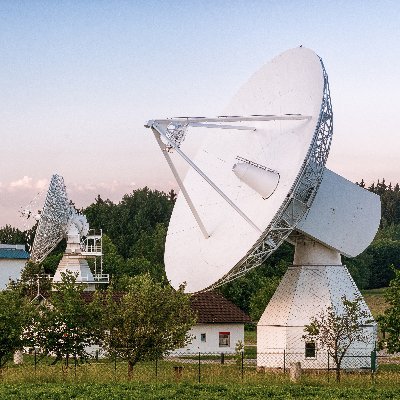
DiscoTimeS: Novel Bayesian approach detects discontinuities & trend changes in geophysical time series. A study applying DiscoTimeS to #GNSS and #altimetry data is published in J. #Geodesy ( https://t.co/ZIofCfuKbM). DiscoTimeS is available on GitHub ( https://t.co/MbNcALvFv5).
0
6
6
What are the rates of contemporary absolute sea level change in the Baltic Sea? Join us tomorrow at 15h30 at #vEGU21 CL2.12 to discuss our investigations on the impact of atmospheric forcing on regional sea level variability using data from @Baltic_SEAL, lead by @m_passaro.
1
1
5

Super proud of this publication with @backeb. The result of several years of hard work.

Excited to share the publication based on our Search and Rescue research and developments. We combine the use of @CMEMS_EU ocean and @ECMWF wind data to predict the trajectories of objects lost at sea. For more information, please contact us! https://t.co/Zpn7sNaC3y
0
1
4
Check out our use case!
. @CopernicusEU #Marine #UseCase: This #ocean model, developed by @TU_Muenchen, uses Copernicus Marine #data to investigate the effect of hatchling swimming behaviour on hatchling dispersal and survival probability for the🐢turtles in the Indian Ocean🌊. https://t.co/rOjZgUrvu1
0
2
4

Doing research opens doors to many new opportunities and discoveries. Check out the doors the #BalticRegionalInitiative #EO4society Baltic SEAL team opened, in our (just released) scientific roadmap. Available at https://t.co/6jtPC4Hgo8
1
2
2