
Guilherme Harada
@HaradaGuilherme
Followers
746
Following
476
Media
5
Statuses
123
Medical Oncologist at Hospital Sírio-Libanês, Brazil Former Advanced Oncology Fellow - Early Drug Development, @MSKCancerCenter
Joined February 2019
🚨“Rare” molecular subtypes of lung cancer: why should we care? 📝In this review out @NatRevClinOncol, we highlight that many rare molecular subtypes of lung cancer individually account for a substantial number of patients diagnosed around the world.🧵 https://t.co/8l8h4NhwfJ
2
18
76
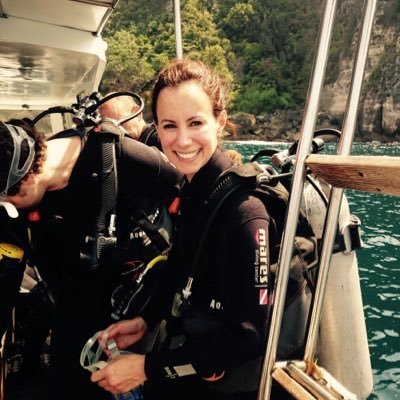
What an absolute pleasure to share that stage with you all at #WCLC25 @IASLC @CespedesMontse @HaradaGuilherme @MaraverLab @triparnasen 💫

Thanks to the #WCLC25 @IASLC for the opportunity to give a talk alongside and amazing lineup of speakers and chairs @MaraverLab @triparnasen #carolinedive @HaradaGuilherme @AyaHelali
0
1
8
Join us tomorrow at the ES02 Preclinical model and therapeutic targets session! Chairs @triparnasen @CespedesMontse talks by @HaradaGuilherme @EsraAkbay_ #RKatayama @MihaelaAngel0va #WCLC25 @IASLC #lungcancer
0
4
7
🫁Honored to have contributed to this study Due to its alternative type II binding mode and its broad availability, cabozantinib can be particularly useful in the treatment of resistance to type I MET TKIs. @alexdrilon
@MSK_DeptOfMed
https://t.co/4nmCGNXGhM

jtocrr.org
Only type I MET tyrosine kinase inhibitors (TKIs) are approved for treating MET-altered NSCLCs. Preclinically, type II TKIs, such as cabozantinib, can rescue progression on type I TKIs. This phase 2...

In this phase II trial evaluating the activity of #cabozantinib, Harada et al. demonstrated that this treatment could benefit pts w MET-altered lung cancers previously treated with type I MET TKIs. Read more: https://t.co/3AcvSj59Wc
4
1
27

How is EGFR-mutant #NSCLC managed in Brazil? In this episode of #LungCancerConsidered, @clarissamathias moderates a discussion with @HaradaGuilherme and Dr. William N. William in Portuguese on treatment approaches for EGFR+ NSCLC. 🎧 Listen now: https://t.co/M03orHoOiu
0
12
22
Phase II study of cabozantinib in #MET altered lung cancer @JTOonline from @HaradaGuilherme @alexdrilon (n=28). RR 20% and 4/5 responses were previously treated with type I MET TKI. PFS 4.5m, OS 7.2m. https://t.co/aqKl04Jpy5
jtocrr.org
Only type I MET tyrosine kinase inhibitors (TKIs) are approved for treating MET-altered NSCLCs. Preclinically, type II TKIs, such as cabozantinib, can rescue progression on type I TKIs. This phase 2...
0
2
20
RT @NarjustFlorezMD: It has been a long journey BUT now I Comfortable wearing yellow I stage. Dare to be different, dare to be YOU! @L…
0
2
0
In the era of Project Optimus, expeditiousness needs to be preserved for dose finding in rare cancers. Common cancers now contain multiple rare genomic and proteomic subsets, underscoring the importance of this mindset. @YoninaMG @AlexiaIasonos

Now online in @CD_AACR, a special commentary for #ASCO24: Optimus-Era Dose Finding for Rare Cancers - by @YoninaMG, Sean Devlin, @AlexiaIasonos, and @alexdrilon
https://t.co/FygmyVUjnY
@MSKCancerCenter
2
2
23

Glad to share our paper just published in @CD_AACR that characterizes mutations in the MET kinase domain in lung cancer and other malignancies from a clinical, preclinical and structural point of view. https://t.co/tDVkanNKwe

aacrjournals.org
Activating MET tyrosine kinase domain mutations were detected across diverse cancer types and showed sensitivity to several MET inhibitors, suggesting that this newly characterized molecular cancer...
4
18
46
🧐Impacto das variantes de ALK e co-mutações nos padrões de resistência adquirida e sobrevida. Mutações em TP53 e perda de CDKN2A/B foram as mais frequentes e associadas com pior SG. EML4-ALK v3 foi associada com pior SLP mas não com SG.@HaradaGuilherme
https://t.co/tjB5cedpBf

pubmed.ncbi.nlm.nih.gov
In a large-scale, contemporary cohort of patients with advanced ALK-positive NSCLC, we evaluated molecular characteristics and their impact on acquired resistance mutations and clinical outcomes. Our...
0
2
4

It is a pleasure to introduce to you the new board and steering committee of the LACOG Lung Group. The new formation of the group will run from 2023 to 2025, and will continue with the goal of developing new clinical and epidemiological studies with a focus on lung tumors.
0
6
11

📣Neste vídeo, Dr. Guilherme Harada, comenta os dados do estudo DESTINY-PanTumor01, que mostrou que T-DXd demonstra boa atividade antitumoral dada boas taxas e sustentação de resposta objetiva. Confira🔽 https://t.co/wT6yxddPqP
#MDHealth #OncologiaBrasil #ESMO2023 #oncologia
0
4
28
#ESMO23 Phase II study of cabozantinib in #MET altered (mostly ex14) NSCLC (85% post MET TKI). Cabo is a type II inhibitor. RR 17%, mPFS 6.3m. 67% dose reduction but some very durable responses. Great work Dr. @HaradaGuilherme @alexdrilon
0
4
16

Great presentation by Paola Roa from the Cocco lab about the preclinical activity of zurletrectinib, a novel next-gen TRK inhibitor at the 2023 AACR molecular targets and cancer therapeutics conference in Boston! @EmilianoCocco2 @SylvesterCancer
0
3
30
📣Vem aí Agnostic Talks! Nesta primeira sessão, Dr. Guilherme Harada e Dr. Marcelo Corassa comentarão os conceitos abordados nas terapias agnosticadas, trazendo experiências e tendências sobre o assunto.🧪 #MDHealth #OncologiaBrasil #oncologia #terapia
0
3
9
What an honor to have you here! Thank you for joining us!

⭐️Amazing time⭐️ with my stellar thoracic med onc colleagues discussing #NSCLC treatment @HaradaGuilherme @MarceloCorassa in Brazil 🇧🇷
0
1
16
📣Não perca a cobertura que realizaremos no Congresso ESMO® 2023! 🔬Acompanhe nossas redes sociais e site para as principais atualizações sobre o Congresso ESMO® 2023. #MDHealth #Oncologiabrasil #ESMO2023 #Oncologia #news #novidades
0
2
2

#molecular alterations in #nsclc #lcsm more targets more effective therapies #pathologist and #oncologist together against cancer @HaradaGuilherme
0
2
5