
Lin Guan
@GuanSuns
Followers
54
Following
35
Media
10
Statuses
35
Research Scientist at Meta GenAI | PhD@ASU, BS@UT Austin | Building intelligent agents by learning from human feedback and harnessing large pre-trained models
Joined February 2017
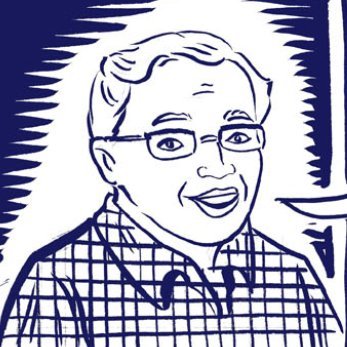
📢 Yochanite Lin Guan (@GuanSuns; https://t.co/o8dAhpHaJo), currently a Research Scientist with @Meta GenAI, will be defending his @SCAI_ASU PhD dissertation tomorrow 10/21 👇. He developed several 🔥 techniques for taming the notorious sample complexity of #RL systems..
2
2
38
This is a joint work with @yfzhoucs @YantianZha @asurobot and @rao2z 👉Paper: https://t.co/resLGF8aIC 🎞️ Homepage:
openreview.net
Large-scale generative models are shown to be useful for sampling meaningful candidate solutions, yet they often overlook task constraints and user preferences. Their full power is better harnessed...
0
1
3
This work is also part of an ongoing effort in our lab (supervised by @rao2z ) to identify constructive roles that LLMs/VLMs can serve in planning tasks. 👉 Relevant paper:

arxiv.org
There is considerable confusion about the role of Large Language Models (LLMs) in planning and reasoning tasks. On one side are over-optimistic claims that LLMs can indeed do these tasks with just...
0
0
1
Our experiment also unveils the weakness of VLM critics — GPT-4V's critiques contain a considerable amount of hallucinated information, mainly due to limited visual-grounding capability. In the paper, we discussed how to mitigate this with extra "grounding feedback"
1
0
1
To understand the capability and failure mode of VLM "style" critics, we collected a video benchmark that encompasses diverse behaviors which are goal-reaching but undesirable. We show that GPT-4V can identify a significant portion of undesirability (high recall rate)
1
0
1
While LLMs cannot verify the correctness of agent behaviors, they can be good at capturing the "style" of desirable behaviors. We set out to find the effectiveness of VLM critics of undesirable behaviors.
1
1
14

Robots now understand decisions via SERLfD – Self-Explanation for Reinforcement Learning from Demonstrations, transcending traditional robot learning from human demos. Check out our article and slides; find more insights at poster 409 during AAAI-24 on 2/23, 7-9 PM!🤖🌐 #AAAI2024
1
1
9
📢📢 Come stop by #AAAI2024 poster spots 644 & 645 (the very last spots) this evening to hear me explain the neat work of 👉@ZahraZ__ & @sailiks on explaining allocations to humans 👉@YantianZha & @GuanSuns on using self explanations to learn from ambiguous demonstrations
1
8
23
📣Chalk it to mad masochism, but we will be updating and reprising our tutorial on LLMs and Planning at #AAAI2024 Vancouver, BC. (Wed Feb 21st, 2-6PM 👉 https://t.co/oiWYEhuWdV. We are told that ~300 folks signed up already..😱). w/ @karthikv792 @GuanSuns
0
7
42
📢Don't miss out our poster session tomorrow (Dec 12) starting at 5:15 p.m. CST in the Great Hall & Hall B1+B2 #1525 This is a joint work with @karthikv792 @sarath_ssreedh and @rao2z Paper homepage: https://t.co/uT8KNkuv3y Presentation at NeurIPS 2023:
0
0
0
📢 Our #ICLR2023 paper on learning and leveraging relative behavioral attributes to tame the sample complexity of #RLHF (joint with @karthikv792 & @rao2z ) is now featured on @mtlaiethics ! 1/ 👉

montrealethics.ai
🔬 Research Summary by Lin Guan, a Ph.D. student at the School of Computing and Augmented Intelligence at Arizona State University, working at the Yochan Lab (AI Lab) under the supervision of Dr.
2
2
2
📢📢 Our #ICAPS2023 tutorial "On the role of Large Language Models in Planning"--all 3 hours of it--presented at @ICAPSConference in Praha this Monday, is now online. 👉 https://t.co/sS5gnxuy9g If you want to know whether or not LLMs can plan, this is just the ticket.. 1/
2
16
71
📢 Although LLMs suck at the search needed to generate executable plans, they do have some approx. planning knowledge . Can we tease this out as world/domain models, and use them to drive planning? (w/ @GuanSuns, @karthikv792 & @sarath_ssreedh) 1/ 👉 https://t.co/aAK92sNl2B
1
10
26
Move over Savanna 🐘 and Forest 🐘! Our #ICLR2023 paper brings in a brand new 🐘 to Rwanda : The RLHF 🐘 👇
In our #ICLR2023 paper, we acknowledge the 🐘 in the RLHF room: By limiting humans to communicate their preferences only through 👍👎 on trajectories, RLHF is unbearably inefficient. Human preferences can be expressed in richer quasi-symbolic ways even for tacit knowledge tasks!
0
2
6
Our ICLR 2023 paper (with @karthikv792 and @rao2z) enables users to control agents through relative attributes like bigger step size in tasks that involve both tacit and explicit knowledge. We achieve this by conditioning preference-based reward on quasi-symbolic **concepts**
1
1
2