

Emily Trunnell PhD 🐀
@ERoseEngland
Followers
1K
Following
23K
Media
173
Statuses
5K
neuroscientist 🧠 advocate for animal rights 🐀 typo purveyor ⌨️ she/her/hers *all tweets/RTs/likes reflect my views only*
Joined February 2014

DC/MD/VA friends! @MelanieDGKaplan is hitting the road with LAB DOG 🐾—starting tonight at Northeast Neighborhood Library (@dcpl) at 6:30 pm with Mary Hollingsworth. More stops ahead: Fairfax Station (Dec 17), Woodbridge (Jan 3), Annapolis (Jan 4), Frederick (Jan 22), Takoma
0
2
2
Congrats to @RevaliaBio on its $26.7 million @ARPA_H grant! "Revalia will lead the effort to build advanced AI-driven models trained on Human Data Trials, living systems derived from donated human organs, organ-on-chip platforms, and multimodal datasets." Read more:
0
2
5
The Fall 2025 edition of SAO Quarterly is landing in inboxes this week! Want insider updates on our work, upcoming events, funding opportunities, and must-read articles—all in one place? 🙅 No spam. ✅ Just 4 content-packed emails per year. "This is an amazing newsletter!!!" –
0
3
5
New website to bookmark! 🔖 The Biomedical models Hub (BimmoH) is the largest public database of biomedical research papers using human biology-based models to date. You can search by model, clinical condition, disease, pathophysiology, anatomy, histology, cell types, and more.
0
2
5
In November, @SAOscience submitted comments on @NIH’s Draft Priorities for the Muscular Dystrophy Coordinating Committee (MDCC) Action Plan. In our statement, we urged the committee to fully embrace human-based research and align with NIH initiatives expanding funding, training,
0
1
4

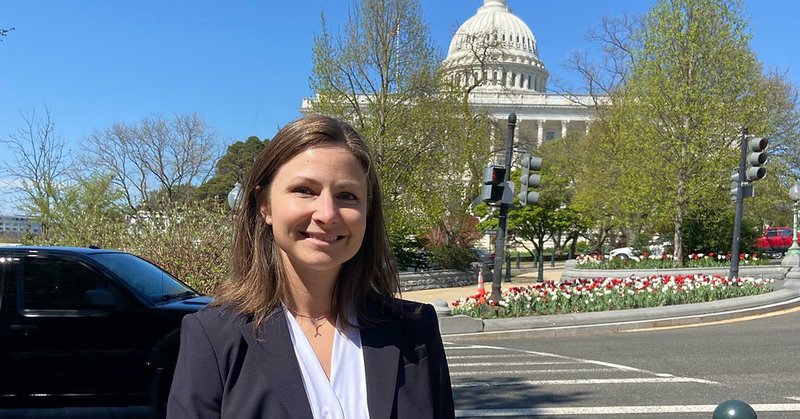
When making a plan for her PhD project, Trunnell recalls her professor telling her, “you’re going to want to do animal work because that’s what journals want to publish. You’ll have much less luck publishing papers if they’re only in vitro.” https://t.co/AgCmH98iHv
whenwejustify.org
During my first year in the neuroscience Ph.D. Program, I sat down with my major professor to decide what kind of experiments I would do—essentially to plan out the next four years of my life. Our...
1
1
2
When you were starting your scientific career, did you feel pressured to conduct animal experiments? Or maybe you still do? COLAAB founding member @ERoseEngland shares her experience as a PhD student in this blog for Justify. #phdlife #phdchat
1
1
1
A new study by @UCD_Cancer researchers reveals why experiments on rhesus macaques aren't a good fit for certain cancer immunotherapy studies. "The study’s new findings show that rhesus macaques—but not humans—shed TIGIT from immune cell surfaces when exposed to plasmin ... The
1
6
13
For decades, communities devastated by HIV and AIDS fought tirelessly just to be heard. They marched, they protested, they demanded research funding and accountability—often in the face of stigma and indifference. Their courage changed the world, forcing governments and
1
4
5
"Given all the progress that has been made in recent years, it’s not too hard to imagine a future without animal testing." - @JessHamzelou for @techreview
https://t.co/OCox67pjHO

technologyreview.com
Advanced in organs on chips, digital twins, and AI are ushering in a new era of research and drug development.
0
2
4
🐠 In the @voxdotcom article, "The surprisingly profound debate over whether fish feel pain," @mbolotnikova writes, "[m]aybe you suspect there isn’t much to fish — and you could hardly be blamed for it. For centuries, Western natural philosophy maligned sea creatures as
0
4
8
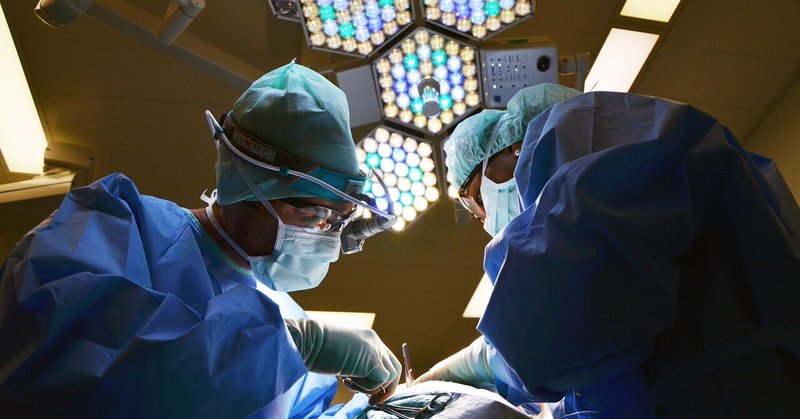
💡🚨 Thinking of publishing a paper on the use of animals in medical or surgical training? In a new online resource, we've compiled a list of journals that publish papers on this topic. We'll be keeping the list updated, so please share any suggestions for journals we missed! So
scienceadvancement.org
Companies and papers describing non-animal simulation models for surgical and procedural medical training
0
2
7
We're excited @NIH has acknowledged that a bias might exist. Now it’s time to get to work understanding what it looks like, how it impacts funding rates for researchers using NAMs and other nonanimal methods, and take steps toward mitigation.
0
1
2
We summarized our analysis of @NIH-funded neuroscience research: study sections dominated by experts in animal-based research, correlating with fewer funded non-animal projects and underscoring the need for diverse expertise in review groups. https://t.co/p7hwNBXzCD

biorxiv.org
Despite increased enthusiasm for research methods that can replace the use of animals, the numbers of animals used in science and the funding for animal-based projects remain high. Our work addresses...
1
1
2
Last week, we offered our assistance to @NIHDirector_Jay in advancing @NIH’s goal of reforming grant review to better prioritize human-based research. We also recommended additional steps the agency could take to further mitigate #AnimalMethodsBias in the review process.
1
3
6
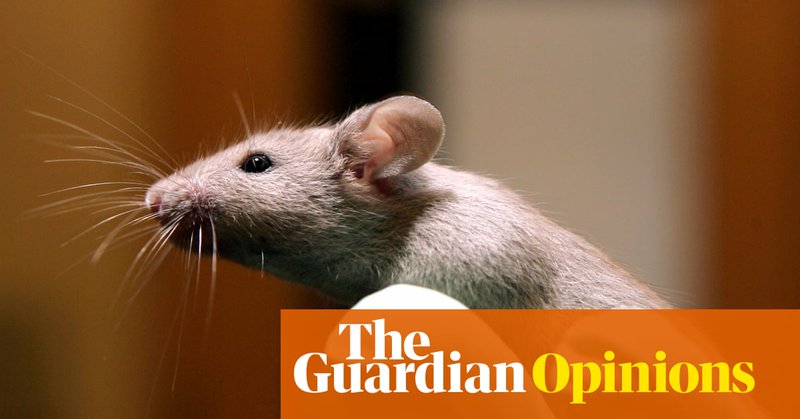
"This is an opportunity for both scientific and economic progress. Animal testing isn’t just cruel, it is expensive and time-consuming. The EU and US have similarly committed to reduce animal experimentation, so there will be rewards for developing technology and knowhow that can
theguardian.com
Editorial: New technologies can reduce our reliance on animal experiments. This isn’t just morally right, it could have scientific and economic benefits too
0
7
9
30,000 Monkeys in Our Backyard is now available. The new documentary from Species Unite, produced by NAVS, examines Bainbridge, Ga., pushing back against a proposed nonhuman primates (NHPs) breeding facility. Watch: https://t.co/B7uROsEzIe
0
3
3
How can we hold federal agencies accountable for reducing animal experimentation when we don’t even know how many animals are used? In @TheAtlantic, @MelanieDGKaplan makes a compelling case for the Federal Animal Research Accountability Act: https://t.co/2uMPPb90P3 The
0
1
7
🚨 BREAKING: @CDCgov will end all experiments on monkeys. While the fate of the roughly 200 macaques is uncertain, an agency representative recently contacted an Indiana primate sanctuary: "He wanted to know how many monkeys we could take immediately ... and whether it would be
0
2
7
Great work, @PetaIndia 👏 CCSEA must take action!

Over 100 experts in medicine, pharmacy and veterinary science, among others, have called for a nationwide ban of the “forced swim test” – that forces small animals to swim in beakers to get insights into human depression, according to Peta India. https://t.co/wX4SWerfUZ
0
0
1