
Daniel Racek
@Da_Racek
Followers
37
Following
54
Media
6
Statuses
35
Head of Data Science for Conflict Research @CCEW_Munich PhD in Statistics from @LMU_Muenchen @MunichDS
Joined December 2021
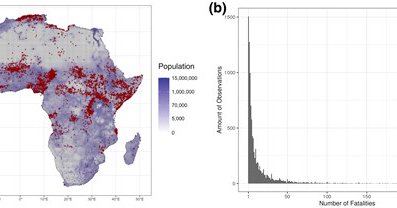
📢 NEW PAPER ALERT Our paper “Capturing the spatio-temporal diffusion effects of armed conflict: A non-parametric smoothing approach” got published in JRSSA. Many thanks to my co-authors P. Thurner & G. Kauermann. https://t.co/Wz2IEnQB60 [1/5]
academic.oup.com
Abstract. Facilitated by advancements in conflict event databases, studies have moved towards predicting armed conflict and understanding its determinants
1
2
5

📣 Next week: CCEW Symposium (co-hosted with the German Federal Foreign Office) “The Potential of Data, AI & Interdisciplinary Analysis in Situational Awareness and Decision Making.” 📅 17–18 Sep 2025:📍Berlin The full program is available here:
0
1
1
🚀 We're live! We’re excited to officially introduce you to the new X account of the Center for Crisis Early Warning (CCEW)! We conduct quantitative #conflict research and predictive analytics to deliver evidence-based early warning. 👉 Follow us for updates!
0
1
1
🆕 Capturing the Spatio-Temporal Diffusion Effects of Armed Conflict: A Non-parametric Smoothing Approach 💡@Da_Racek Thurner and Kauermann develop a statistical model to capture the spatio-temporal diffusion effects of armed conflict (@LMU_Muenchen) https://t.co/okwLXNvu2r
academic.oup.com
Abstract. Facilitated by advancements in conflict event databases, studies have moved towards predicting armed conflict and understanding its determinants
1
3
6
Making explicit use of the grid-based structure, model estimation can be carried out efficiently with the R package mgcv, allowing for complex model fits over large sets of areas (e.g. continents). We provide a tutorial how researchers can apply our method for their own work[5/5]
1
0
0
We show how conflict is triggered across cells, over varying distances and time lags. Diffusion is heavily driven by population structures. Conflict generally breaks out in densely populated areas and from there diffuses, disproportionately affecting less populated areas. [4/5]
1
0
0
We develop a generalized additive model that smooths across the spatio-temporal history of each observation, to capture these diffusion effects. Using conflict data from UCDP & PRIO grid cells in Africa, we analyze diffusion up to 550km in distance and 24 months in the past.[3/5]
1
0
0
Armed conflict exhibits substantial diffusion, i.e., spreading, across space and time. However, existing statistical models do not analyze nor fully capture these complex transmission processes. [2/5]
1
0
0
🚨New Preprint (wish it were less timely)🚨 We map everyday behavioral patterns of authoritarians using smartphone data, providing an updated portrait of authoritarianism in the digital age. w/ @timokoch_, Clemens Stachl, Ramona Schoedel, @Da_Racek etc https://t.co/16riDM2v5K
1
3
6

1/ 🚨 New Research Alert! 📷Together with my supervisory team, we explored how video-enabled smart home security devices reshape neighbourhood dynamics. Unlike studies focusing on individuals, our analysis zooms out to the neighbourhood level. 📷🧵 👉🏻
1
5
13
Amazing and really grateful to see our paper on language usage in Ukraine before and during the invasion on that list #UkraineRussiaWar

Communications Psychology is celebrating its first birthday and has recently reached the publication of its 100th peer-reviewed paper. 🥳 We mark our transition to toddlerhood by reflecting on publications, milestones, and development.
0
0
8

Trending in #SocialPsychology: https://t.co/VVfvHkrnUn 1) Correcting Misperceptions of Fundamental Differences Between U.S. Republicans & 2) Online Signals of Extremist Mobilization 3) Upward & Downward Prosocial Influence Across Levels of a Social Hierarchy 4) Financial
0
3
6
"Online Signals of Extremist Mobilization" New open access paper with @lauragesmith @BritDavidson @Da_Racek @joinson funded by @crest_research
https://t.co/6cpGGqx76r (1/6)
journals.sagepub.com
Psychological theories of mobilization tend to focus on explaining people’s motivations for action, rather than mobilization (“activation”) processes. To invest...
1
11
35

A study in @CommsPsychol analysing Ukraine-based X, formerly Twitter, accounts’ language use prior and during the Russian invasion of Ukraine shows a behavioural shift away from Russian language to Ukrainian language. https://t.co/5T8F1bmBGn
1
7
20
Twitter-Nutzer aus der Ukraine benutzen kaum noch Russisch. "Wir interpretieren diese Ergebnisse als bewusste Entscheidung der Nutzer für eine ukrainische Identität", schreiben @Da_Racek, @BritDavidson und @xiaoxiang_zhu in Nature Communications Psycology. Russland verliert.
3
2
12
"Vladimir Putin's war in Ukraine is changing how people are speaking, new research has found. Researchers ... reached this conclusion by analyzing social media language before and after the war broke out."

newsweek.com
Researchers found a dramatic shift in the number of people speaking the Ukrainian language rather than Russian after the launch of Moscow's invasion of Ukraine.
0
1
1

Neue qualitative deutsch-englisch-Studie über ukrainisches Twitter vor und nach der Großinvasion: Mehr als die Hälfte der v.a. auf Russisch twitternden ukrainischen Nutzer wechselt zu Ukrainisch, einige vollziehen im Februar 22 sogar radikalen Wechsel.⬇️ https://t.co/14lev2MSHa
14
70
235

Researchers found a dramatic shift in the number of people speaking the Ukrainian language rather than Russian after the launch of Moscow's invasion of Ukraine. https://t.co/3C5mNEQO5g
3
5
9
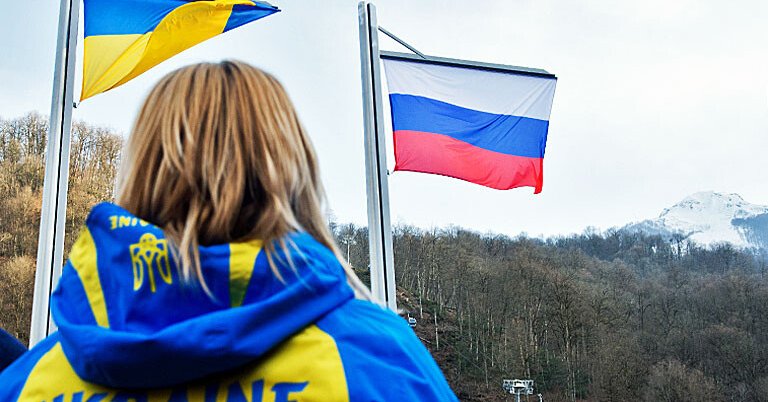
In der Ukraine haben sich seit dem Angriff Russlands viele Menschen auch von Russisch als Sprache abgewandt - das zeigt jetzt auch eine internationale Studie. @Da_Racek @BritDavidson @xiaoxiang_zhu @LMU_Muenchen @dlfnova
deutschlandfunknova.de
Schon nach der Annexion der Krim wurde Russisch in der Ukraine unpopulärer. Das hat sich seit Beginn des russischen Einmarschs verstärkt.
0
1
1