

Andreas Boland
@BolandLab_GE
Followers
4K
Following
12K
Media
288
Statuses
5K
Professor at University of Geneva. https://t.co/RfDg6e8gDU Biochemistry and Structural Biology @UNIGEnews; views are my own 🇩🇪 🇨🇭 🇬🇧 RT ≠ endorsement
Geneva, Switzerland
Joined September 2016
Our work on characterizing ATTR amyloid fibrils extracted from skin tissue of a living patient has now been published (unedited version): https://t.co/4FxdV8Lser
2
2
15
This is exactly the basketball they should be able to play when healthy. Please continue like this. #MFFL
0
0
0
We hope to be able to expand this work in future to other toxic amyloid fibrils that cause neurodegenerative diseases.
0
0
0
Patient-derived fibril structures could guide the design of personalized immunotherapies that are more effective and tailored to dominant fibril conformations and epitopes. Therapies could include de novo designed universal binders, such as mini-proteins, peptides or nanobodies.
1
0
0
Moreover, skin biopsy can be performed longitudinally, enabling within patient follow-up studies that reveal how amyloid fibrils may evolve over time and in response to disease-modifying intervention.
1
0
0
Fibrils derived from living patients offer the possibility to study filament composition and structure across distinct genotypes, phenotypes and disease stages (fibrils from post-mortem tissue likely reflects the end stages of a disease).
1
0
0
In our proof-of-concept study we demonstrate that tissue from minimally invasive skin biopsies can be used to characterize fibril composition (such as wild-type to mutant ratios), PTMs, and to determine the three-dimensional structure by cryo-EM.
1
0
0
However, this work has been executed in a very close collaboration with our partners in Bellinzona: Sandra Pinton, Elena Vacchi, Andrea Cavalli, Matteo Pecoraro, and especially Giorgia Melli. @BellinzonaIrb
1
0
0
The cryoEM work was done by Jun Yu and Xuefeng Zhang in our group at the University of Geneva @UNIGEnews @unige_en @Biologie_UNIGE and data were collected at the Dubochet Center for Imaging (DCI). @DCI_EM.
1
0
0
eventually requiring wheelchairs or full assistance. Without treatment, it severely reduces quality of life and shortens life expectancy, though newer therapies can slow progression and preserve mobility longer.
1
0
1
ATTR is a degenerative, systemic disease characterized by transthyretin fibril deposition in organs like the heart, kidneys, liver, and skin. Patients commonly experience numbness, pain, and muscle weakness in the limbs, which progressively impairs mobility….
1
0
0
Most science projects are like this....

Everytime I get mad at my sports team for losing, I remind myself of what Giannis said. Arguably my favorite response to a reporter ever.
0
0
2

COOOOOOOOOOOOOOPPPPPPPP!

0
0
0

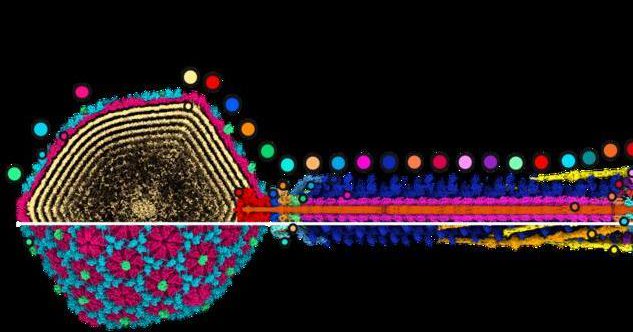

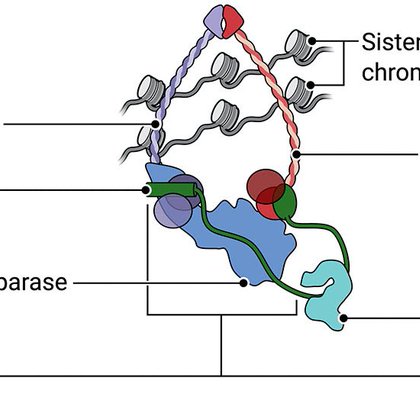
Why is your separase such a big protease? | Science Advances
science.org
Recent structural work explains a fundamental event during cell division, the timely and specific cleavage of the chromosomal cohesin complex by the protease separase.
0
1
3

11
44
409
In case you want to learn more about the science in our lab, the group homepage has just been updated. https://t.co/H8KfVa9l44
bolandlab.org
How is timely and accurate sister chromatid separation achieved? A process that is happening around 30-50 billion times per minute!!! in the human body needs tight regulation (to avoid cancer development...). paper: https://t.co/X0uF42A06a comment: https://t.co/8inOxfGlve
0
0
6