Biodiversity Ireland
@BioDataCentre
Followers
27K
Following
14K
Media
5K
Statuses
14K
National Biodiversity Data Centre - Documenting Ireland's Wildlife Explore wildlife in your area at: https://t.co/MrJCtUGQ5Y 🗺️📊🔎
Waterford, Ireland
Joined November 2009
CSI fans... we asked what killed this Rayed Trough Shell? The answer is a Dog Whelk... which used its super strong radula to bore a hole in it's victim's shell, injecting it with digestive juices and turning it into a protein drink! Explore Your Shore! at https://t.co/OZBWhasHZR
0
1
6
Are you a budding Crime Scene Investigator? Well... what killed this Rayed Trough Shell? (Find out tomorrow!). Explore Your Shore! at https://t.co/OZBWhasHZR
0
2
4

Free Holiday Podcast: Untangling A Christmas Carol! “Make no mistake, A Christmas Carol is a ghost story…” Enjoy the Spirits of the Season! HOW THINGS WORK: Book Series, Free Weekly Substack, Weekly Subscription Podcast & Thread
0
1
6
Hi All, We will be performing essential website maintenance this evening from 6pm. This may mean that some of our website, maps and recording portals will be offline for a couple of hours. Normal service will be resumed by tomorrow morning. Thanks
0
0
7
One to watch out for on our Adopt-a-Rockpool Survey - this is Morchellium argus, a colonial sea squirt that can be found on the lower shore in rockpools, on all Irish coasts. It has pinkish heads and four red dots per zooids. Explore Your Shore! at https://t.co/8N6QQX9XOM
0
0
6

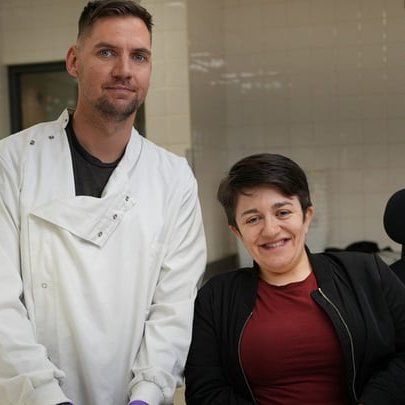
👀📺 Reminder, if you missed the Asian Hornets, stinkbugs, zebra mussels, brazen bunnies and emus (!) that featured in the recent @10Things_ToKnow About #InvasiveSpecies catch up on the @RTEplayer here👇 https://t.co/a2nObpiNYk
@teagasc @MetEireann @Researchirel @GeolSurvIE
rte.ie
Episode 4 looks at invasive species. Presented by Kathriona Devereux and Fergus McAuliffe. Watch 10 Things to Know About S11E04 - Invasive Species on RTÉ Player for free
0
1
4

Check out how ALAI has fared against its benchmark and see why AI exposure may appeal to growth-oriented investors.
0
5
48
Jelly fungus feeds on rotten wood (saprotrophic). Typically found growing on Gorse, Hazel and other deadwood. Beneficial fungi decompose dead organic material, break it down into humus, minerals and nutrient resources, utilised by plants. Info➡️ https://t.co/L1eH421zZ1
0
1
9
Essential maintenance on our servers today from 2pm. Some services may be temporarily unavailable, including: Recording portals BiodiversityMaps Other online tools and applications hosted on our servers We expect the main updates to be completed by 5:00pm. Thank you.
0
0
2
We’re Hiring! To support the All-Ireland Pollinator Plan 2026–2030, the National Biodiversity Data Centre are delighted to announce that we are now seeking applications for a number of Project Officer posts. For full details of each role see: https://t.co/3yYL7tsVpL
0
3
3
To help protect native wildlife, we can learn to identify Ireland’s invasive species and report sightings through https://t.co/6khVXgTZSw
#10thingstoknowabout #invasivespecies @BioDataCentre
0
3
8

[Happiness/Gratitude] Unhappiness often shadows our lives, fueling anger and discontent. When people try to build happiness on ephemeral things—success, pleasure, relationships, or control—they inevitably discover how fragile and incomplete it is. True and lasting happiness
0
0
11
Even in the depths of Winter there's plenty to see and record on Ireland's coasts. Last week we were in Dingle with staff from Oceanworld Aquarium doing a Big Beach Biodiversity Survey. Explore Your Shore! at https://t.co/3bOn55mXb9
0
1
7
Species # 37: Fieldfare Winter visitors from Scandinavia and Russia, they feed on worms and grubs from soft ground and haws and other berries from the hedgerows. To find out more or record your sightings, go to https://t.co/L1eH421zZ1
@PollinatorPlan
#FarmlandBiodiversity
1
2
6
Join our Biosecurity & Invasive Species Officer for a short, practical course which will introduce the core principles of biosecurity and shows you how simple “Check, Clean, Dry” habits can protect the places you love 👉 Sign up now: https://t.co/jVdObaRitf
@WatersProgramme
0
3
3
Top 100 Explore Your Shore! species - #58 - Common Goose Barnacle / Giúrann / Lepas anatifera is found cast ashore attached to driftwood and debris. Shore: sandy. Distribution: primarily south & west coasts. https://t.co/OZBWhasHZR
0
0
6

We are delighted to have received funding to deliver the next phase of the All-Ireland Pollinator Plan. This will allow the AIPP to build on success of previous phases with more ambitious plans for transforming the landscape for pollinators. More here ➡️ https://t.co/VcJGvvK9Sz
1
3
15
We are delighted to announce the publication of the new Biodiversity Ireland Autumn/Winter issue for 2025. Download your free copy now: https://t.co/lIxp7JFuT1
0
0
3
Highlights from our final #CleanCoastsObserver @biodatacentre #ExploreYourShore Workshop! Big thanks to @cleancoastsnw & @greystonestidy for hosting. We discovered 20+ shark egg cases 🦈! Huge shoutout to Dave Wall for sharing his knowledge! #CitizenScience #Biodiversity
0
1
5
Keep your eyes peeled for this ball of red branched hairs, where the Bedeguar Gall Wasp causes the gall, as a home for their larvae on Dog rose. Add some Dog Rose plants to native hedgerows. Find out more: https://t.co/L1eH421zZ1
#farmlandbiodiversity
0
2
10
The founders included the Export Clause because they remembered what it meant to have commerce controlled by royal prerogative—licenses sold, permissions granted or withheld at the sovereign's pleasure, arbitrary charges imposed on those who wished to trade. A 25% fee on Nvidia
0
1
7
Bonnemaison's Hook Weed (Bonnemaisonia hamifera) is an invasive red seaweed that is native to Japan. First recorded on Ireland's west coast in the 1950s, its is now found on all Irish coasts and is readily identified by its curved hooks. Explore more at: https://t.co/jD4TaT1e6G
0
0
4
Due to global the Cloudflare service disruption. Users may have some issues accessing our sites and services. https://t.co/22FwTsE58T
0
0
5
What's This? Sea chervil (Alcyonidium diaphanum) is a strange species that is found washed up on all Irish coasts. It is most commonly confused with seaweed but is in fact a colonial animal... a type of Bryozoan. Explore more at: https://t.co/jD4TaT1e6G
0
1
8