
CSUFullerton
@BioAnthEvolving
Followers
831
Following
22
Media
38
Statuses
327
Dr. Eric Schniter, Evolutionary Anthropologist: https://t.co/K9VGhw8TKz… my bsky: https://t.co/O4AMwNVBQP
Fullerton, CA
Joined January 2016
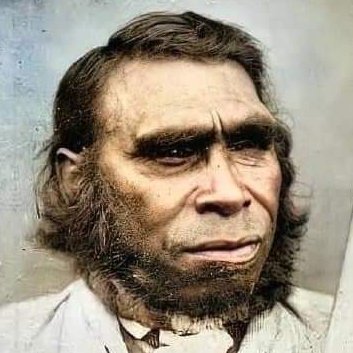
Talgai was the first ancient human skull found in Australia. It was discovered in 1884 eroding from a billabong in southern Queensland. Known for its robust features, Talgai is the only Australian terminal Pleistocene skull not found in the southeast. #FossilFriday The heavily
6
15
134
Time to update the textbooks. And its about time to assign a binomial nomenclature name to this lineage - we should no longer consider them ghosts!

Just published in @ScienceMagazine: ancient proteins show that the Penghu 1 mandible from Taiwan belongs to a male Denisovan. They weren't just in Siberia or Tibet. Open access article: https://t.co/gGHPbqzVvW
#HumanEvolution #Denisovan #Paleoanthropology #AncientProteins
0
1
2

Amazing: Babies are more attentive to face-like stimuli than non-face stimuli - even before they’re born. https://t.co/w3f7KN0EG1
3
18
128

Aliens like... A fossil of a sea lily that is approximately 345 million years old
12
66
427
“Evidence for Endogenous Collagen in Edmontosaurus Fossil Bone” by Lucien Tuinstra, Brian Thomas, Steven Robinson, Krzysztof Pawlak, Gazmend Elezi, Kym Francis Faull and Stephen Taylor, 17 January 2025, Analytical Chemistry. https://t.co/r1XvJBjxRh

pubs.acs.org
Reports of proteins in fossilized bones have been a subject of controversy in the scientific literature because it is assumed that fossilization results in the destruction of all organic components....
0
0
0
Mesozoic dinosaur collagen found in fossilized bones. The paper in Analytical Chemistry hints that DNA might be available too. https://t.co/1HMrcV8dhM

scitechdaily.com
Liverpool researchers' discovery of collagen in fossilized bones could provide new insights into dinosaurs. For years, scientists widely believed that the fossilization process destroyed all original...
1
0
0

New paper out with insights into kinship, alloparenting, and cooperative breeding! Older, closely related kin more often provide costly aid to young Tsimane, while unrelated alloparents provide older youth lower-cost - possible investment in future reciprocal relationships.
1
8
34
For all my students who wrote essays on bipedalism and had to come up with non-primate examples:

0
0
1
It was a really sweet celebration of John's memory and legacy. He was a dear friend and I sure do miss him!

The Titan community gathered to honor late CSUF Professor Emeritus of Anthropology, John Patton. Students and colleagues described him as a voracious leader and a champion for his students. 👉 Learn how Patton left a lasting legacy:
0
1
2
I'm amazed by how the sky place has come alive. As someone who was mostly attracted to "academic twitter" it was sad to see the waining intellectual activity on this site. Its now evident that this place has sunsetted for smart academic conversation and its moved over there.
1
1
4
The article mentions that this is not the first time monkeys escaped from this research center:

cnn.com
Residents in a small South Carolina town are finding themselves in the middle of a real-life game of Jumanji after 43 monkeys escaped Wednesday from a research facility.
0
0
0

Needles with eyes emerged during the paleolithic approximately 40,000 years ago. Great review on the evolution of dress. https://t.co/WvxYzTgtQ8
0
10
39
We sent a chimpanzee into space before we knew chimpanzees used tools in the wild! Astonishing how little we knew of the world until recently. In 1961 the first ape, a chimp named Ham, was sent into space, just a few months after Jane Goodall made her first trip to study
1
2
5
related: Yang et al. 2014 Proteomics evidence for kefir dairy in Early Bronze Age China https://t.co/TalaB2bKtQ Zhang et al. 2021 The genomic origins of the Bronze Age Tarim Basin mummies https://t.co/HZtB3yqcV9

nature.com
Nature - A genomic analysis of human remains from the Bronze Age provides insights into the origin of the Tarim Basin mummies from the Xinjiang region.
1
0
0
Evolution of probiotic bacteria studied using DNA from 3,600-year-old cheese found in Chinese graves. Samples contained bacteria & fungus, including Lactobacillus kefiranofaciens and Pichia kudriavzevii, both still found in present-day kefir grains used to make cheese from milk.
1
1
2
Showed my bioanth class this video of how chicha is made (from sweet manioc & plantain). I believe these are Kichwa from the Sarayacu river region of the Ecuadorian amazon. The role of saliva in this chicha making process is common throughout the Amazon. https://t.co/NzWouXc3xd
Apropos to my lecture from today about the role of alpha-amylase in saliva for converting starches to sugars, and for making a mash of yucca more easily fermentable: https://t.co/BP4UYWCOch
0
1
2
Apropos to my lecture from today about the role of alpha-amylase in saliva for converting starches to sugars, and for making a mash of yucca more easily fermentable: https://t.co/BP4UYWCOch
nature.com
Nature - The impact of structural variation on the evolution of the amylase genes is explored using human pangenome resources and ancient DNA data.
0
1
1
“My mind seems to have become a kind of machine for grinding general laws out of large collections of facts.” Charles Darwin
Naturalists like Darwin have an insatiable curiosity for all things in nature (living and otherwise) and never tire of making observations of things and noting details. When the mental notes and observations accumulate, deductions can be formed and novel hypotheses formulated.
0
4
6