
Angus Lothian
@AngusJLothian
Followers
620
Following
2K
Media
94
Statuses
664
Aquatic Ecology | Animal Behaviour | Spatial Ecology | Biotelemetry | Post-Doc researcher @UCalgary
Joined May 2010
High migration success of Atlantic salmon smolts in standing waters could be due to relative current speeds providing good quality directional cues to migrants. More from @JessicaRFordyce @C_Adams1758 @AngusJLothian @sceneUofG
@UofGSBOHVM @Galloway_FT https://t.co/USZnTn2KN9
onlinelibrary.wiley.com
Riverine habitat fragmentation by barriers, including impoundments, is common and their effects on obligate aquatic organisms are manifold. Organisms, such as Atlantic salmon (Salmo salar), that...
0
8
14
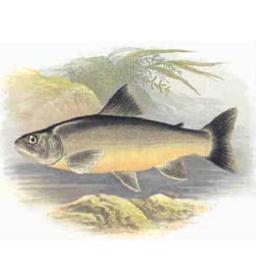
How successfully salmon smolts migrate down river can be in part predicted by the landscape of the catchment @JessicaRFordyce @AST_Salmon @sceneUofG

New paper 🚨 Smolts show significant temporal and spatial (river) variations in migration success👇 Determinants of riverine migration success by Atlantic salmon (Salmo salar) smolts from rivers across the UK and Ireland. Journal of Fish Biology, 1–16. https://t.co/VafpYhg31h
0
4
14
New paper 🚨 Smolts show significant temporal and spatial (river) variations in migration success👇 Determinants of riverine migration success by Atlantic salmon (Salmo salar) smolts from rivers across the UK and Ireland. Journal of Fish Biology, 1–16. https://t.co/VafpYhg31h

onlinelibrary.wiley.com
There is some evidence that the river migration success of Atlantic salmon smolts, on their first migration to sea, varies both spatially and temporally. However, we have only a poor understanding...
0
10
20
So proud of @DrERDickinson and her incredible work in the Arctic safeguarding food resources through understanding wildlife heath
0
0
3
New in Hydrobiologia: Factors influencing European river #lamprey passage at a tidal river barrier https://t.co/qw9Lox3HgO
0
1
1

📢 Nice to get this one out. Building on @MontaliAshworth's PhD work, modifying bristle cluster diameter and spacing to provide more space for larger #fish to ascend river barriers while still providing low vel zones for smaller 🐟🐟🐟. Open access: https://t.co/ISHVIRRIlj
1
3
8

Our new paper in Animal Biotelemetry shows acoustic telemetry's role in monitoring basking sharks, revealing cross-border connectivity, annual site fidelity, hotspots, and potential grouped movements @SEUPB @SeaMonitor1 @QUBelfast @EdinburghNapier
https://t.co/9N1LqSRFWV
2
25
79
@durham_uni @DurBiol @UniOfHull Great collaboration with @FishMigrationDr @IslanderDodd @AndyDNunn and others!
0
0
0
🚨New paper! We investigate river lamprey passage at a tidal weir in Yorkshire. Passage was over the weir not via fishways because of velocity barrier at the exit, and at high flows when weir was drowned out. #fishsci @durham_uni @DurBiol @UniOfHull
https://t.co/kb39tjUREc
1
2
13
"How big is too big" is a question that is always asked of the tag sizes used in smolt tracking studies - this is a valuable contribution to this discussion. @JessicaRFordyce
@C_Adams1758 @AngusJLothian @DBIRCT @AST_Salmon
@sceneUofG @UofGSBOHVM
https://t.co/SbyqpObwxZ

onlinelibrary.wiley.com
Tracking of animal migrations using telemetry technologies needs to take into consideration the burden that the tag exerts on the animal. Here, we examined the potential impacts of acoustic tags of...
0
6
16
We conclude that tagging smolts up to 7.39% tag burden is appropriate and thus the findings support lowering size threshold for tagging studies to use a greater range of fish sizes to have a better representation of the migration success and behaviours of any given population.
0
0
0
All fish were also detected in the hours of darkness – a nocturnal migration behaviour that is seen in many migratory animal populations and in has been shown to be the main migratory behaviour of smolts.
1
0
0
Similarly, migration speed and residency at acoustic receivers was similar in both tag groups, suggesting no alterations to swimming performance.
1
0
0
A time-to-event analysis showed that there was no difference in the time until migration failure for either tag group, suggesting that tag burden impacts were not different between the two groups.
1
0
0
We saw that there was only 6% survival to the lowest receiver over a distance of ~80 km, resulting in an overall loss rate of 1.14%/km.
1
0
0
We tested two significantly different tag burdens from V6 and V7 tags on seaward migrating Atlantic salmon smolts. Maximum tag burden recorded was 7.39 % with means of 3.63% for V6 and 5.84% for V7 tagged fish.
1
0
0
🚨 New paper Here we test the tag burden of two @Innovasea acoustic transmitter sizes on Atlantic salmon smolt migration success and behaviour. https://t.co/d48o6QmPMj
@C_Adams1758 @JessicaRFordyce @LornaWilkie @sceneUofG @UofGSBOHVM @AST_Salmon @DBIRCT #fishsci #telemetry
1
8
20

Interested in the effects of dam removal on smolt migration after passing multiple barriers? Check out our new paper! @OlleCalles @Andrew_Harbicht @HellstromKGV @RivEM_Karlstad @life_connects @UniperSweden
https://t.co/jUePBV65R3

onlinelibrary.wiley.com
Migration is critical for life-cycle completion in diadromous fish species. River connectivity is vital in facilitating these large-scale movement events, but the extent of present-day river fragme...
2
12
32

There have only been 4 Directors of SCENE; on the first day of office of the 4th- Chris Harrod - the previous two - Roger Tippett (1972-1995) and Colin Adams (1995 – 2024) were there to welcome him this fantastic research and teaching field station. @UofG_SBOHVM @chris_harrod
6
16
88
It has taken 45 authors, 1914 tagged fish, from 25 rivers in 8 projects to describe the coastal pathways taken by salmon smolts from Ireland, N. Ireland, W Scotland & England in this new paper. https://t.co/o5H1eEoTPE
@JessicaRFordyce @Jessie__Lilly @AST_Salmon @ProfColinBean
1
37
122