
Asociación Valenciana de Astronomía 😷🔭
@ASTROAVA
Followers
4K
Following
9K
Media
769
Statuses
39K
Cuenta oficial de la Asociación Valenciana de Astronomía. Estudio, investigación y divulgación de la Astronomía ✨ CAAT (Centro Astronómico del Alto Turia)
Valencia, España
Joined June 2013
Iniciamos un año con muchas ilusiones y proyectos. Pero hay una efeméride especial, nuestro 50 aniversario. Para este evento se recupera nuestro primer logo original de 1972, y lo conmemoraremos con actividades durante todo el año. Estad atentos, lo anunciaremos por web y redes.
7
25
84
Para iniciarse en la observación astronómica, mucho mejor unos prismáticos astronómicos que un telescopio. Son más baratos, prácticos y fáciles de manejar. Lo ideal, entre 10-20 aumentos y 50-100 mm de apertura (10x50, 15x70, 20x80...), con trípode para los más grandes.
1
4
33

@NASAArtemis Muy pronto, @NASAArtemis II viajará alrededor de la Luna, esta vez con cuatro astronautas a bordo de Orion. ¿Quieres que tu nombre vaya a bordo de la primera misión lunar tripulada en más de 50 años? 🚀 ¡Regístralo!: https://t.co/vtlUBU6pyK
1
7
26
☄Se viene el punto más cercano con la Tierra del Cometa interestelar 3I/ATLAS, el 19 de diciembre. Se podrá ver con telescopios y no a simple vista. Te dejamos los resultados que ALMA obtuvo sobre su composición.
4
142
533
¿Por qué, si el universo está lleno de innumerables estrellas y galaxias, el espacio es tan profundamente oscuro en lugar de resplandecer de luz? Este enigma se basa en la clásica paradoja de Olbers, que sostenía que en un cosmos infinito, eterno e inmutable con una
Why, if the universe is full of countless stars and galaxies, is space so profoundly dark rather than ablaze with light. This conundrum builds on the classical Olbers' paradox, which argued that in an infinite, eternal, unchanging cosmos with an even distribution of stars,
0
3
2
Los neandertales encendieron el primer fuego de la humanidad hace 400.000 años. 🔥💀 En lo que hoy es el este de Inglaterra, alguien encendió una hoguera y la mantuvo viva hace la friolera de 400.000 años. No fue un humano moderno, sino un neandertal, y esa pequeña llama cambia
0
3
36
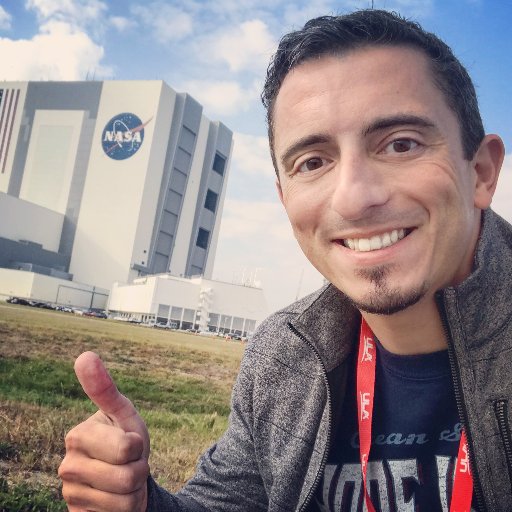
Saturn’s moon Enceladus spraying into the hazy E ring, a view made from image data captured with the narrow-angle camera aboard Cassini on December 9, 2012 from a distance of 704,000 km
4
41
147
En un poético giro de revelación, el @ALICE_LHC en @CERN finalmente ha descubierto cómo los frágiles núcleos de luz emergen intactos del horno ardiente de las colisiones de alta energía, un misterio que se ha mantenido en secreto durante décadas. Cuando los protones chocan
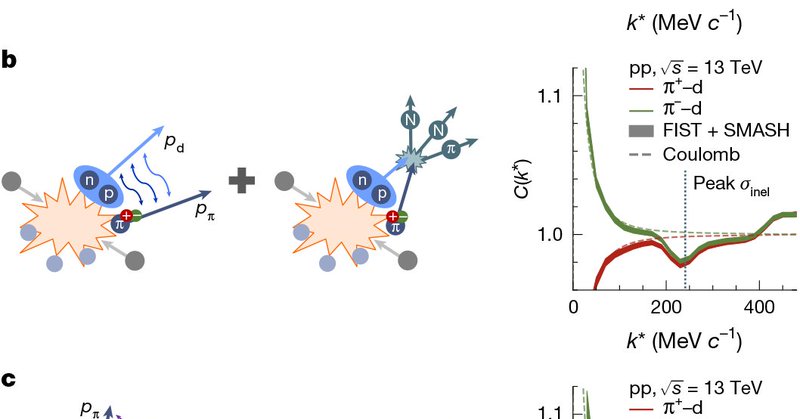
nature.com
Nature - The ALICE Collaboration provides details on the microscopic mechanism that ends up creating antideuteron in high-energy proton–proton collisions at the Large Hadron Collider.
In a poetic turn of revelation, the @ALICE_LHC at @CERN has at last uncovered how fragile light nuclei emerge intact from the fiery furnace of high-energy collisions, a mystery that has whispered across decades. When protons slam together inside the Large Hadron Collider, the
0
2
4

217 exoplanets. 10 potentially habitable worlds. That’s what 2025 revealed. Imagine what we can discover in 2026 — only with your help by supporting Next Year: New Worlds 🌍✨ 👉 Give now: https://t.co/ZkFaLrWcRx
1
8
26
Before we can defend our planet from a potential asteroid impact, we need to find the potential impactors! Our planetary defense network has now found more than 40,000 near-Earth objects and ruled out any known impact within the next hundred years. https://t.co/RsuDd5uKcH
12
51
217
10 imágenes de nuestro cósmico año 2025 N°9⃣: Nuevas formas en las que los planetas podrían formarse🪐 En una región de formación estelar en Tauro, un par de estrellas en órbita muestran algunas diferencias inesperadas en los discos circunestelares de polvo y gas que las rodean
0
24
88


New Heroes: @NeilShubin. Neil Shubin has spent his career searching for the deep links that tie every creature on Earth to the ancient past. He is best known for the discovery of Tiktaalik, the fossil that helped illuminate the moment when fish first began to move onto land.
0
3
6

#TRAPPIST-1e, an Earth-sized exoplanet in the habitable zone, shows hints of methane, but further data are needed to confirm whether it possesses an #Atmosphere or surface water. @AAS_Office
https://t.co/yQEJNgj9XF

phys.org
Of the seven Earth-sized worlds orbiting the red dwarf star TRAPPIST-1, one planet in particular has attracted the attention of scientists. This planet orbits the star within the "Goldilocks zone"—a...
1
20
37
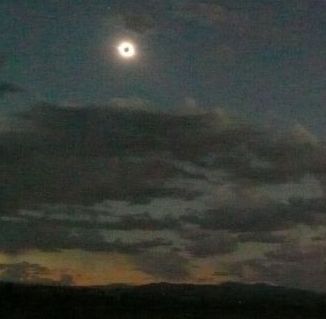
ALMA Reveals an Eccentricity Gradient in the Fomalhaut Debris Disk: https://t.co/t4oJraFWOz -> A Planet Carving the Fomalhaut Debris Disk?

aasnova.org
Astrobites reports on the Fomalhaut debris disk, which is well studied but may contain a hidden planet we haven’t seen.
0
5
4
JWST-TST DREAMS - NIRSpec/PRISM Transmission Spectroscopy of the Habitable Zone Planet TRAPPIST-1 e (and more): https://t.co/F0gApuaTlR & https://t.co/J3soCXbLU8 / https://t.co/d8QbarK7Te ->

news.arizona.edu
Recently reported methane signatures detected by the James Webb Space Telescope could be a hint to it potentially harboring life, but University of Arizona researcher Sukrit Ranjan urges caution.
0
5
4

Cel Fosc propone incorporar salvaguardas en la futura Ley de Actividades Espaciales. Propone incluir prohibición, limitación y/o consulta previa para impedir que el territorio español sea iluminado intencionadamente desde el espacio en horario nocturno. https://t.co/M5dddYUAiT
0
6
6
El Telescopio Espacial James Webb Identifica la Supernova Más Antigua Jamás Registrada. +Info en https://t.co/dFtiJoFtvY
0
2
1
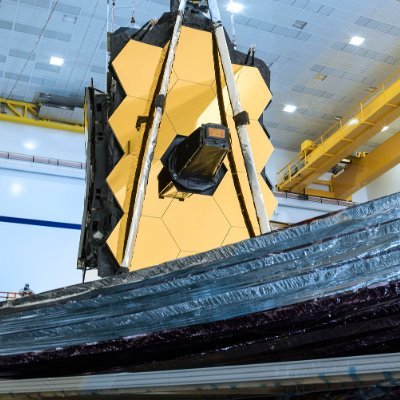
Webb confirmed the earliest supernova to date; this dying star exploded when the universe was only 730 million years old. Webb’s sharp infrared capability also allowed astronomers to locate the supernova’s very faint and distant host galaxy. https://t.co/lgDPtZfkc7
38
264
1K
🙌🏻Se cumplen 80 años desde que la poetisa chilena Gabriela Mistral recibiera el Nobel de Literatura. Y hace 10 años nuestro sitio es un Santuario Internacional de Cielos Oscuros bautizado su nombre, hogar de los telescopios @cerrotololo , SOAR, @VRubinObs NSF-DOE y @GeminiObs Sur
0
2
2
Here's a newly-processed view of Saturn's north pole, showing the central polar vortex and two bends of the hexagonal jet stream made from image data acquired with @CassiniSaturn on December 10, 2012 #OTD from a distance of about 403,000km 🪐
6
73
334
Pluto – the exiled king of the outer Solar System Officially the largest resident of the Kuiper Belt, but in 2006 the International Astronomical Union brutally demoted it from “planet” to “dwarf planet” and the internet has never recovered from the heartbreak Right now,
13
84
617