

UC_HCT
@uc_hct
Followers
36
Following
67
Media
22
Statuses
49
Human-Centred Technology Research at the University of Canberra
Canberra, ACT, Australia
Joined May 2022
The latest paper by @uc_hct PhD student Akim Kapsalyamov in the IEEE Transactions on Medical Robotics and Bionics is now available in early-access "A Novel Underactuated Robotic Orthosis for Individualized Gait Rehabilitation" DOI 10.1109/TMRB.2023.3328633 @UCSciTech
0
0
1

Delighted to present our work in-person at Ottawa @sigmm #ACMMM23. Join us for the discussion! Details: In-person attendance: 📍Provinces-1, The Westin Ottawa 🕐Oct 31, 10:30 AM - 12:30 PM Virtual attendance: 🆔Conflux: 564 🔗Conflux event: https://t.co/YDETYNMkm2 See you :)
New paper by @uc_hct PhD student Ravikiran Parameshwara "Efficient Labelling of Affective Video Datasets via Few-Shot & Multi-Task Contrastive Learning" Proc. 31st ACM Int'l Conf on Multimedia https://t.co/cRNxhwdjuj
1
4
4
New paper by @uc_hct PhD student Ravikiran Parameshwara "Efficient Labelling of Affective Video Datasets via Few-Shot & Multi-Task Contrastive Learning" Proc. 31st ACM Int'l Conf on Multimedia https://t.co/cRNxhwdjuj
0
1
1
This is joint work with @Raul_FR_, @tanayaguha, Ram Subramanian and @rolaustral on using the concept of kinemes for analysing head motions in subjects with depression and healthy control subjects. Kinemes are a set of elementary head motion units from 3D head pose angles.
0
0
2
@uc_hct PhD student Monika Gahalawat presented her latest paper "Explainable Depression Detection via Head Motion Patterns" at the @AcmIcmi 2023 conference in Paris last week https://t.co/T4xDswqfZu
@UCSciTech #AffectiveComputing
1
0
4
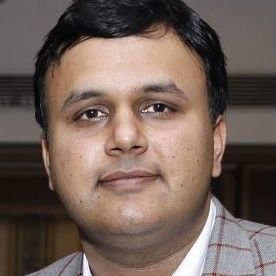
Delighted that our paper Emotion Recognition in the Wild challenge 2013 has been awarded Ten Year Technical Impact Runner-Up at the 25th ACM International Conference on Multimodal Interaction 2023. with @rolaustral @jyotij0shi Tom Gedeon and Michael Wagner
2
2
37

Congratulations to our 2023 3MT Winners 🎉 🥇 Major Prize $4,000: Senada Meskin (Faculty of Arts and Design) 🥈 Runner-Up $2,000: Sara Chica-Latorre (Faculty of Health) ⭐ People's Choice Award $1,000: Sara Chica-Latorre @UCGradResearch #UniCBR
0
3
25
New paper on rehabilitation robotics by @uc_hct PhD student Fahad Hussain "Topology and material optimization of an underactuated robot for gait rehabilitation" in the Mechanics Based Design of Structures and Machines journal @UCSciTech
https://t.co/5W7MFMS0ZG
0
1
0
New paper by @uc_hct PhD student Yinan Jin "Design and analysis of a multi-DOF compliant gait rehabilitation robot" in the Mechanics Based Design of Structures and Machines journal - eprint at https://t.co/VVVhD4Y50E
@UCSciTech
0
2
1
Now in early access: New review paper by @uc_hct PhD student Muhammad Faizan Shah "Mechanism Design and Control of Shoulder Rehabilitation Robots: A Review" (DOI 10.1109/TMRB.2023.3310086) in the IEEE Transactions on Medical Robotics and Bionics @UCSciTech
https://t.co/EokL2JIU2w
0
2
2
Congratulations to @uc_hct PhD student @ravikiranprao and team on having a paper accepted at the prestigious ACM Multimedia 2023 conference! Also kudos to 2 co-authors from @seeingmachines. Final author version now available on arXiv https://t.co/3oqL0R63mA
@UCSciTech
0
1
3
...to the activated area, leading to changes in local concentrations of oxygenated haemoglobin, deoxygenated haemoglobin, or the total haemoglobin. fNIRS is... suitable for balance assessment tests providing real-time info on changes in brain activity related to motor function.
0
0
0
Functional near-infrared spectroscopy (fNIRS) projecting near-infrared light through the scalp and skull into the brain, which is then diffusely refracted, and the intensity changes are measured. Neural activation in response to a stimulus results in an increase in blood flow...
1
1
1
New open access review article by @uc_hct PhD student Yasaman Baradaran in IEEE Access: A Systematic Review on Functional Near-Infrared Spectroscopy Concurrent With Quantitative Balance Assessment https://t.co/ZX1xF9apoZ
@UCSciTech @UniCanberra
1
0
2
@uc_hct researcher Shahid Hussain has been appointed to the editorial board of the IEEE Transactions on Neural Systems and Rehabilitation Engineering for his expertise in rehabilitation robotics and biomedical engineering https://t.co/MZB07x7EZk
@UCSciTech @UniCanberra
embs.org
0
0
0
Nice work by @uc_hct researcher @damith and colleagues, using the Human Observation Lab at the @UniCanberra @UCSciTech Human-Centred Technology Research Cluster

First, "Role-Taking and Robotic Form: An Exploratory Study of Social Connection in Human-Robot Interaction" where participants felt as 'seen' by robots as other human collaborators based on their design. By @Jenny_L_Davis @damith @A_grogg & @tonyplove
https://t.co/AhZcnoepjd
0
0
3
New Research: Multimodal physiological sensing for the assessment of acute pain #pain
0
0
0
New open-access publication by @Raul_FR_ from @uc_hct "Multimodal Physiological Sensing for the Assessment of Acute Pain" with colleagues @nirajhirachan, Nick Brown, @DrGWaddington, Luke Murtagh, @benosaka @rolaustral
https://t.co/eA1CZhR8mA
@UCSciTech
1
1
1
New paper by @uc_hct PhD student Yinan Jin on the "Design and analysis of a multi-DOF compliant gait rehabilitation robot" with the first intrinsically compliant gait robot design with 3 actuated and 5 passive DOF #rehabilitation #Robotics @UCSciTech
https://t.co/VVVhD4Y50E
0
0
0
...tools, & the implications for their use. There are significant opps to leverage multimodal sensing and deep learning to improve accuracy of pain monitoring systems. Need analyses and datasets that explore the inclusion of neural & physiological information together! 2/2
0
0
0