
UC Berkeley Urban Bee Lab
@uc_bee
Followers
314
Following
8
Media
5
Statuses
21
Our mission is to survey and evaluate ecological relationships of native California bee species and their flowers in selected agro and urban ecosystems.
Berkeley, CA
Joined November 2018
Today's featured bee is the Euglossa, commonly referred to as "orchid bees." Fun fact: The Euglossa has co-evolved with the orchid and consequently developed a long tongue to reach into the long part of orchid to get to the nectar! Spot its long tongue in the second picture!
1
18
58
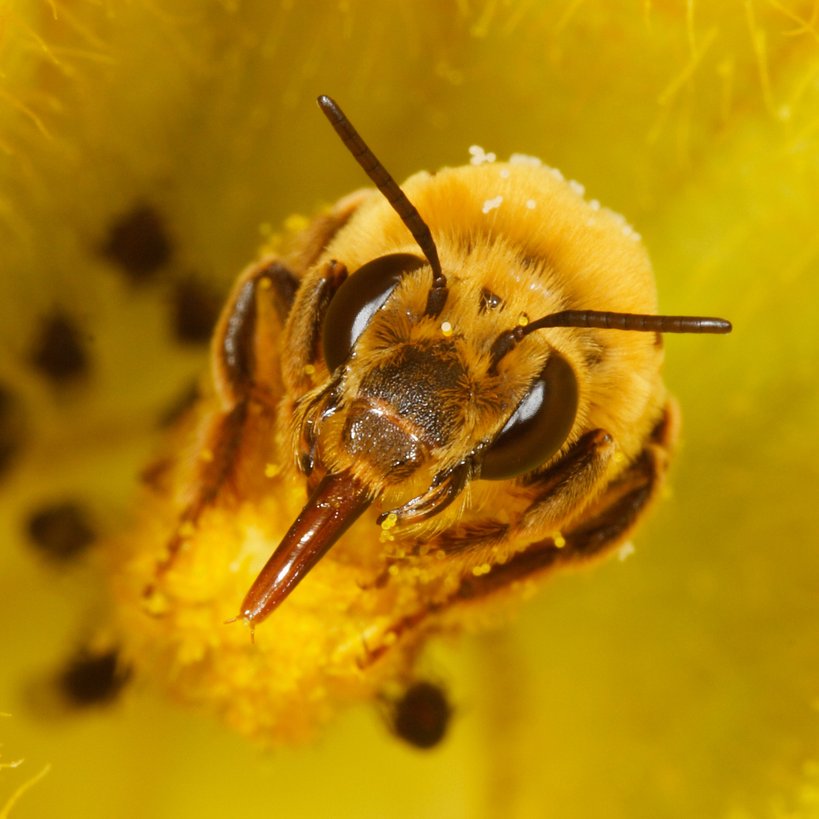
The featured Bee of the Day is the Peponapis pruinosa! Also called the "Squash Bee," this species is common in California. Females love to visit squash, pumpkin, and gourds for pollen while males and females visit melons and cucumbers for nectar. Find them hiding in flowers!
0
4
13
Clarification for the Teddy Bear Bee-- it is the name we go by in CA for the Xylocopa varipuncta. Common names for insects are not official scientific names for any species, but the scientific name will now be included with any common name for our bees to avoid confusion!
0
1
3
Special feature today, the Teddy Bear Bee! The male is shown being safely held, as males cannot sting! These bees are given their name due to their distinct golden color. You can find them flying around year round, with peak activity in March-August. Look out for these big guys!
35
694
2K
The Bee of the Week is Anthophora californica! These bees are often called "Digger bees" and can be found nesting in soil. They can be found visiting the family Lamiaceae, such as Lavandula, Nepeta, and Salvia. Look out for A. californica making large jumps while foraging!
4
34
142
Our December Newsletter is out! Check out our newsletter for some information on kleptoparasites and our new garden expansion! https://t.co/IWc5DFAnRE
0
0
0
Our Bee of the Week is Hylaeus punctatus! These bees are known as "masked bees" for their distinctive yellow markings. The male bee has a broader central mark, compared to the female bee (shown here) which has a pair of more narrow vertical marks just inside the compound eyes.
0
1
8
Like us on Facebook also at https://t.co/XRAt3boSVX !
0
0
1
We are the UC Berkeley Urban Bee Lab and we are ready to discuss how to best study, conserve, and promote native bee populations!
1
2
4