

Roosevelt Institute
@rooseveltinst
Followers
31K
Following
8K
Media
2K
Statuses
31K
Advancing ideas that rebalance power in our economy and democracy.
New York, NY
Joined September 2009
NEW📰: Democracy requires both an informed citizenry and a free press. But how do these ideals show up in public policy? Today, we have a paper out that looks at how media has become highly concentrated, commercialized, and drained of its public interest potential.
1
13
16
“Revitalizing the capacity of the federal government to solve national problems requires preventing the judiciary from politicizing and kneecapping that capacity.” Among our 161 recent recommendations to improve government for workers: reform the courts. https://t.co/BER1b6DkAG

rooseveltinstitute.org
In a new analysis, Hannah Garden-Monheit and Tresa Joseph draw on interviews with more than 45 senior Biden-Harris appointees to offer a bold road map for rebuilding federal government capacity and...
0
1
2
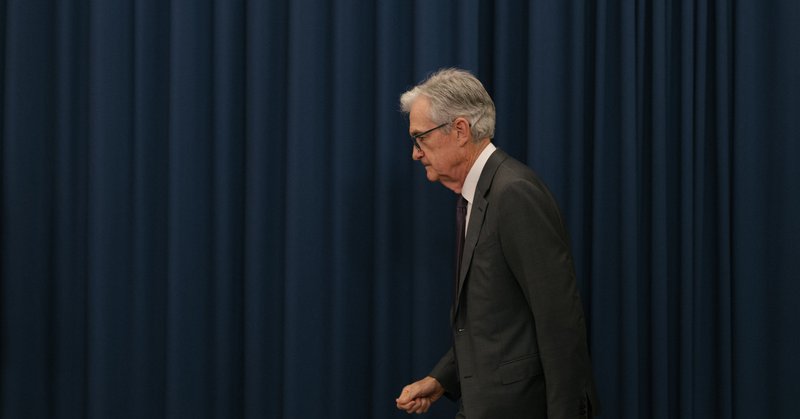
The stakes are clear for this case: If the Supreme Court says presidents can fire independent agency leaders at will, agencies like the FTC—and even the Fed—will lose the insulation needed to protect the economy from politicization and corporate pressure.
nytimes.com
The president seemed poised for a big Supreme Court win letting him remove officials without cause. But the justices appeared to struggle with how to insulate the Federal Reserve from politics.
2
1
2
Crypto market structure is back on Congress’s agenda, but the details—and potential implications—remain unclear. Brad Lipton’s blog explains how these rules could either protect consumers and markets or leave them exposed to unregulated speculation:

rooseveltinstitute.org
Congress is currently considering the second bill of its planned three-part trilogy on cryptocurrency. The first was the Guiding and Establishing National Innovation for US Stablecoins (GENIUS) Act,...

Democrats weigh GOP offer on crypto market structure bill
0
0
0
@AnnieLowrey In Detroit, corporate buyers turned hundreds of homes into investment assets, leaving tenants with unsafe, neglected conditions and little recourse. Unchecked corporate ownership is pushing stable housing out of reach for the families that need it most.

rooseveltinstitute.org
In Winning a People-Powered Future, Roosevelt Institute President Elizabeth Wilkins emphasizes the importance of listening to people’s problems and aspirations, looking seriously at power in our...
0
1
3
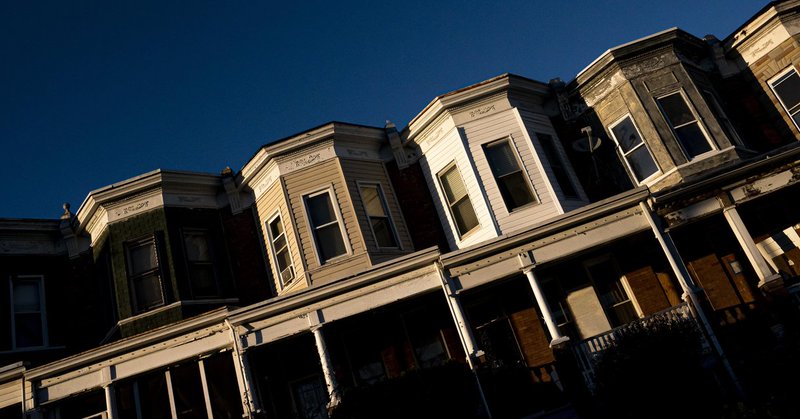
Corporations now own 1 in 11 residential parcels in urban areas—and more than 20% in some communities. That consolidation is leaving lower-income families at the mercy of absentee landlords with little stake in local well-being. New from @AnnieLowrey: https://t.co/MHq34ft2Cn
theatlantic.com
Is there someone to blame for the housing crisis?
1
0
6

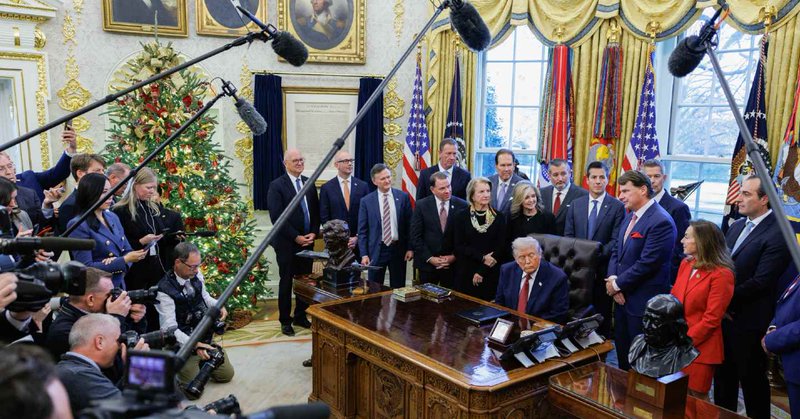
A New Roosevelt Institute Report Confronts the Roots of Our Media Crisis—and Calls for Breaking Up Corporate Media
thenation.com
Today’s journalism crisis wasn’t inevitable, but it’s time to free journalism from the straitjacket of turning a democratic obligation into a profit-maximizing business model.
0
7
12

As Trump 2.0 has repeatedly reminded us, we’ve created a media system susceptible to pressure from all directions. That’s what happens when we treat media as just another market and information as a commodity rather than the foundational public good that it is.
NEW📰: Democracy requires both an informed citizenry and a free press. But how do these ideals show up in public policy? Today, we have a paper out that looks at how media has become highly concentrated, commercialized, and drained of its public interest potential.
0
8
20

Hey @EUCouncil why don’t you guys go fine these police officers? Or are you’ll to busy trying to steal more money from American Companies and shareholders since you all opened an investigation into @Google now as well?
2
0
13
The role of public power is to ensure that markets actually work for the public. And in the case of media — where information is foundational to the health of our democracy — we have a lot of work to do.
“Should our media system primarily serve democracy, or profit?” NEW in @thenation: the team behind our new report argue the answer must be democracy—and lay out what it’ll take to break up corporate media and rebuild public media: https://t.co/5AYTdqOuQy
0
7
26
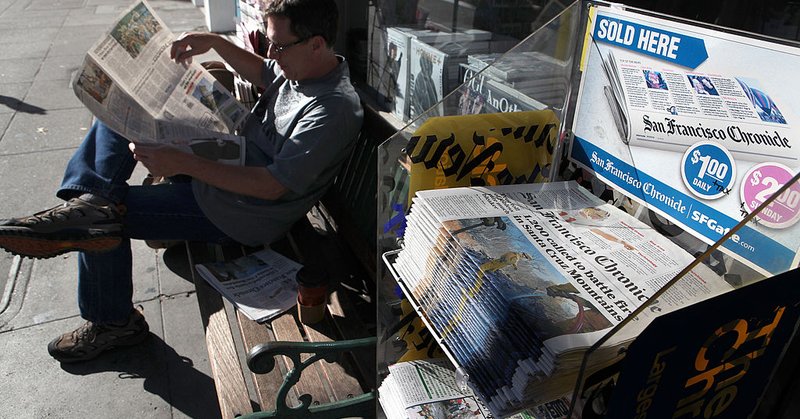
#ICYMI: Our top stories of the week ✅ Pro-corporate media policy is bad for democracy ✅ Billionaire charity can’t fix Trump accounts ✅ What’s behind the affordability crisis More in the #RooseveltRundown ⬇️ https://t.co/XssmKYBqik
rooseveltinstitute.org
Roosevelt Rundown: The Broken Media Economy Is Bad News for Democracy, What We’re Talking About, and What We’re Reading
0
0
5
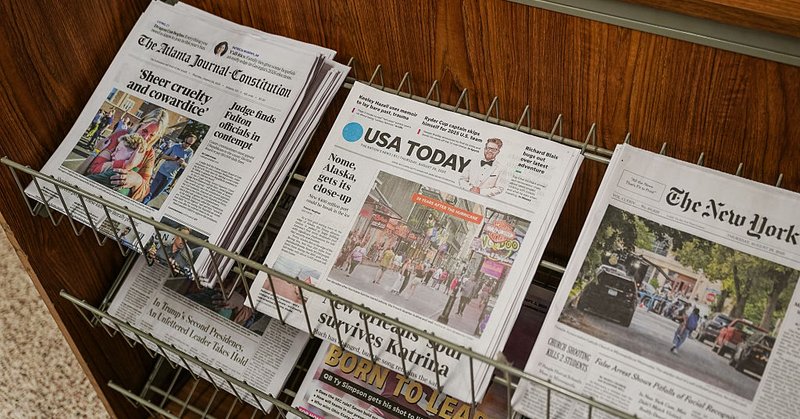
These aren’t isolated developments. They’re symptoms of a media system reshaped by decades of policy choices that favored consolidation over the public interest. Our new report maps how we got here, and what a democratic media system must look like.
rooseveltinstitute.org
Bilal Baydoun, Shahrzad Shams, and Victor Pickard trace the roots of the US media crisis to decades of deregulation and commercial capture, outlining how consolidation, news deserts, and platform...
0
1
3
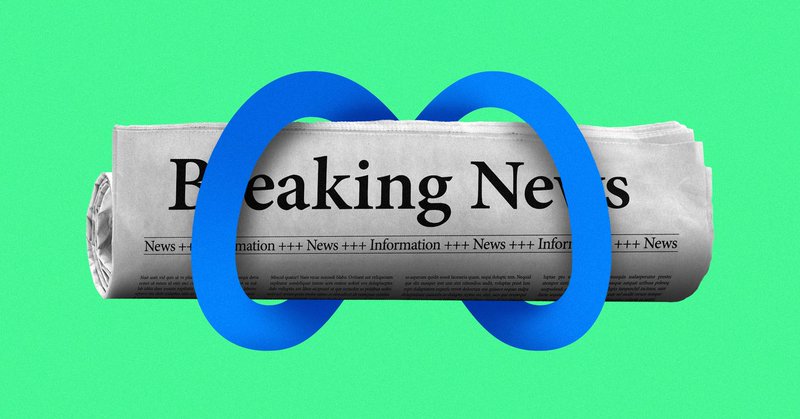
And now, platforms are paying publishers again—this time to feed real-time reporting into their AI assistants. As more news is routed through those systems, what people see will reflect corporate incentives long before it reflects public ones. https://t.co/BHGcVuxfZ0
axios.com
Meta's new partners include USA Today, People Inc., CNN, Fox News, The Daily Caller, Washington Examiner and Le Monde.
0
0
1
A streaming giant absorbing a major studio shows how concentrated economic power has become. Netflix acquiring Warner Bros. isn't just a Hollywood shakeup; it’s another step toward media consolidation. Fewer players. Bigger stakes. Less public control. https://t.co/mHfqaqJtHA

nytimes.com
The deal to acquire the Hollywood behemoth’s television and film studios as well as HBO Max will bulk up the world’s biggest paid streaming service.
2
3
6
“Should our media system primarily serve democracy, or profit?” NEW in @thenation: the team behind our new report argue the answer must be democracy—and lay out what it’ll take to break up corporate media and rebuild public media: https://t.co/5AYTdqOuQy
NEW📰: Democracy requires both an informed citizenry and a free press. But how do these ideals show up in public policy? Today, we have a paper out that looks at how media has become highly concentrated, commercialized, and drained of its public interest potential.
0
1
9
We shouldn't need to count on billionaire donations to operate important public programs. We need the tax system to fund effective governing institutions, structured to serve all of us — not the few who can afford to buy their way in. Roosevelt report:
rooseveltinstitute.org
In a new analysis, Hannah Garden-Monheit and Tresa Joseph draw on interviews with more than 45 senior Biden-Harris appointees to offer a bold road map for rebuilding federal government capacity and...
0
0
5
We know this play: big splash, bigger payoff later. TikTok deals → media buys. Crypto “pledges” → White House access. When wealth buys influence, the ROI isn’t moral—it’s political currency.

newyorker.com
The sale demonstrates the President’s personal brand of industrial policy—transactional, opaque, and designed to politically benefit him and his allies.
0
0
2
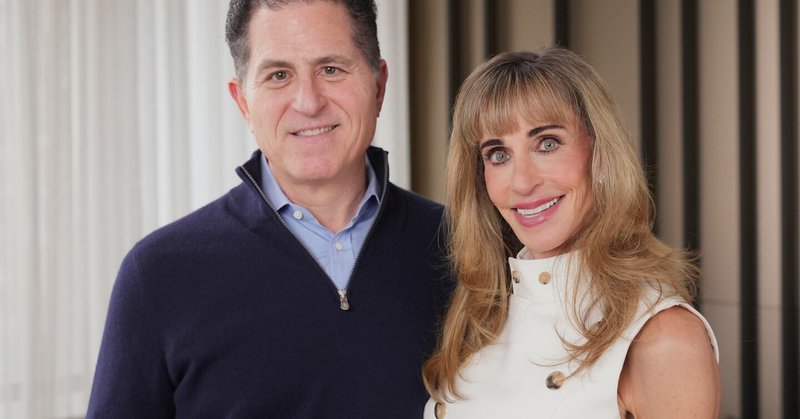
Dell donating billions to “Trump Accounts” appears to be driven by PR, not generosity. A one-time donation can’t replace public investment, especially when billionaires have spent years fighting taxes that fund real anti-poverty programs.
apnews.com
Billionaires Michael and Susan Dell pledged a historic $6.25 billion on Tuesday to provide an incentive to families to adopt new investment accounts for children.
3
1
7
@IFP It’s not just CHIPS. Across agencies, underinvestment and procedural choke points created a system built to avoid risk, but not deliver for working people. A more effective government ensures public investment actually reaches communities and workers. https://t.co/BER1b6DSqe
rooseveltinstitute.org
In a new analysis, Hannah Garden-Monheit and Tresa Joseph draw on interviews with more than 45 senior Biden-Harris appointees to offer a bold road map for rebuilding federal government capacity and...
0
0
2
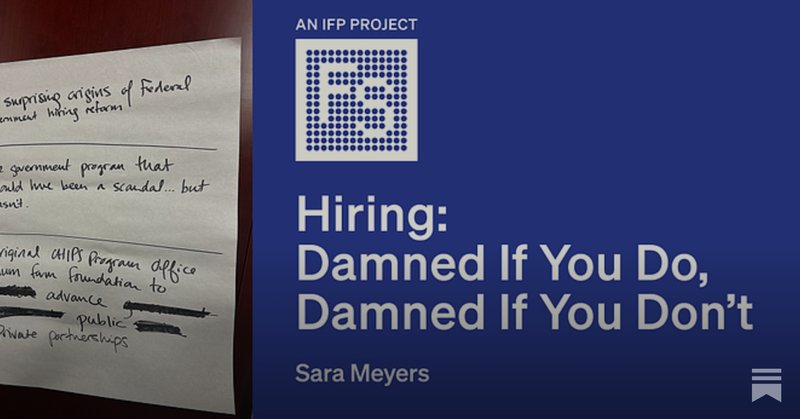
“Many systems in government are designed to move slowly.” A new @IFP analysis shows the CHIPS Act’s effort to deploy billions for U.S. semiconductor manufacturing was stalled by rigid hiring caps, drawn-out approvals, and process-first oversight. https://t.co/Mle4J4vhzS
factorysettings.org
Even with all the chips stacked in your favor, federal hiring is still too hard.
1
1
9

"Market supremacy has shrunk both our understanding of what a civic information economy ought to provide in a democracy, and our imagination about how to better guarantee the public access to reliable, diverse information." Must-read from @rooseveltinst: https://t.co/fJZ9e01UCF
rooseveltinstitute.org
Bilal Baydoun, Shahrzad Shams, and Victor Pickard trace the roots of the US media crisis to decades of deregulation and commercial capture, outlining how consolidation, news deserts, and platform...
3
2
3
Safeguarding our democracy requires a robust, fully funded public media system, a broader view of the First Amendment that advances citizens’ “right to know,” and a regulatory apparatus shielded from commercial *and* state pressures. Read the report 👇 https://t.co/ReJuHO0ZNa
rooseveltinstitute.org
Bilal Baydoun, Shahrzad Shams, and Victor Pickard trace the roots of the US media crisis to decades of deregulation and commercial capture, outlining how consolidation, news deserts, and platform...
0
1
5