
The Robertson Program
@robertsonprog
Followers
1K
Following
5K
Media
356
Statuses
1K
Collaborating with educators and researchers to create inquiry-based math and science resources. Part of the Ontario Institute for Studies in Education, U of T.
Toronto, Ontario
Joined March 2019
From all of us at the Robertson Program, we hope you have a restful winter break! We can’t wait to share more exciting content with you in 2026!
0
0
0
Students identify the missing piece of a puzzle using key characteristics, including number of sides, length of sides, angles, and lines of symmetry. https://t.co/VLPwOKValu

oise.utoronto.ca
Students develop reasoning and discussion skills by identifying the missing piece of a puzzle.
0
0
1
Students are invited to select a number card, read the number and build the corresponding "tower," to get their minds and hands engaged with numeracy in this one-on-one activity with an educator.

oise.utoronto.ca
Students get their minds and hands engaged with numeracy while making Unifix Towers.
0
0
1
Students learn to visually represent the multiplication of multi-digit whole numbers by using the area model.

oise.utoronto.ca
Students learn about a way of visually representing the multiplication of multi-digit whole numbers.
0
0
0
Students practice precise graphing skills using a graphing package to sort and classify objects. https://t.co/fXLIe0SDvJ

oise.utoronto.ca
Students practice precise graphing skills by using a graphing package to sort and classify objects.
0
0
0
Junior students often have misconceptions about fractions such as incorrectly saying that one quarter (1/4) is larger than one third (1/3). Read to learn about effective fraction teaching strategies and activities that can be incorporated in the classroom.

oise.utoronto.ca
Whole number bias is the tendency to apply or misapply one’s understanding of whole numbers or natural numbers – the numbers we typically count with – to rational numbers. It makes sense that people...
0
1
1
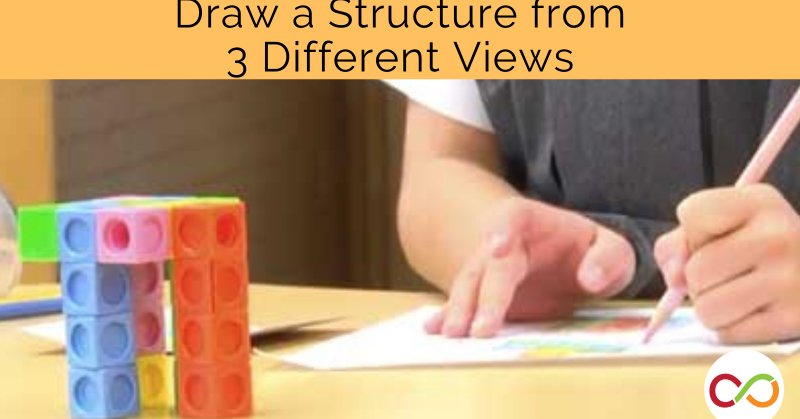
Students learn how to draw 2D/3D images while using accurate positional and directional language.
oise.utoronto.ca
Students learn how to draw 2D/3D images while using accurate positional and directional language.
0
0
0
Students learn to add and subtract to 500 through this collaborative small group activity.

oise.utoronto.ca
In this addition and subtraction game players attempt to arrive exactly at 500 on the number line.
0
0
0
Help children understand exponential growth and doubling with this fun hands-on activity using only five to ten manipulatives.

oise.utoronto.ca
Help children understand exponential growth and doubling with this fun hands-on activity.
0
0
0
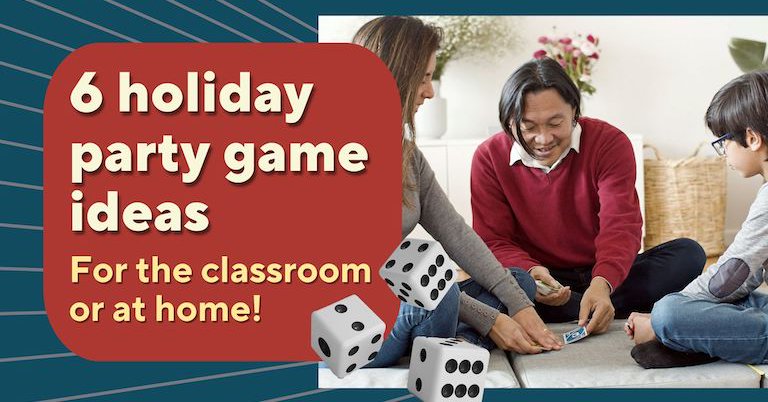
Thinking of holiday party game ideas for the classroom or at home? Read about these 3 games target number sense and data management in a playful manner and take little effort to learn. All you need are dice or a deck of playing cards to get started! https://t.co/078Is28xn0
oise.utoronto.ca
3 dice games + 3 card games that work for any holiday party – in the classroom or at home. The games target number sense and data management in a playful manner and take little effort to learn. All...
0
0
0
Students decompose composite numbers and identify prime factors using factor trees. https://t.co/P93NGyHbEP

oise.utoronto.ca
Students decompose composite numbers and identify prime factors using factor trees.
0
0
0
Students work in teams to determine the maximum, minimum, mean, median, mode and range of a group of playing cards.

oise.utoronto.ca
Students work in teams to determine the maximum, minimum, mean, median, mode and range of a group of playing cards.
0
0
1
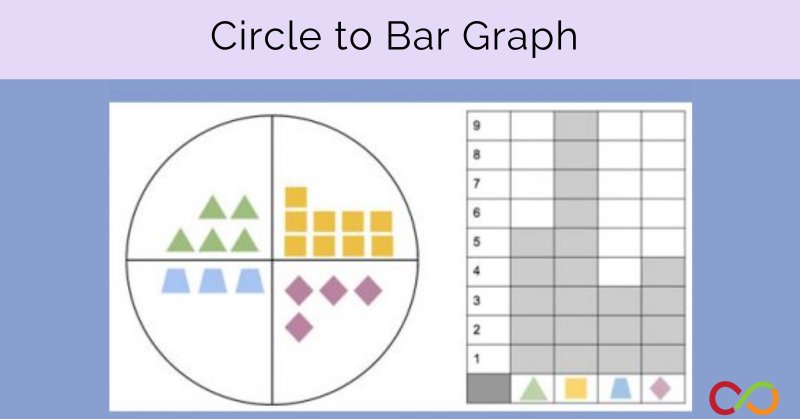
What is easier to read - a circle graph or a bar graph? Children discover the answer in this lesson.
oise.utoronto.ca
What is easier to read - a circle graph or a bar graph? Children discover the answer in this lesson.
0
0
1
Using a probability line, students will make predictions informed by the likelihood of selecting a domino that is greater, equal, or lesser to the one in their hand.

oise.utoronto.ca
Using a probability line, students will make predictions informed by the likelihood of selecting a domino that is greater, equal, or lesser to the one in their hand.
0
0
0
Students practice one-to-one correspondence in this fun dice-rolling, bingo-dabbing game.

oise.utoronto.ca
Students practice one-to-one correspondence in this fun dice-rolling, bingo-dabbing game!
0
0
0
Students attempt to minimize the value of their hand in this competitive card game using addition, subtraction, multiplication and division.

oise.utoronto.ca
Students attempt to minimize the value of their hand in this competitive card game.
0
0
0
Check out our recent monthly challenge exploring patterning and order of operation word problems!

oise.utoronto.ca
Each month, we are offering sets of engaging math challenges tailored for both primary and junior students. Designed to ignite classroom discussions and foster deep mathematical thinking, these...
0
0
0
Students practice spatial language as they design and describe their geometric flags to their partner.

oise.utoronto.ca
Students will practice their spatial language as they design and describe their geometric flags to their partner.
0
0
0
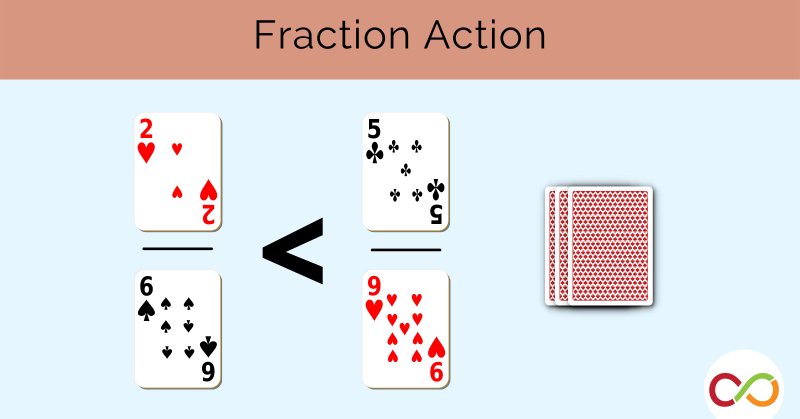
Get your students in on some fraction action as they strategically create and compare fractions. The player with the most cards is the winner!
oise.utoronto.ca
Get your students in on some fraction action as they strategically create and compare fractions. The player with the most cards is the winner!
0
0
0
As an educator, has your student ever asked why they should be learning math? In this blog, we hope to inspire educators by exploring the relevance of math and introduce methods that can strengthen math teaching through a joyful approach.

oise.utoronto.ca
Dr. Julie Comay explores how learning math is filled with joyful possibilities. In her message at this year’s meeting of the National Council for Teachers of Mathematics (NCTM), president Trina...
0
0
0