

isaac Samuel
@rhaplord
Followers
16K
Following
13K
Media
10K
Statuses
99K
Finance | History | Trance patreon https://t.co/xgWIKaKCFk?…
Joined February 2013
A 17th-century West African scholar: the philosophical theology of Muḥammad al-Wālī (fl. 1688) https://t.co/4LPv4NiScI
1
16
69
Our modern tendency to confuse historical artwork with modern photography (or naturalism) is the origin of most of the debates we have about our image of ancient peoples Ancient artists weren't always interested in making realistic depictions of the natural world

The Heretic King: Possible Diagnoses of Pharaoh Akhenaten
0
1
11

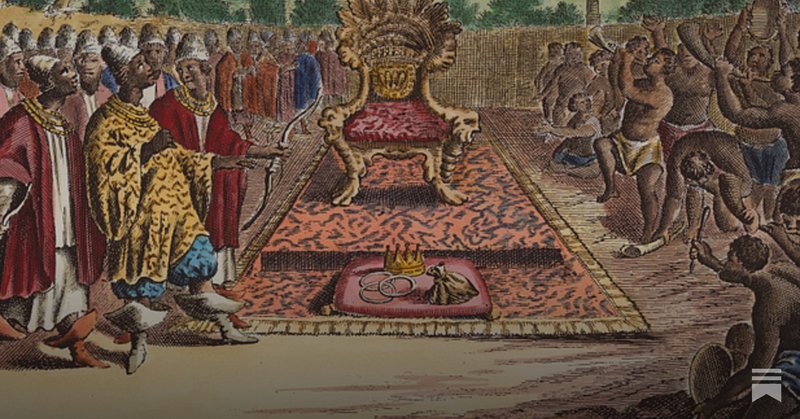
Acemoglu in Kongo: a critique of 'Why Nations Fail' and its wilful ignorance of African history.
africanhistoryextra.com
There aren’t many Africans on the list of Nobel laureates, nor does research on African societies show up in the selection committees of Stockholm.
0
2
10

Fascinating article
I've discussed this sort of geographic determinism before, It appeals to a specific type of Hegelian-style reductionist, who uses pseudo-scientific language not to understand African history, but to deny its existence ⤵️ Acemoglu in Kongo https://t.co/Tj1OJRZjVs
0
1
4
I've discussed this sort of geographic determinism before, It appeals to a specific type of Hegelian-style reductionist, who uses pseudo-scientific language not to understand African history, but to deny its existence ⤵️ Acemoglu in Kongo https://t.co/Tj1OJRZjVs
africanhistoryextra.com
There aren’t many Africans on the list of Nobel laureates, nor does research on African societies show up in the selection committees of Stockholm.
2
6
47

Shadow Killer weaves terror, art heists, and existential dread. A charismatic killer distorts reality, forcing Alexander and Alexia to face the arcane.
3
9
85
4) population density of tsetse-infested zone was high precisely b'se agric. productivity was high Despite the modern obsession with using technology (plows) as a proxy for agricultural productivity, historical evidence suggests they weren't correlated https://t.co/Tj1OJRZjVs
3
4
37
3)On urbanization, many of the largest and oldest cities in pre-colonial Africa were located in the tsetse infested regions of southern Nigeria and the East African coast, ie: the Yoruba & Swahili cities with higher population densities than those found in the tsetse free region
2
4
34
2) Regarding centralization, historians tend to associate the southernmost states; Asante, Dahomey, Kongo, with centralized bureaucracies (however anachronistic) In contrast, large states in the tsetse free Sahel ; Mali, Songhai, Bornu, were never centralized to a similar extent
1
3
41
Surprisingly, the author uses Great Zimbabwe as a counter-example for (tsetse-free) political centralization, yet historians now consider it to be a heterachical rather than hierarchical society https://t.co/f402E7Ebpf
1
4
37
I read this paper so you don't have to Here are some reasons why all of its claims are total bullshit 1) Tsetse fly free regions like the Sahel have some of the lowest levels of agricultural production and population density on the continent https://t.co/rmrP8kXsVk

Mind blowing how much of a menace and barrier to state development the TseTse fly has been in Africa. It kills (via transmitted parasite) essentially all horses and roughly 70–100% of cattle in the areas it inhabits. The paper notes “no African ethnic group occupied
7
37
197

The developments described by Khaled El-Rouayheb (tahqiq vs. taqlid), extended as far as modern Ghana.
“Knowledge (ʿilm) is essential to the doctrine of faith. It relates to the truth, by means of proof (dalīl). The imitator is he who accepts the words of the ʿulamāʾ (scholars) without proof and then falls back to blind acceptance.” al-Wālī, Chad, 1688. https://t.co/H8KEyt9rte
0
4
14
al-Wālī's works circulated widely and have been discovered in manuscript collections across Mali, Nigeria, Egypt, and Algeria. 17th-century manuscript by al-Wālī found at the University of al-Azhar, Egypt, Currently at Leiden University, Netherlands. https://t.co/4LPv4NiScI
0
8
40

Rio Grande LNG is committed to hiring locally in the Rio Grande Valley, supporting the employment of residents from 40+ communities around the region. Data is from July 2023 – September 2025.
0
0
1
The Fulbé constituted another significant scholarly diaspora in the region, especially the Toroɓɓe clerisy, which included some of the most prominent scholars in the kingdoms of Bornu and Bagirmi (modern Chad). https://t.co/4LPv4NiScI
0
8
43
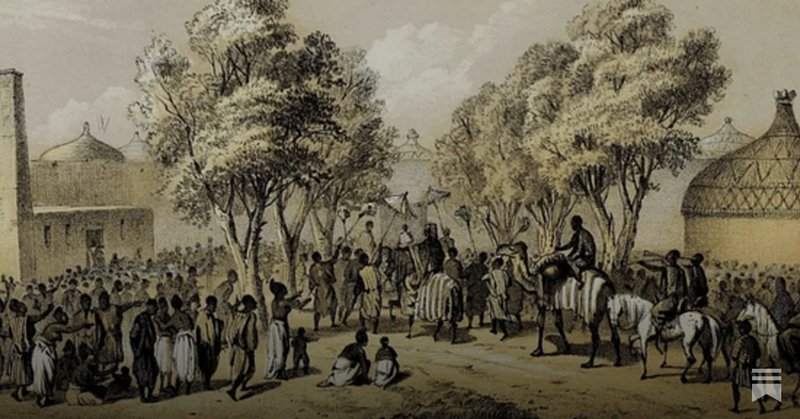
Return of the Sultan of Bagirmi from the Expedition, 4th July 1852. Massenya, Chad. https://t.co/H8KEyt9rte
0
6
26
19th-century copy of the prayerbook ‘Dalāʾil al-Khayrāt’, written in northern Ghana. https://t.co/H8KEyt9rte
2
9
29
“Knowledge (ʿilm) is essential to the doctrine of faith. It relates to the truth, by means of proof (dalīl). The imitator is he who accepts the words of the ʿulamāʾ (scholars) without proof and then falls back to blind acceptance.” al-Wālī, Chad, 1688. https://t.co/H8KEyt9rte
africanhistoryextra.com
At the turn of the 20th century, one of the most remarkable contributions to African ethnography was produced by Umaru al-Kanawi, a Hausa scholar born in Kano (Nigeria), who, after a brief stay in...
0
6
17
The West African scholar al-Wālī (fl. 1688) was a rationalist whose writings combined classical/Greek philosophy and local oral traditions to challenge the ‘blind acceptance’ of religious authority https://t.co/H8KEyt9rte
africanhistoryextra.com
At the turn of the 20th century, one of the most remarkable contributions to African ethnography was produced by Umaru al-Kanawi, a Hausa scholar born in Kano (Nigeria), who, after a brief stay in...
1
9
29
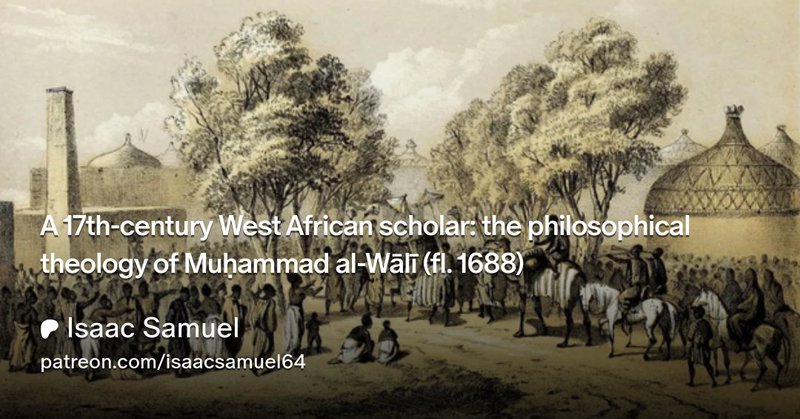
The philosophical theology of Muḥammad al-Wālī is the subject of my latest Patreon article⤵️⤵️ A 17th-century West African scholar: the philosophical theology of Muḥammad al-Wālī (fl. 1688) https://t.co/4LPv4NiScI
patreon.com
Get more from Isaac Samuel on Patreon
0
0
1