
Planetary Science Institute (PSI)
@planetarysci
Followers
5K
Following
1K
Media
3K
Statuses
5K
PSI is a private nonprofit dedicated to studying the origin, characteristics, and evolution of Earth, our Solar System, and planetary systems around other stars
Tucson, AZ
Joined September 2013
Read the full interview, learn more about Matt's recent research, and subscribe to our newsletter to all these PSI stories delivered directly to your inbox every Monday morning!
0
0
0
What inspired you to pursue planetary science? I was always just good at math&physics, so I picked that in school. During undergrad I had a professor who was doing asteroid research, and she asked for help, so I did. Before that I certainly had never heard of planetary science.
1
0
0
Matt Walker recently coauthored a paper about how melting ice on distant moons can cause subsurface oceans to boil! Learn more about Matt:
1
0
0
Happy Friday! 🪐 🐾 This week's #PlanetaryPet is PSI’s Jean-Philippe Combe's English Pointer Aubrey. According to Jean-Philippe, Aubrey likes to explore her environment by climbing to higher elevations, test new grounds, and challenge humans’ point of view.
0
0
0
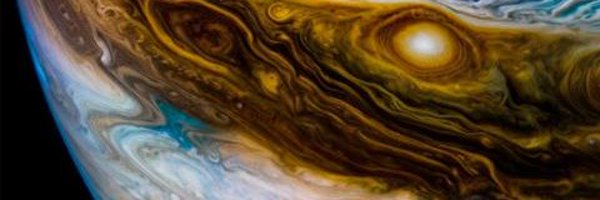
#JunoCam: Processing included saturation & contrast enhancement, color normalization, background extraction, reducing color artifacts, & image sharpness enhancement. Process your own JunoCam images at https://t.co/jhL9bk3f8a 📸: NASA/JPL-Caltech/SwRI/MSSS/Raihan Mohammad
0
1
1
A new study published in Geophysical Research Letters casts doubt on a 2018 discovery of a briny lake potentially lurking beneath Mars’s south polar cap. Read the full story: https://t.co/oolBqWJz7D
0
1
1
“Water is pretty important for habitability, so there is a lot of effort in understanding the processes which modify the oceans and the types of histories these environments experience,” said paper coauthor and PSI's Matthew Walker. Read the story: https://t.co/bLGIImNIRU
0
4
9
Painting by PSI Cofounder & Senior Scientist Emeritus Bill Hartmann uses acrylic paint & integrates Tucson soil to create texture on the surface. As Siding Spring Comet passed by Mars on 10/19/14, it broke up in the atmosphere, creating a luminescent shower in the pre-dawn hours.
0
1
1
Exciting news! We launched our annual campaign! This week's newsletter highlights our '24 annual report so you can learn more about us: https://t.co/iIJUbGVDkg If you like what you see, consider subscribing & making a donation! https://t.co/n3nidY6Phh PSI thanks you! 🪐🌵🌌
1
1
1
#SciArt: This week’s featured art is a dramatic digital image by PSI Research Scientist Peter Buhler. He was inspired to create this after being stranded in a snowstorm for a few hours along the Rim of the World Highway (near Big Bear).
0
0
0
Our PSI Annual Campaign is on! You can help us on our journey to pursue cutting-edge Solar System research and to share science with our communities by making a year-end pledge: https://t.co/JOWBq9f7rv
0
2
1
#JunoCam: A false color and sharpened image of Jupiter's volcanic moon Io. Interested in processing your own JunoCam images? Visit: https://t.co/c1v6uOiKDl 📸: NASA/SwRI/MSSS/Johnathan Brackett
0
0
1
Are you a PhD student interested in attending a planetary science-related conference or workshop? Each year, the Planetary Science Institute bestows two awards: For more information, go to: https://t.co/LurTZkpd8s
0
1
2
❓ What hobbies do you enjoy in your spare time? 🎙️I have two young children and a full-time job. What's spare time? If I do have a moment, I love anything outside - particularly running and cycling. Read Carly's Q&A + subscribe to our newsletter: https://t.co/IygxBrLWZw
0
0
0
Happy Friday! 🪐 🐾 This week's #planetarypet is Grant, who loves riding shotgun alongside PSI's Aileen Yingst. Here he has planted himself in the car to make sure the family doesn’t leave without him - wherever they are going.
0
0
1
The Earth's magnetic field keeps us safe, but such storms can trigger disturbances in our electronic infrastructure and produce colorful aurora.
0
0
0
PSI's Pamela Gay caught this beautiful image of the aurora from her home in Illinois! The northern lights were seen as far south as Florida and were caused by coronal mass ejections, solar storms that spew particles, energy, magnetic fields and material into the Solar System.
1
0
2