
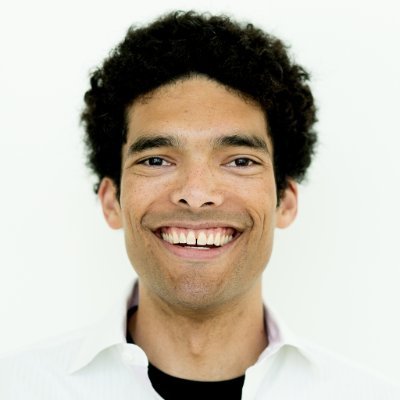
Neville Bowers
@nsb
Followers
275
Following
481
Media
56
Statuses
195
Co-founder @ emdash, building a better way to organize your conversations | Co-founded Rimeto (Acquired by Slack in 2020) | Ex-Facebook/Meta, Microsoft
San Francisco, CA
Joined March 2007
Big news: @emdash_io is now in public preview! 🚀 We built emdash to fix a problem every distributed team faces: making chat and video work together so everyone stays aligned without drowning in noise. What usually goes wrong? ▪️Chat threads get buried. ▪️Video calls become
0
0
3
Remember that key insight from last month’s meeting? Yeah, me neither. https://t.co/UcVqgaiSZE
0
0
1
Some of the best people I’ve ever worked with had ZERO formal training. https://t.co/UBonixSMOd
0
0
0
What if our everyday interactions could serve as both the medium AND the record of our decisions – without adding extra work? https://t.co/2AwdkGFSIj
0
0
0
At @emdash_io, we recently shipped 3 major features in 3 months using a simple, 3-step planning process. Planning isn’t just about setting goals. It’s about assessing, learning, and adjusting based on what’s working – and what’s not. It’s about staying agile and primed to
1
0
2

Last week, I saved 7 hours using @emdash_io Assistant. Here’s how: 1/ Kicked off Monday with a comprehensive summary of key meetings, conversations, and code changes from the prior week. 2/ Generated agenda proposals for my standing meetings, ensuring no key action items from
1
0
1
Traffic to @perplexity_ai has increased 658%. Further proof synthesis (synth AI) is the most important shift in AI right now. There are endless applications for AI-generated research & insights. What's the most exciting business/personal application you can think of?
0
0
8
Meta’s most beloved product you've never heard of is being shut down. I worked at Meta for 9 years and after I left, I was an avid user of Workplace. The tool centralized your company's chat, group conversations, and meetings. It was Meta’s answer to Slack. And while it’s
1
0
9
No self-help book will make you a better you. (Professionally.) Working at a startup will.
0
0
7
It's 2024. And managers still don't believe that WFH makes their teams more productive. What a shame. In a recent study, Microsoft found that 85% of managers find it hard to believe WFH employees are productive. But here's the kicker: The data tells a completely different
0
0
6
AI tools are improving, but there's still a fundamental problem: Silos. Advancements in AI productivity instruments have been excellent, but they don't integrate well. For example: → Fireflies works great within Zoom or Meet → Gemini functions well within Google Docs →
1
0
8
3 ways to keep up with the future of work: 1) Employee equipment that allows for work anywhere 2) 100% universal WFH flexibility 3) Fully integrated knowledge bases across video, chat, and file sharing What did I miss?
0
0
6
People are still saying WFH is dead. The data says it's alive and well. According to the Survey of Working Arrangements and Attitudes' June 2024 update: ➝ 75% of workers with a bachelor's degree work at least partially from home. ➝ 42% of office workers would take a 10% pay
0
0
9
I've written about this before but it's worth re-hashing: no one has a better co-founder than me. I’ve spent 10+ years collaborating with Phillip Zigoris. We worked together at Meta/Facebook, Rimeto, and now @emdash_io, and I can’t think of anyone I’d rather be building this
0
0
9
I never take notes in meetings. Not because I'm not listening. The opposite. I don't take notes so I can listen more effectively. This would be totally irresponsible...if I wasn't using @emdash_io's summarization tool. My shorthand is bad. emdash takes much better notes than
0
0
7
If you could automate 1 element of your workflow, what would it be?
1
0
7
Search is out. Synthesis is in. Wasting time digging around endless Google search results is so last year. Now, Google is starting to do this work for you with AI Overviews. It scours through all the info available and gives you a summary of the most relevant results in one
0
0
7
RIP manual note-taking. For the longest time, corporate meetings (especially remote ones) went like this: 1) The group meets on a specific topic. 2) They assign a (human) notetaker. 3) The notetaker types or handwrites notes on the meeting. 4) The notes are distributed to
0
0
11