Maike Sander & Lab
@msanderlab
Followers
2K
Following
893
Media
106
Statuses
566
Max Delbrück Center for Molecular Medicine, Berlin and Sanford Consortium for Regenerative Medicine, San Diego
Berlin and San Diego
Joined March 2017

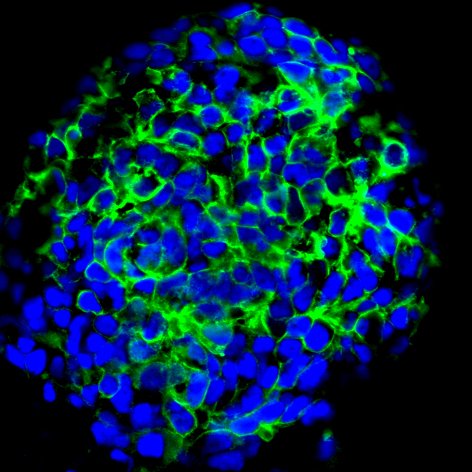
A promising drug target for regenerating functional β-cell mass in diabetes! @WorthamLab, @msanderlab & team @UCSanDiego discover the deacetylase SIRT2 restrains proliferation of pancreatic β-cells in a glucose-dependent manner: https://t.co/44pvCihyxG The image shows labeling
1
5
26
We are recruiting a postdoctoral researcher @MDC_Berlin iPSC islet cell models High throughput screens in iPSC models Organ-on-a-chip Genomics and computation Please RT! DM if you want to learn more. https://t.co/CkXXSIWwEp
0
47
75

Fast, reliable internet no matter how remote. Experience speeds up to 400+ Mbps to enjoy streaming your favorite shows and sports, video calling, browsing forums and weather apps—even in the most rural areas. Order online in under 2 minutes.
153
601
3K
I look forward to an exchange of science with colleagues at Heidelberg University. It’s been a while - I graduated from Heidelberg University in 1994.
Join us for a talk by Maike Sander on "Understanding and Treating Diabetes with Islet Stem Cell Models" April 29, 2024 16:00, BioQuant, SR41 @UniHeidelberg @uniklinik_hd @msanderlab @MDC_Berlin Please RT
0
1
18
Very honored to join the @ChariteBerlin faculty. I look forward to the work ahead with wonderful colleagues.

On March 1, our Scientific Director Maike Sander (@msanderlab) will take up her appointment as professor for "Pancreatic Organoid Research and Disease Modeling" at @ChariteBerlin. Dean Joachim Spranger presented her with the certificate. Congratulations! https://t.co/FkNh6664ic
3
0
41
Congratulations to @WorthamLab and the many other contributors. The study identifies Sirtuin-2 as a glucose-dependent regulator of beta cell proliferation.
I’m excited to share our discovery of a novel regulator of adaptive beta cell proliferation–the protein deacetylase SIRT2–from work in @msanderlab together with many key contributors including Bastian Ramms, Chun Zeng, Jackie Benthuysen, and @someshtweet
0
0
11
Thrilled to announce that registration and abstract submission for European Islet Study Group meeting in Helsinki, Finland, 18-20 June 2024 is NOW OPEN! https://t.co/kk5ealxGZS 🚨Early-bird registration is March 15th, limited seats available🚨 Please RT ;)
1
16
27
Very much look forward to my upcoming visit to @CRGenomica - to learn about the outstanding science and to visit our @EULIFE_news partner institution. Of course, also to experience beautiful Barcelona.

📣 PRBB-CRG conference 📋 Insights into diabetes from stem cell islet organoids and single-cell genomics 🗣️ Maike Sander @msanderlab 📆 Jan 12 ⏰ 12:00 CET 🤝Hosted by Jorge Ferrer, CRG 📍Marie Curie room #PRBB
1
4
17
We identified two distinct beta cell subtypes that exhibit an abundance shift in T2D. T2D risk variants are enriched in subtype-defining accessible chromatin. Both subtypes exhibit functional impairment in T2D, likely induced by the T2D-associated metabolic environment.
1
0
5
Out today @NatureGenet our work on mechanisms of beta cell dysfunctions in type 2 diabetes (T2D) combining single-cell genomics and Patch-seq. Congratulations to @GaoweiW @JoshChiou, Chun Zeng. Big thanks to @kjgaulton @seb11pr @bcellorg, F Kandeel, S Kim. https://t.co/mFreaSVooE
4
17
62
The @MDC_Berlin is seeking a Head of Innovation & Commercialization. An opportunity to shape a modern innovation office. Please RT! DM me with any questions.
#NowHiring: join the #mdcBerlin as "Head of Innovation & Commercialization" and advise our scientists in creating industry alliances or spin-off companies. 📢 permanent, full-time position with great compensation and benefits‼️ 𝗔𝗣𝗣𝗟𝗬: https://t.co/S57JtZTCC4
#JobOpening
0
10
10
Retweeting our call for senior scientist or postdoc at the Max Delbrueck Center in Berlin with correct link to application website. 1. iPSC-islet organoids 2. Metabolomics 3. Single-cell biology and screens https://t.co/jubYzGifhb
2
25
34
It was a pleasant surprise to see the commentary on our recent JCI paper by @powersac_TN and Kristie Aamodt who provide an apt metaphor for the regulatory layers of beta cell function https://t.co/vpxvMDYKQL. Thanks for highlighting! Original article here:
0
2
15
We identified a pre-β-cell population in the fetal pancreas that produces serotonin under the control of the transcription factor CDX2. This transient pre-β-cell population resembles enterochromaffin cells in stem cell islets, suggesting these are not pancreas-aberrant. 2/2
1
0
8
We are thrilled to share our single-cell genomics analysis of stem cell islet differentiation in Dev Cell: https://t.co/l29povRP23 Congratulations to Han and Gaowei, who led this study, and thank you to collaborators @LabSpagnoli @kjgaulton @powersac_TN 1/2
3
18
96
Retweeting our call for senior scientist or postdoc at the Max Delbrueck Center in Berlin with correct link to application website. 1. iPSC-islet organoids 2. Metabolomics 3. Single-cell biology and screens https://t.co/jubYzGifhb
2
25
34
Join @msanderlab as a #postdoc! It aims to understand & reverse pancreatic beta cell dysfunction in #diabetes. It employs #hPSC-based models and interrogates these models combining functional & #singlecell based genomic assays. #postdocjobs 👉 https://t.co/LY6GKEGnn8
0
10
11
Join our team @MDC_Berlin as senior scientist or postdoc! 1. iPSC-islet organoids 2. Metabolomics 3. Single-cell biology and screens https://t.co/L8cNyst8dN
0
28
54

Helmholtz delegation visit to Sydney. Wonderful discussions with a perfect view of Sydney harbor. @KatrinJM @msanderlab
0
1
15
Sites of LSD1 recruitment in human islets are enriched for T2D-associated variants, revealing a potential mechanism whereby genetic background influences adaptive insulin secretion. Stay tuned to @WorthamLab who will continue this exciting research. Much more to come! 3/3
0
0
3
We found that feeding increases H3K27 acetylation in pancreatic islets, and that the chromatin modifying enzyme Lsd1 mediates deacetylation of these sites between meals. Experimental manipulations that prevent resetting of feeding-induced changes cause insulin hypersecretion. 2/3
1
1
6