
Michael Le Page
@mjflepage
Followers
3K
Following
6K
Media
209
Statuses
8K
A reporter at New Scientist. I'm over at the good place now. What on earth are you still doing here!
London
Joined October 2012
This is the Ravine between Torreblanca and Alcalá de Chivert "Castellón Norte" in the Valencia region of Spain. This really doesn't look good! 😳 https://t.co/1l5uAkoJRK
80
1K
4K

A welcome sliver of postive climate news 🌳 @mjflepage says fears that global warming is accelerating faster than models predicted are probably overblown. Quoting @ClimateOfGavin, @rowhoop says avoiding doomerism and retaining agency is vital https://t.co/i5IteCfm4C
3
8
12

Colossal, a US firm that is aiming to revive lost species such as the woolly mammoth, says it now has a near-complete genome of the extinct thylacine, writes @mjflepage for @newscientist.

newscientist.com
Colossal, a US firm that is aiming to revive lost species such as the woolly mammoth, says it now has a near-complete genome of the extinct thylacine
0
2
1
We may be closer to bringing thylacines back from extinction than ever before. @colossal says it has obtained a nearly complete genome of the the extinct marsupial. But @mjflepage says there's a big catch... https://t.co/i5IteCeOf4
0
1
3

Invasive snake is surviving in Britain by living in attics and walls Britain should be too cold for the invasive Aesculapian snake to survive, but it is thriving by exploiting the warmth of attics, wall cavities and compost heaps @mjflepage
https://t.co/MsqP04uGDb

newscientist.com
Britain should be too cold for the invasive Aesculapian snake to survive, but it is thriving by exploiting the warmth of attics, wall cavities and compost heaps
0
8
7

This drought is so acute, that rivers across the Amazon have become just a scar in the landscape.
3
23
75
There are at least five major problems with the idea that we can cool the planet 🌍 back down after overshooting the 1.5 target, according to @CarlSchleussner @JoeriRogelj & co With comment from @JamesGDyke
https://t.co/Gn7y4QVKf8

newscientist.com
We might not be able to cool the world down again after overshooting the 1.5°C warming limit – and even if we can, a lot of irreversible damage will have been done
4
16
17

📢📢Job alert📢📢 We're looking for a new Chief Subeditor at New Scientist. Could this be you? Details here https://t.co/FENOs5NdKU DMs open.
newscientist.com
After many years of connecting brilliant minds with the world’s leading science employers, New Scientist Jobs has now closed . We want to express our heartfelt thanks to every employer, recruiter,...
1
9
6
Demis Hassabis is a Nobel winner. This line always stood out to me when we spoke "The Hubble telescope allows us to see further into the cosmos – that’s how I see AI, as a generalised telescope that can help us progress in many areas of science" https://t.co/TlJuEy1rSl

newscientist.com
DeepMind's co-founder says artificial intelligence is set to crack many of the toughest problems in science, from the nature of life to nuclear fusion
2
9
30
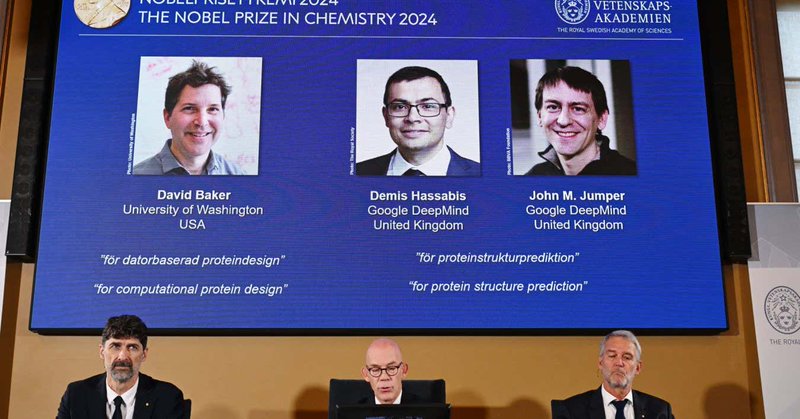
The Nobel prize in chemistry has gone to David Baker for developing ways to design entirely new proteins, and @demishassabis and John Jumper at DeepMind for developing ways to predict the structure of any protein from its sequence https://t.co/BlPnuiIf9E
newscientist.com
David Baker, Demis Hassabis and John Jumper have been awarded the 2024 Nobel prize in chemistry for research on predicting protein structures and designing new proteins
1
6
27

“A dire assessment is an honest assessment," a group of prominent researchers write in a new report that finds 25 of 35 key climate indicators have reached records this year, from greenhouse gas levels to fossil fuel subsidies. https://t.co/odIVjm0UFZ

newscientist.com
Key climate indicators from greenhouse gas levels to ice loss have reached record levels this year in what researchers call a “critical and unpredictable new phase of the climate crisis”
3
31
49
The Nobel for medicine goes to Victor Ambros and @gary_ruvkun for the discovery of tiny pieces of RNA called microRNAs. They're important because a single microRNA can control many different genes 🧬 at once https://t.co/luFFIImxaL

newscientist.com
The 2024 Nobel prize in physiology or medicine has gone to Victor Ambros and Gary Ruvkun for their discovery that tiny pieces of RNA called microRNAs play a key role in controlling genes
0
13
44
I think many people assume unexploded bombs get less dangerous over time but a recent study found this is not the case:

newscientist.com
An explosive found inside many bombs and shells used during the first and second world wars is becoming more likely to explode in response to impacts

At Miyazaki Airport in Japan, a section of the taxiway collapsed, which was later determined to have been caused by unexploded ordnance. A camera at the nearby Aviation College captured what is believed to be the moment of the explosion 😳💥 https://t.co/5frSckrDxK
0
1
1

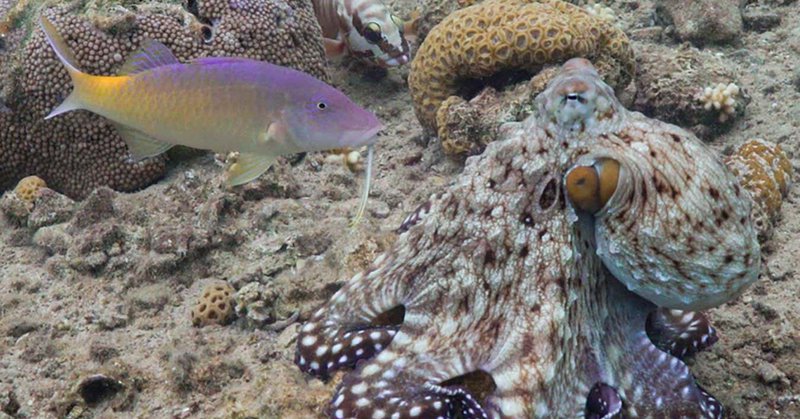
An unlikely friendship 🐙🐟 @mjflepage says octopuses and fish have been found teaming up in an unexpected display of cooperation - just one of several surprising octopus discoveries we've made recently https://t.co/BpwUttRyMa
0
8
35
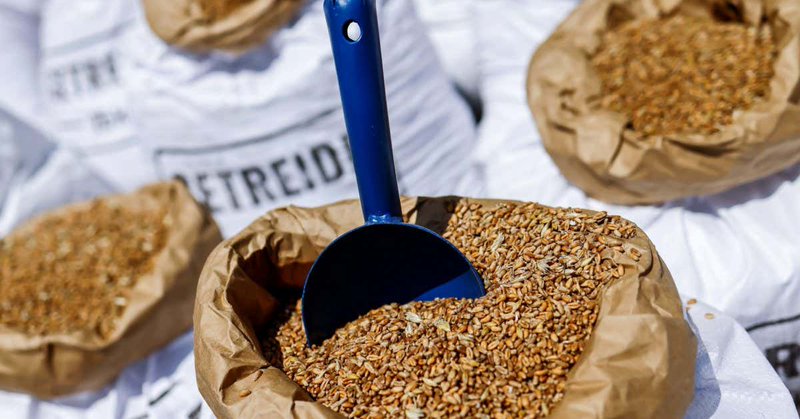
Of course, there would be even bigger environmental gains if we stopped turning vast quantities of vegetable oil into fuel https://t.co/n3SuiPswSS
newscientist.com
The G7 group of nations reportedly rejected a proposal from the UK and Germany to lower biofuel production, but the two European nations could still go it alone
0
1
1
Camellia oil is already grown and used for cooking in China, but not many people outside Asia are familiar with it The bad news is - well, just brace yourself before checking its price. But that would come down fast if more countries grew it
1
1
2
A modelling study suggests that if camellia replaced other oil crops on just 11% of land, it could reduce greenhouse gas emissions by 14%, water use by 5%, land use by 7% and pesticide use by 9% This is because it is a high-yielding shrub that can thrive in fairly poor soil
1
1
2
We're still cutting down rainforest to grow more vegetable oils. So which oil should you buy if you care about the environment - and your health? #climate The answer might be camellia oil, often sold as tea seed oil, which is similar to olive oil https://t.co/SflvuCWFsD
newscientist.com
Replacing some existing vegetable oil crops with camellia oil could boost production while reducing environmental impacts such as greenhouse gas emissions
1
8
4
The more we learn about octopuses 🐙, the more impressive they get Collaborative hunting with different 🐠 species is an impressive feat for a solitary animal https://t.co/uezxyeWaUv
newscientist.com
An octopus will work with several different species of fish to find and catch prey - and punch those that aren't helping
0
10
36
It has not yet been shown if the bubbles act as artificial gills, but it's likely - the bubbles of aquatic insects and spiders 🕷️ act as gills BTW, if you want to know why there are no artificial gills for human divers, this is the feature for you: https://t.co/xcmjOMYjwN
newscientist.com
"I FELT fine until I passed out," says Edward Cussler of the University of Minnesota in Minneapolis. Back in 1980 he had built an artificial gill that extracted oxygen from water. His dream was that...
0
0
0