Tang Lab
@lab_tang
Followers
149
Following
6
Media
21
Statuses
41
We are a group of experimentalists dedicated to solving problems at the interface of engineering, soft matter, and biology! The tool we use is microfluidics.
Stanford, CA
Joined November 2018
The Tang Lab had an amazing time at #BMES 2022! So exciting to share our work and be a part of this incredible community of biomedical engineers! @BMESociety @TangSindy
0
1
3
0
1
2
Here are some behind-the-scenes of our blades. Learn more about ancient tools here: https://t.co/0wy5rWlGzL
https://t.co/sPTjYa9lk4
1
1
1
Obsidian, made from volcanic rock, was used by cultures in the Stone Age to make blades up to 3 nm sharp! Can we use modern-day micromachining techniques to get close to this natural wonder?
1
1
4
A ~2.5 hour glimpse of a day in lab -- some setup, some discussion, some experiments. Featuring @Tangsindy and @nic_castano
0
1
3
Another day, another BAT. Shown here is an aspirator removing supernatants. We don’t know about you, but we certainly can do with a ✨stress aspirator✨ in our lives (': Check out the paper below to learn more about food allergy diagnostics & BATs! https://t.co/NiBDmEfx0i (5/5)
0
0
0
As the Tang Lab is expanding its work into allergy research, we've been doing LOADS of BATs. And how cool is it to see the flow cytometer sorting and analysing cells in real time?? (4/5)
1
0
0
Upon allergen stimulation, the surface marker CD63 is upregulated on basophils. In BAT, the percentage of CD63+ basophils is analysed by flow cytometry. If this value is higher than the negative control's, the individual is most likely to be allergic to the tested allergen (3/5)
1
0
0
With invasive prick tests and risky OFCs performed on individuals, the basophil activation test (BAT) is a game changer in diagnosing food allergies thanks to these people. BATs are carried out in vitro, measuring the CD63 and CD203c levels of basophils (2/5)
1
0
2
Ever wonder how food allergies are diagnosed? Is it in vivo skin prick tests and oral food challenges (OFCs) (i.e. microdosing an individual with suspected allergen – epipen on hand), or in vitro blood tests? Well.. the answer is all of them (1/5)
1
0
2
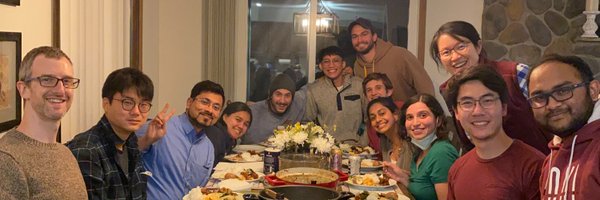
The Tang Lab members had a great time at the lab's summer social, where we enjoyed good conversation, good food, and good music (courtesy of the lab's musically inclined members). And we celebrated the youngest Tang Lab member's birthday!
0
1
6
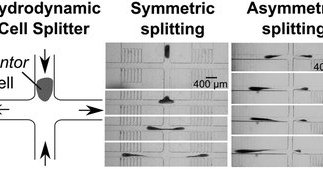
For the full details of the hydrodynamic splitter, check out our recently published work in Lab on a Chip! (6/6)
pubs.rsc.org
Stentor coeruleus, a single-cell ciliated protozoan, is a model organism for wound healing and regeneration studies. Despite Stentor's large size (up to 2 mm in extended state), microdissection of...
1
1
6
Maybe the smaller fragments can’t repair wounds as easily as larger fragments. It’s also possible the greater mechanical stresses on the smaller fragments (necessary to achieve the small size) lead to decreased viability. We aim to study these effects in future studies. (5/6)
1
1
1
By adjusting the geometry and adding a subsidiary flow to the cross-junction (A), we can split cells asymmetrically (B). The long-term viability of the fragments decreases with fragment size (C). We aren’t completely sure what is causing this, but we have some guesses: (4/6)
1
1
2
We found that cells split beyond a critical strain rate. Larger cells and faster fluid flows make splitting more likely. When the flow is fast enough, the cells are split into roughly equal halves. (3/6)
1
1
1
Stentor coeruleus is a single-celled microorganism that has incredible healing capacity. The hydrodynamic splitter uses small volumes of fluid flow at a microscopic cross-junction to split Stentor cells. There is no debris buildup, and we can split ~500 cells/min. (2/6)
1
1
2
How do cells heal injuries and repair wounds? Cutting cells is the first step to studying the extremely important process of wound healing! We are excited to share our recently published work where we cut Stentor coeruleus cells using fluid flow. (1/6)
2
21
103
Last week, our undergraduate #AmgenScholars Martín Koch presented his work on cell size effects on Stentor wound repair as part of the 2022 Stanford Summer Research Program! Congratulations Martín & thanks for a great summer! #SSRP @StanfordBiosci @AmgenFoundation @MartnKoch1
1
2
8