
David Foster
@davidrfoster0
Followers
478
Following
454
Media
36
Statuses
482
Assistant Professor of Political Science at Florida State University. Berkeley PhD. I study American political institutions, esp. presidential unilateralism.
Tallahassee, FL
Joined January 2012

Works in Progress is now available as a print magazine. I think it's the most beautiful and readable magazine I've ever seen. Subscribe today for $100/£75 to receive six beautiful, 120-page issues a year. https://t.co/sCOVnY1mf1
51
111
622

Of course, all I am doing here is spelling out the logic of @davidrfoster0 & Joseph Warren's 'The NIMBY Problem'. Some good examples of it here

Since Yimbys became players Sacramento (circa 2017), they've scored lots of legislative & media wins, but the actual housing-production results have been, well, disappointing. /2
0
1
6
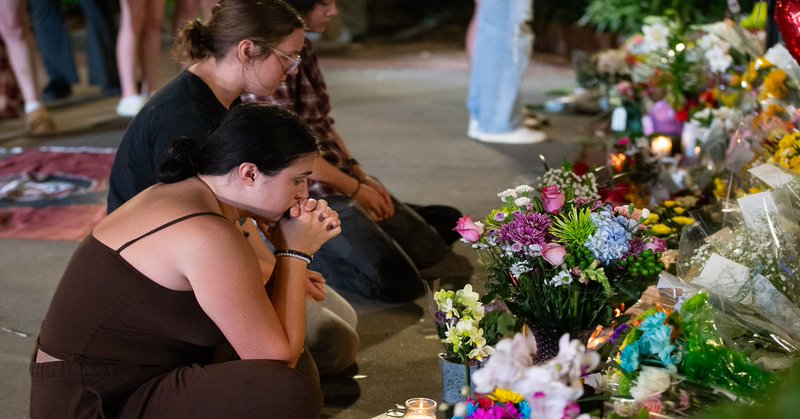
A scary situation at FSU but I am alive, well, and away from the area.
tallahassee.com
FSU reeling after "tragic and senseless act of violence at the heart of our campus."
0
0
23
Helen Mirren said WHAT?! @ClickHole

Helen Mirren says she feels “sad” that Kurt Cobain is no longer alive because he never got the chance to experience GPS and its “magical” functionality. “I always say, it’s so sad that Kurt Cobain died when he did, because he never saw GPS,” Mirren said. “GPS is the most
0
0
2

⚖️Using a formal model, @davidrfoster0 shows unilateralism can alter the landscape of group power through policy feedback effects, and survive a purportedly opposed new president https://t.co/zSllyX8mM0
#FirstView #OpenAccess
0
5
16
Number 1 is very important. Please no more emails intended for the Berkeley neuroscientist @replayprof.

My advice for how to email a professor: 1. Look up their email address. 2. Type your message. 3. Press send.
0
1
4

Interesting model. It might not be that executive orders are any less durable than congressional legislation, just that legislation (as opposed to executive orders) is correlated with stronger support from the interest group environment.
Excited that my article on presidential executive orders and policy feedback effects is finally available on @PSRMJournal FirstView. Everyone usually assumes that legislation is sticky, while unilateral action can be immediately reversed by a successor. 1/7
0
3
17
Future work needs to contend with the normative implications of this for democratic accountability in the United States. Open-access article here: https://t.co/HNdnMu3tJG 7/7
1
2
6
In some cases then, unilateral action can be politically impossible to undo, even if it is narrowly legally permitted. Thus, presidential unilateralism can be a key means of achieving durable policy shifts. 6/7
1
1
5
If you are initially weak, you have to rely on the president's pen. But remember the idea of (positive) policy feedback: policy itself can strengthen the group demanding it and self-reinforce, opening the door to further policy shifts in the future. 5/7
1
1
7
I argue first that legislative persistence and unilateral transience might have nothing to do with legal status and a lot to do with the strength of policy-demanding groups. If you are initially strong, you can pressure Congress effectively and get legislation. 4/7
1
0
5
But what about the case of persistent unilateral action, which isn't reversed even under an opposed successor? Key examples include lack of federal enforcement against state-legalized cannabis, and the persistence of DACA protections for those originally receiving them. 3/7
1
0
1
Even I have a paper in which that is a key assumption. https://t.co/ml6JXT6Qpu 2/7
journals.uchicago.edu
Understanding unilateralism may require examining the conditions that precede and motivate the president’s action. But if members of Congress can anticipate unilateral action, their failure to...
1
0
1
Excited that my article on presidential executive orders and policy feedback effects is finally available on @PSRMJournal FirstView. Everyone usually assumes that legislation is sticky, while unilateral action can be immediately reversed by a successor. 1/7
2
8
45
Link to podcast above seems not to go to the specific episode, but it's called "We Have Created the Scarcity on Purpose".
1
0
1
...them as a starting point for scholarly inquiry and policy innovation. 9/9
1
0
1
...rather than trying in vain to circumvent them. Importantly, it also preserves the power of disadvantaged communities to say no to some genuinely bad and exploitative projects. Given these advantages, we encourage scholars and policymakers to read these works and use... 8/9
1
0
2
...for more housing and infrastructure in a way that's politically possible. The theoretical and empirical evidence for compensation-based approaches is still young but this is a very promising direction: its focus is on turning would-be powerful opponents into supporters,... 7/9
1
0
2