Chris Field
@chrfield
Followers
5K
Following
109
Media
894
Statuses
1K
Director, Stanford Woods Institute for the Environment Find me on Mastodon: @[email protected] Find me on BlueSky: @chrfield.bsky.social
Stanford, California
Joined April 2011
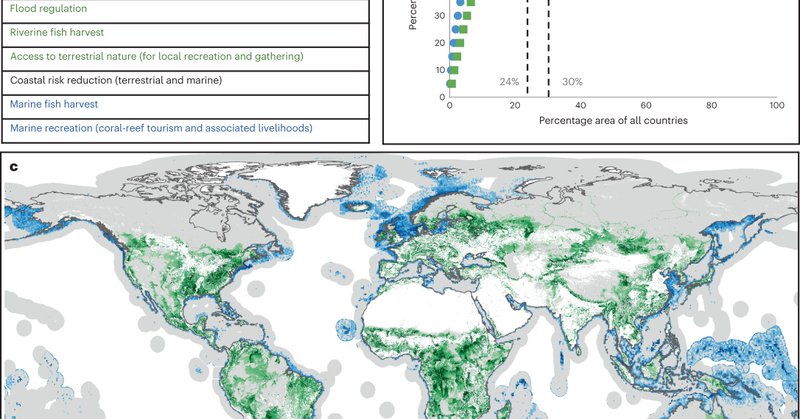
New in @NatureEcoEvo: Study maps global locations of critical natural assets. Shows that conserving 30% of global land & 24% of coastal waters would sustain 90% of nature’s current contribution to people. Collab led by @UMNIonE w/ @NatCapProject. Read:
nature.com
Nature Ecology & Evolution - Bringing together multiple models and databases on nature’s contributions to people, the authors map these contributions globally and determine the critical...
1
15
37
Paper in @natureecoevo develops a framework to assess the role that various social cues play in animal's migration decisions. Applies framework to existing cases documenting the influence of social cues on the timing of animal migration. https://t.co/OjOJ5IDLqt
@HopkinsMarine
0
1
10
It was a pleasure to moderate the @Stanford #COP27 side event with @Princeton and @Cornell covering the 2022 Global Carbon Budget @gcarbonproject, creating impact at scale @StanfordDoerr, and decarbonizing #agriculture @WorldResources. Read summary:
sustainability.stanford.edu
Stanford and Princeton co-hosted an official side event at COP27 to present the 2022 Global Carbon Budget, outline approaches to impact at scale at the Stanford Doerr School of Sustainability, and...
1
0
7
Study in @naturecomms reveals #microplastics ingestion by filter-feeding whales is likely 10 million pieces/day. Combines depth-integrated microplastic data w/ foraging measurements from 191 blue, fin, & humpback whales: https://t.co/OursRPE1q3
@hopkinsmarine
3
32
73
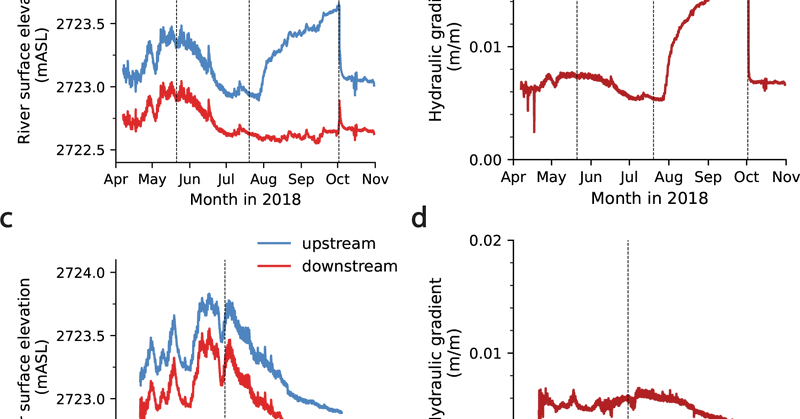
New in @NatureComms: Beaver dams positively influence water quality in mountain watersheds, overshadowing climatic extremes. Warmer weather -> more beavers -> more dams -> removal of nitrate that would otherwise lead to water quality degradation:
nature.com
Nature Communications - Beaver dams increase water flow gradients and nitrate removal far more than seasonal climate extremes. An expanding beaver range is an ecosystem feedback to climate change...
0
2
8
From @djhayes01: an insider’s view on the Biden administration’s #climate resilience strategy - how the US federal government is approaching major climate risks. Important context for current adaptation conversations at #COP27. Read: https://t.co/utRfsYLU91
0
2
5
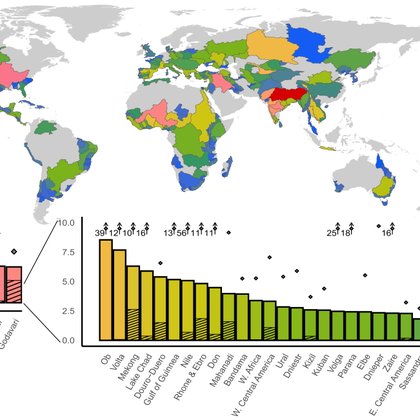
New @PNASNews from @RjpSchmitt @lorenzorosa1992 & Gretchen Daily @natcapproject: Study quantifies h2o storage required to maximize crop irrigation w/o depleting water stocks or nature. Finds dams also store 50%+ of needed h2o, but notes dam drawbacks:
pnas.org
Providing affordable and nutritious food to a growing and increasingly affluent global population requires multifaceted approaches to target supply...
0
11
21
New in @TheLancetPlanet: Analysis from @Stanford, @Princeton, et al. explores direct vs environmental disease drivers. Finds 80% of pathogens are environmentally mediated, supporting the need for more research on #environmental solutions to human diseases: https://t.co/YKTwwCqVDI
0
1
5
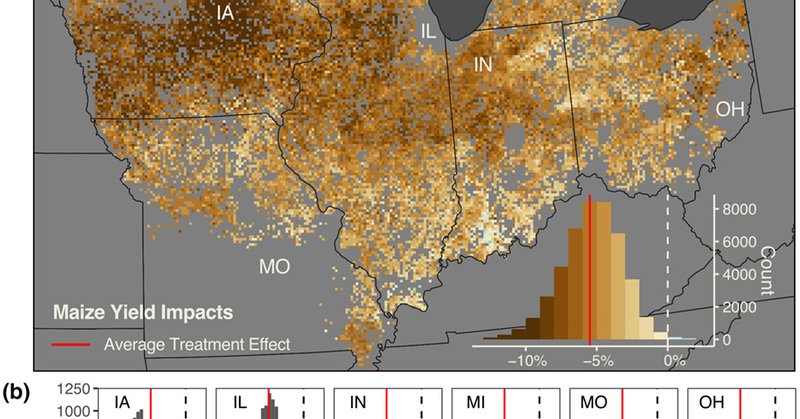
New from @DavidBLobell et al. in @GlobalChangeBio: Cover crops reduce maize & soybean yields in U.S. Corn Belt. Study suggests cover cropping could lead to negative impacts despite being encouraged as a method of carbon sequestration:
onlinelibrary.wiley.com
Cover cropping is increasingly promoted as a way to improve soil health, reduce soil erosion, and increase soil carbon in agricultural fields, but yield impacts at commercial scales are not well...
0
0
6
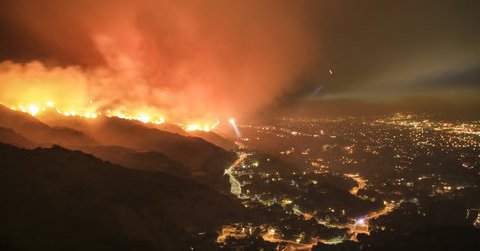
Fighting fire with fire 🔥 Experts @RanaSarkar_, @ChristiansonAmy, Alexandra Konings, & Frank Lake discussed the growing threat of #wildfire and a path to resiliency w/ moderator @chrfield. Watch the webinar 🎞️ https://t.co/3gzJdGen7V Read insights💡 https://t.co/hyORVML0rm
sustainability.stanford.edu
Climate change and decades of fire suppression have fueled increasingly destructive wildfires across the western U.S. and Canada. Stanford scholars and wildfire experts outline how a path forward...
1
3
7

Listening now. What an amazing panel gathered together

🔥 Webinar tomorrow @ 11am PT | Different approaches to #wildfire mitigation and forest management, new climate factors, public perceptions of controlled burns and more, with US & Canadian fire experts. Register: https://t.co/khvn2sgOjS
1
2
4
New in @AnnualReviews: Comprehensive review from Noah Diffenbaugh examines observed and hypothesized enviro impacts of the COVID-19 pandemic; finds acute risks to many terrestrial and marine ecosystems and communities that depend on them. https://t.co/zxVwaKaMMe
0
1
8
New in @SocRiskAnalysis from @WongParodi_grp and others: Exposure to traditional media (TV, radio, etc.) predicts mitigation behaviors for both COVID-19 & hurricanes, but exposure to social media does not.
0
1
3
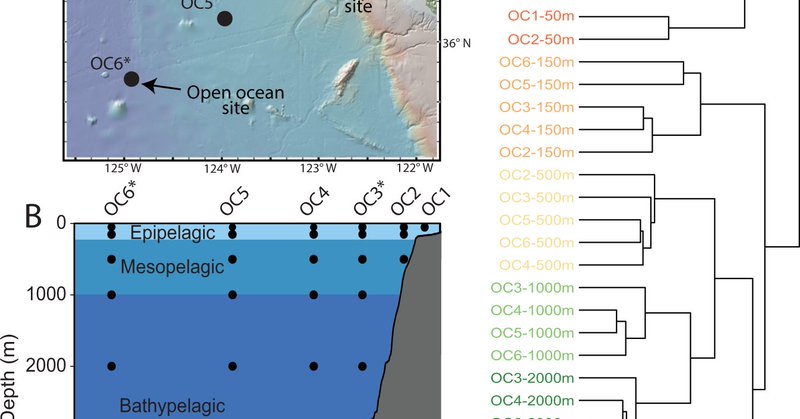
New @ISMEJournal study on microbial activity off the #california coast from @annedekas, @NestorArandia & Alma Parada. Study detects activity throughout the water column & exceeds previous estimates for the proportion of active cells in the deep sea.
nature.com
The ISME Journal - Single-cell view of deep-sea microbial activity and intracommunity heterogeneity
0
1
4
New @PolicyMarine paper from scientists at @oceansolutions @natcapproject & @Hopkinsmarine offers an understanding of the compounding risks posed by multiple interacting ocean stressors & a framework for policymakers to integrate into decision-making: https://t.co/GtMAtVn5vJ
0
37
82
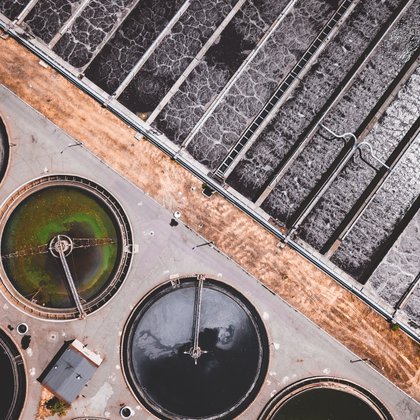
.@BillGates visited @Stanforddoerr to learn how our researchers are tackling climate challenges. He met #StanfordWHD faculty affiliate @TarpehDiem, who transforms sewage into valuable products. Read more about Tarpeh's work ➡️
water.stanford.edu
One person’s wastewater is another person’s treasure. A new Stanford University study paves the way to mining sewage for valuable materials used in fertilizers and batteries that could someday power

After my visit to the @stanforddoerr school of sustainability, I’m even more optimistic that we can develop breakthroughs that will transform our global economy, our lives, and our planet for the better: https://t.co/aILfplXPZQ
0
4
4
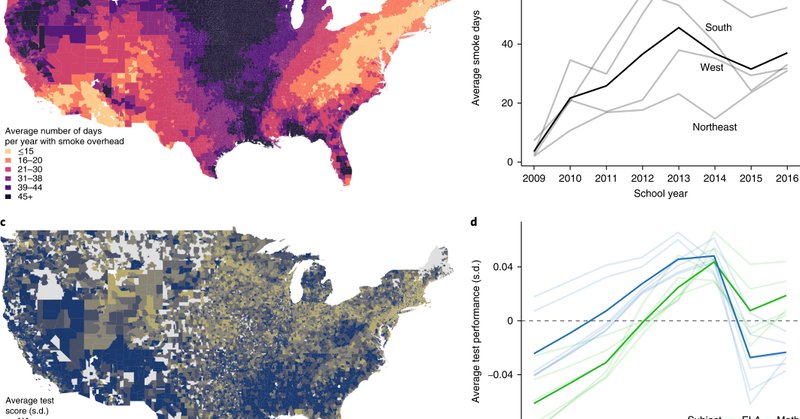
New @naturesustainab paper quantifies a social cost of US #wildfires: smoke exposure reduces test scores. (Fixed-effects regression models controlled for confounds like temp & precipitation). From @jeffliwen & @MarshallBBurke @StanfordECHOLab:
nature.com
Nature Sustainability - Wildfire increases are worsening air quality in many regions, undoing gains in pollution control. This study finds that across the United States, exposure to fine...
0
5
17
New @EnvSciTech study by Yang Liu and Meagan Mauter of @WE3Lab and @StanfordEng presents a high-resolution carbon accounting framework for urban water supply systems:
pubs.acs.org
Decarbonization of urban infrastructure systems is imperative to meeting global climate goals. Urban water supply systems (UWSSs) account for 1–3% of urban electricity consumption in the U.S., a...
0
2
6
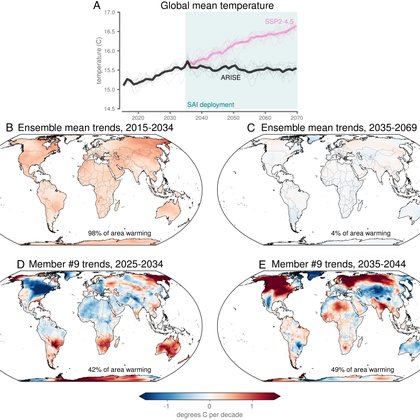
New @PNASnews: #climate models show the effectiveness of stratospheric aerosol injection (SAI) could be hidden by the natural variability of Earth’s climate. In the decade after SAI, many regions could still experience even higher local temps:
pnas.org
As anthropogenic activities warm the Earth, the fundamental solution of reducing greenhouse gas emissions remains elusive. Given this mitigation ga...
1
3
6
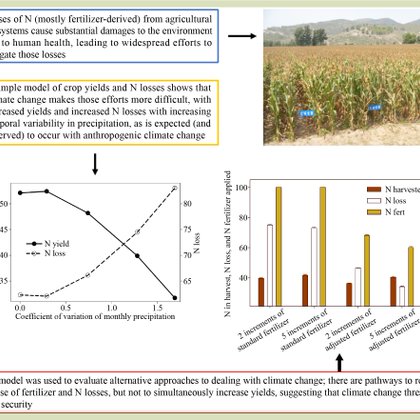
New paper @FrontiersofAgr1 predicts that increasing temporal variability in precipitation will reduce crop yields & increase nitrogen losses. This is expected & observed to occur w/ anthropogenic #climatechange:
journal.hep.com.cn
● A simple model was used to evaluate how increasing temporal variability in precipitation influences crop yields and nitrogen losses. ● Crop yields are reduced and nitrogen losses are increased at...
0
3
4