

Carnegie Endowment
@CarnegieEndow
Followers
261K
Following
5K
Media
9K
Statuses
49K
The Global Think Tank.
Washington, D.C.
Joined February 2009
Once the New START treaty expires, guardrails preventing a global nuclear arms race will be gone. What’s next, for the U.S. and the world? Carnegie president Mariano-Florentino (Tino) Cuéllar, @toby_dalton, @Gottemoeller, and Scott Sagan discuss at our upcoming event,

carnegieendowment.org
0
1
1
As plans for Gaza progress, @HamzawyAmr, Sarah Yerkes, and Kathryn Selfe reflect in @ForeignAffairs on the United States’ past role in Middle East mediation—and what meaningful sustained U.S. engagement must look like today. Read here:

foreignaffairs.com
To broker peace, America should draw on its past successes in the Middle East.
0
0
0

But this transition won’t be easy, says Sinan: “The lauded transition from an era of global powers’ influence to a more democratized global order is fraught with difficulties that may endanger the ambitions of those middle powers.”
1
0
1
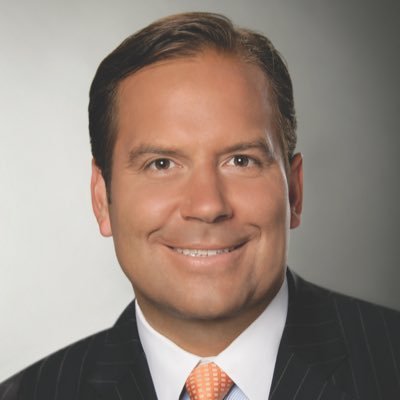
My recent presentation in Paris: America First and the Old World...rethinking foreign policy in a new era.
1
3
15
“The world order we once knew is now dead, and the Trump administration is both its assassin and its undertaker,” Stewart writes. If middle powers step up to the plate, they may provide the path forward.
1
0
0
🧵 The Trump administration has upended the global order. What comes next? Carnegie experts @StewartMPatrick and @sinanulgen1 weighed in for @politico.
1
1
2

🇪🇺🇺🇸 ¿Cómo está cambiando Donald Trump la relación entre EE. UU. y Europa? Responde Rosa Balfour (@RosaBalfour), directora en Europa del 'think tank' Carnegie Endowment (@CarnegieEndow). La entrevista al completo: https://t.co/hsci5wGPW5
0
3
4

The AI story doesn’t end with the model. It starts when the system has to run—day after day, inside real operations. Scott Tease of @Lenovodc explains why inferencing, not frontier models, is where enterprise AI earns trust, drives efficiency, and becomes durable.
0
0
4
Reminder: join us live online tomorrow morning for this conversation! Be sure to RSVP at the link below ⬇️
As Donald Trump enters the second year of his second presidency, how is the U.S. faring at home and abroad? @tomfriedman joins @aarondmiller2 to unpack on next week’s Carnegie Connects. Jan. 28, 10am EST, live online. RSVP: https://t.co/YZu5oAldrV
0
0
1
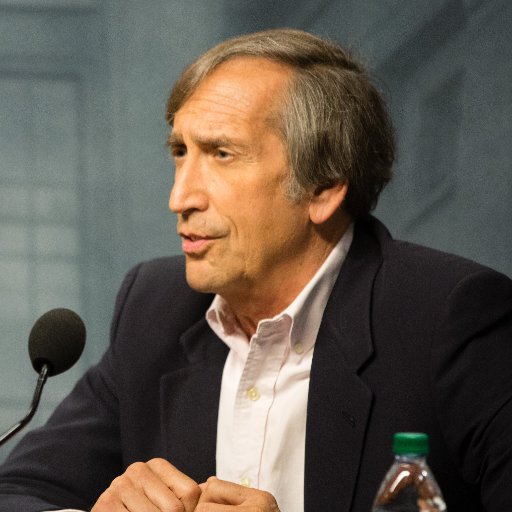
.@carnegieendow @ceipstatecraft Join me tomorrow Wednesday January 28 10-11 am EDT for a conversation @tomfriedman on Minneapolis, Greenland, the Middle East and much more. Register here: https://t.co/hMlphLDlAh
0
3
5
Karim and @wrightr joined @aarondmiller2 to discuss the recent protests in Iran on last week’s Carnegie Connects. Read the transcript of their conversation here:

carnegieendowment.org
A conversation with Karim Sadjadpour and Robin Wright about the recent protests and where the Islamic Republic might go from here.
0
2
3
🧵 “When you see tens of thousands, probably collectively millions, of protesters throughout the country, that’s very significant,” says @ksadjadpour, “because each of these people knows that they’re taking the ultimate risk."
2
0
3
.@CarnegieEndow @ceipstatecraft Tune in Wednesday January 28 10-11 am EDT as I engage @tomfriedman on the fate and state of the American Republic. Register here: https://t.co/kFGW0NCjyL
2
3
4
After this month’s ouster of Nicolás Maduro, some within (and outside) the Trump administration are asking: who’s next? The question is concerning in any case, but especially when it targets democratic leaders. Sarah Yerkes and @HamzawyAmr explain:

carnegieendowment.org
When democracies and autocracies are seen as interchangeable target, the language of democracy becomes hollow.
2
4
5
Update: this event will be rescheduled at a later date. We sincerely apologize for any inconvenience caused.
After decades of success in lowering proliferation risks, the bomb is back on the world stage – potentially, with the help of technology. What now? @JDMenton, @Gottemoeller, Amy McAuliffe, and Matthew Bunn discuss. Jan. 27, 1:30pm EST, hybrid. RSVP: https://t.co/HFxJCba4Hn
0
0
4
As Donald Trump enters the second year of his second presidency, how is the U.S. faring at home and abroad? @tomfriedman joins @aarondmiller2 to unpack on next week’s Carnegie Connects. Jan. 28, 10am EST, live online. RSVP: https://t.co/YZu5oAldrV
0
2
2

"The Middle East’s listing near the bottom of the NSS was no coincidence," writes @MarwanMuasher. He joined Sarah Yerkes, @AndrewMLeber, and colleagues from across @CarnegieEndow to react to Trump's national security strategy. Read their observations here:

carnegieendowment.org
Carnegie scholars examine the crucial elements of a document that’s radically different than its predecessors.
1
2
2

Reflected on the National Security Strategy's view of the Middle East/North Africa for @CarnegieEndow - full article (below) contains views of over 20 colleagues on various aspects of it.
1
2
1

Glad to contribute a short commentary to this collection of analyses by @CarnegieEndow scholars on the Trump administration’s national security strategy: https://t.co/yZ3qD6EBhW

carnegieendowment.org
Carnegie scholars examine the crucial elements of a document that’s radically different than its predecessors.
0
4
15
The United States' pursuit of Greenland threatens trust in the NATO alliance. @SophiaBesch analyzes President Trump’s motivations and the responses from European leaders:

carnegieendowment.org
They cannot return to the comforts of asymmetric reliance, dressed up as partnership.
0
0
4
Pres. Trump's recent National Security Strategy marked a stunning departure from conventional strategy, particularly around democracy. DCG scholars joined other @CarnegieEndow experts in reacting to the new NSS. Their takes in thread 🧵⏬ https://t.co/jZsO2wn9Ff
carnegieendowment.org
Carnegie scholars examine the crucial elements of a document that’s radically different than its predecessors.
1
3
4