

Abhishek Meena 🏵️
@aacle_
Followers
43K
Following
3K
Media
903
Statuses
3K
Building @Vulncure ⚡| Helping founders fix vulnerabilities before hackers find them. Talk to me about: Bug Bounties, LLM Security & React.👇 Book a 15-min Demo
Joined June 2017
We've curated entire API Pentesting Series into a single, auto-updating Notion page. • All existing parts • Future parts added automatically • One link to bookmark Access the full library here: https://t.co/sndMacHPYJ
3
126
594
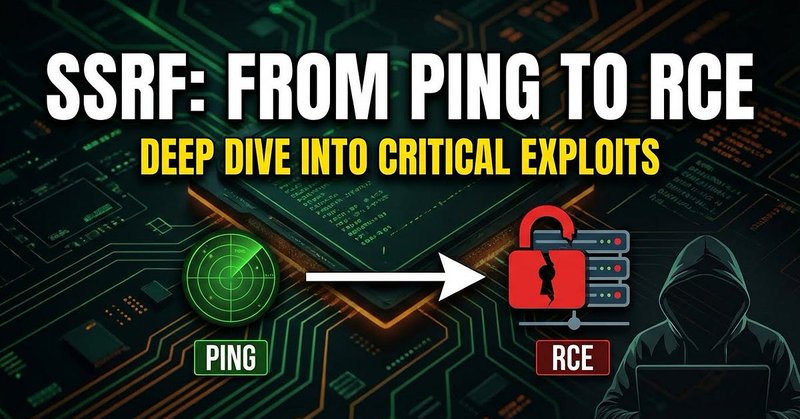
🚨 New article: SSRF exploitation What's inside: → 20+ bypass techniques → Cloud metadata attacks (AWS/Azure/GCP) → Gopher protocol exploitation → Docker & Redis RCE chains → Blind SSRF detection → Real automation scripts From ping to RCE:
medium.com
Why I'm Writing This
2
28
115
🔥 Underrated Trick: Memory Forensics ( ~ APi Pentesting Series Part 8 ) Stop just looking at the Network tab. • Open DevTools → Memory • Take a 'Heap Snapshot' • Grep for api/, v1, admin or etc You will find endpoints hardcoded in variables that the UI hasn't even
API Pentesting Series — Part 8 is LIVE! If you can’t discover APIs, you can’t hack them. Simple as that. In this chapter, I broke down: 🔸 Passive Recon → GHDB, CT logs, GitHub 🔸 Active Recon → DevTools, JS mining, mobile app analysis 🔸 Swagger/OpenAPI hunting 🔸 Kiterunner
0
8
53
API Pentesting Series — Part 8 is LIVE! If you can’t discover APIs, you can’t hack them. Simple as that. In this chapter, I broke down: 🔸 Passive Recon → GHDB, CT logs, GitHub 🔸 Active Recon → DevTools, JS mining, mobile app analysis 🔸 Swagger/OpenAPI hunting 🔸 Kiterunner
2
63
312
IDOR isn't just incrementing numbers. It's about understanding business logic and data relationships. Stop thinking like a user. Start thinking like a tired developer. Read the full guide on Medium:

medium.com
Stop looking for id=1. Start looking for the logic flaws that scanners miss.
1
3
12
WAF blocking you? Confuse the framework. Parameter Pollution: GET /messages?user_id=VICTIM&user_id=ATTACKER Type Juggling (Node.js): Change {"id": 123} to {"id": [123]}. Sometimes the security check validates one, but the business logic uses the other.
1
0
8
Server says 200 OK but returns no body? Don't move on yet. Test for Side Channels: 1️⃣ Timing: Does GET /user/VALID take 200ms vs 50ms for INVALID? 2️⃣ State: If you send DELETE, does the account actually lock up? Empty responses can still hide P2 vulnerabilities.
1
0
3
Hunting B2B apps? Look for "Cross-Tenant PII Leakage" (VRT P1). 🚨 Devs often use "Global Objects" (like Tags or Labels) without tenant checks. Attack: Fuzz the ID of a "public" object. If you pull back internal project names from another company, that’s a critical finding.
1
1
3
The biggest lie in API security: "It's a GUID, so it's unguessable." You don't need to guess it. You need to make the app leak it. Developers scrub IDs from the UI but often forget: 1️⃣ Mobile API responses (often fetch full objects) 2️⃣ CSV/PDF Export features (metadata
1
0
14
Stop looking for id=1. Start looking for the logic flaws scanners miss. 🛑 Basic IDORs are dying. Modern apps use GUIDs (550e8400-e29b...) to hide data. But obscurity isn't security. Here is the blueprint for finding Advanced Broken Access Control in 2025. 🧵👇 #bugbountytips
4
24
173
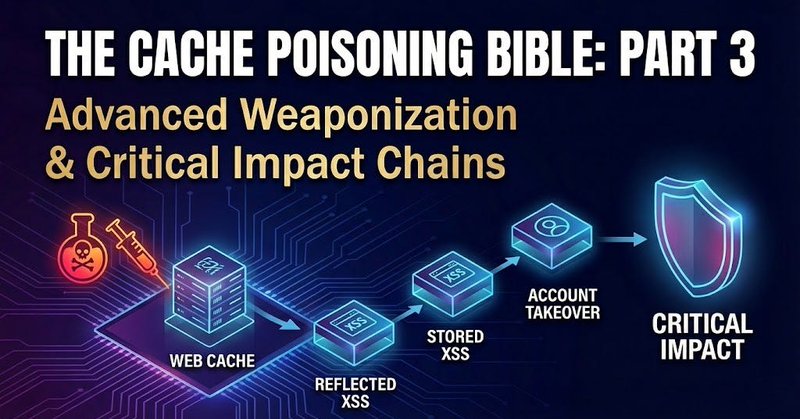
Stop reporting Cache Poisoning as a P4. The gap between a low-impact bug and a Critical bounty is Weaponization. In Part 3, I break down exactly how to turn a cache hit into Stored XSS and DoS chains. Read for free: 👇 https://t.co/vnJDXPSZaT
medium.com
From Finding to Fortune: The $20K+ Exploit Chains
2
7
37

In this video I use Neo by @pdiscoveryio to: 1️⃣ Reverse Engineer an N-Day by comparing source code 2️⃣ Create me a working POC 3️⃣ Exploit it against a Wordpress website and get me Remote Code Execution Watch here: https://t.co/Yu8EAgmSlp
4
35
263
Manual testing > Script kiddie tools. Understanding why the database reacts the way it does is how you move from finding low-hanging fruit to critical P1s. Credit to @Tib3rius for the incredible breakdown at NahamCon. Follow @aacle_ for more bug bounty insights & pentesting

medium.com
Automated scanners miss critical bugs. Here is how to find them using the “Break & Repair” method.
0
0
3
5️⃣ The UNION Attack Trick When extracting data with UNION SELECT, you want the app to show your data, not the legitimate data. Force the original query to fail by using an invalid ID. ❌ Input: id=1 (Shows valid user) ✅ Input: id=-1 UNION SELECT... (Shows your payload)
1
0
0
4️⃣ Know Your Target (Fingerprinting) Don't guess the database. Ask it. Inject these payloads. The first one to return a 200 OK reveals the DB: MySQL → AND 'foo' 'bar' = 'foobar' MSSQL → AND DATALENGTH('foo') = 3 Postgres → AND TO_HEX(1) = '1' Save this for your notes. 📝
1
0
0
3️⃣ When Comments Fail Sometimes comments (--) break the query logic because they cut off important backend checks (like hidden ID verification). If comments result in errors, switch to Boolean logic: admin' AND '1'='1 This keeps the query structure valid while injecting your
1
0
0
2️⃣ The Syntax Trap (And how to fix it) Ever tried '-- and it failed, but the bug was there? SQL comments usually require a trailing space. If the backend strips whitespace, your payload dies. 🔥 Pro Tip: Always use '-- - The extra dash protects that crucial trailing space from
1
0
0
1️⃣ The "Break & Repair" Methodology The concept is simple: 1. Establish a baseline (Does the page load normally?) 2. Break it: Add a ' or " to cause an error/change. 3. Repair it: Add a comment or payload to fix the error. If you can break it AND fix it manually → You likely
1
0
0