
Fergal O'Connor
@a_fergal
Followers
927
Following
8K
Media
220
Statuses
3K
Senior Lecturer Financial Economics UCC | Precious Metals: History&Investment | Consultant: Gold Pricing Models&Liquidy | Economics of Beer and NoLo Alcohol
Cork, Ireland
Joined March 2014
Just Published: The Efficiency of the London Gold Fixing: from #gold standard to hoarded commodity (1919-68). Paper shows the daily price of gold for the first time and discusses the 4 phases of this market: 2 Free markets & 2 Gold Standard periods.

cambridge.org
The efficiency of the London Gold Fixing: from gold standard to hoarded commodity (1919–1968) - Volume 31 Issue 3
1
3
13
The Financial News has this as a type of uncertainty barometer on its front page in the top left through the 1920s. Love that one of the market conditions was "Dull."
0
0
1
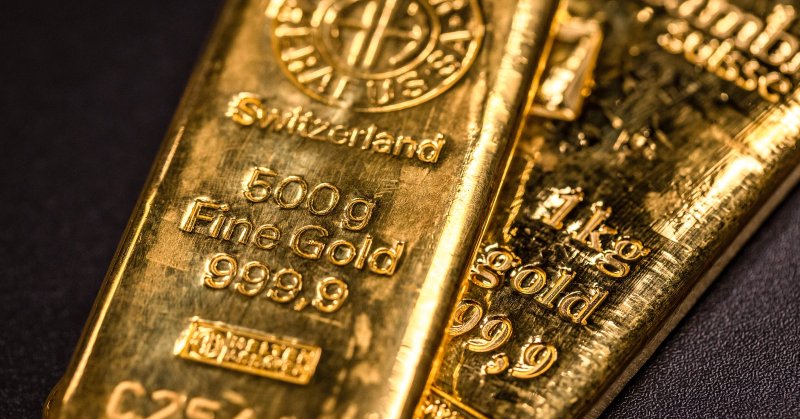
Lots to talk about in the #Gold market ATM with record prices, steep sell-offs and prices holding above $4,000 so far. Some thoughts from me here in relation to this and the dissimilarities between Gold and Bitcoin. @UCC @CUBSucc
rte.ie
Gold and Bitcoin are fundamentally different in what gives them value, how that value goes up over time, and how resilient it is
5
2
2
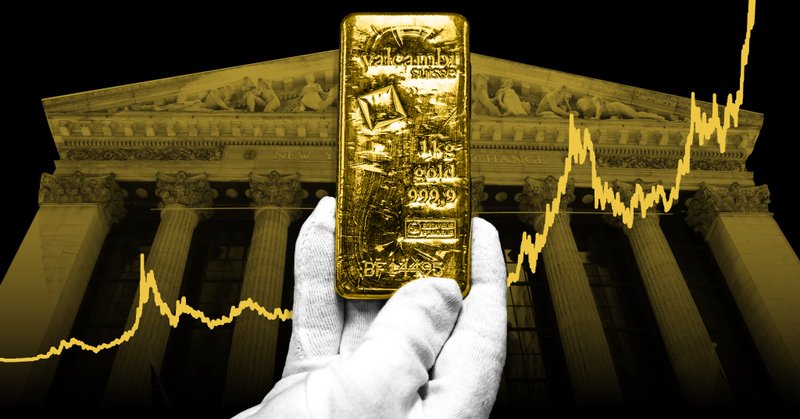
Whenever gold comes up someone quickly says Keynes called it a "barbarous relic" ( https://t.co/wBGDGTuDeG
@lesliehook @iankmsmith), but he was referring to the Gold Standard. So are central banks ignoring this and heading for a new gold standard with all these purchases? 5/n
ft.com
In an era where core assumptions about the global economy are being questioned, gold has once more become an anchor — especially for central banks
0
0
0
A growth perspective explains why gold's annualised returns have been 8% over 50 years. CB demand in the last 3 years has also been broad-based, with not just Asian banks adding to demand, but also major purchases from Poland and with even Ireland doubling its gold reserves. 4/n
1
0
0
Gold's perceived weakness has been that it generates no income, but in the long-run, gold grows with GDP as Jewellery and other physical buyers continue to buy for reasons other than purely financial, making up 75% of current global #gold holdings. https://t.co/km2eqtSvSz 3/n
1
0
0
CBs have had 3 record years of gold demand, over 1k tonnes~25% mine supply, diversifying their holdings & gold is now the 2nd largest reserve after the dollar.Why hold gold?It is unaffected in the short term by economic growth and financial crises https://t.co/9jcou1mKGs 2/n
1
0
0
& a simple model trying to explain gold prices with real rates & the dollar has stopped being useful. Gold rising today (back up over $3,070) while even US treasuries fall shows that it's THE uncorrelated asset for crises 2/4
0
0
1

rte.ie
Live news, sports, weather and traffic, presented by Gavin Jennings and Mary Wilson.
Delighted to get interviewed by @morningireland this morning, article summarising what we chatted about here “Gold prices rise to near record high as US tariffs loom” https://t.co/mcaB6qyBDK
@UCC @CUBSucc @EithneDodd
1
3
10
Delighted to get interviewed by @morningireland this morning, article summarising what we chatted about here “Gold prices rise to near record high as US tariffs loom” https://t.co/mcaB6qyBDK
@UCC @CUBSucc @EithneDodd
0
1
8
Might be on @morningireland tomorrow for a minute talking about #Gold, Trump and Tariffs in the morning @UCC @CUBSucc
1
0
7
New paper with Dr. Zhen He in Shanghai and Prof. Jacco Thijssen in York Using #Gold and other Precious metals to construct risk-free and zero-beta portfolios in the US and the UK @CUBSucc @economicsucc
0
3
8
#Gold has surpassed $3,000 today for the first time, reasons discussed below for anyone interested

0
0
5
Why has the price of gold surged to record levels in the last year? High prices for gold reflect the exceptional economic and geopolitical uncertainties the world faces in the coming years, writes @a_fergal @CUBSucc @UCC
rte.ie
High prices for gold reflect the exceptional economic and geopolitical uncertainties the world faces in the coming years
0
5
4
1
1
7
The price source in October 1960 was the product of hot money in Europe and was only quelled when the Treasury finally stepped in and calmed the market. Fuller details and results in the paper which is open access.
0
0
1
The market was shut in 1939 with the outbreak of war, and UK citizens had to sell their gold at the official price, but non-UK holders were allowed to keep their gold in London. The market reopened in 1954 but bar one breakout in the early 60's prices were well controlled.
1
0
2
1931-39 was the period when private investors became increasingly important for gold demand, referred to as Hoarders by both official sources and the letters of the Bullion Banks.
1
0
3
1925-31 was a gold standard period but this doesn't mean that prices on the London, market were fully fixed. They generally had a ceiling where the @bankofengland stopped the price from rising - but the market did go above this point due to French demand in the 30's.
1
0
2
1919-25 was a free market dominated by central banks and arbitrageurs who kept the London Sterling price mostly in line with the Fixed US price. The daily data for the whole period is freely downloadable here: https://t.co/7ieAgROEJe
1
0
1