
Yorkshire Historical Dictionary
@YorksDictionary
Followers
447
Following
134
Media
76
Statuses
446
Historic Yorkshire dialect, language and sayings @UoYBorthwick. Website to follow. Get in touch with examples you've found!
York, England
Joined November 2017

In amongst the hugely important world events we are experiencing, worth taking a moment to consider that the police believe multiple public officials at the heart of government committed criminal offences. Worth asking how this happened and what it says about this govt.
13
480
2K
Happy Yorkshire Day!

Know what 'cricket' once meant in Yorkshire? Stumped? New lost Yorkshire words are revealed TODAY in the latest volume of the Yorkshire Historical Dictionary (@YorksDictionary): https://t.co/03UQmkYjKo
@UoYBorthwick @gillintmoors #YorkshireDay #YorkResearch
0
0
2
The dictionary, in 2 volumes, is now available from the publishers here:
0
1
6
I suspect a link to 'chilted' meaning injuriously affected by cold according to English Dialect Dictionary but usage of this only cited to Kent (@kenticisms)
1
0
0
Anyone have any knowledge of the word 'chiltered'? It was used in reference to blood from an old wound in an 1830s WRY diary, and more recently, in the mid20thC, as a type of boat varnish (yes really). Intrigued that relatively recent usage has not equalled dictionary inclusion.
1
1
1
Here's the dictionary entry: https://t.co/pD40hyOpJb The bridge shown above is the Charles bridge in Prague.
0
0
0
Here's a great gif illustrating how bridge builders would 'draw away' water so that the foundations could be built
1
0
0

@The_Dalesman @YorksDictionary @hedgehogsociety My grandfather living in North Yorkshire always called them :”pricky—backed otchins
0
1
2
So sea urchins are sea hedgehogs!

Did you know hedgehogs used to be known as urchins during the Middle Ages? Get this month’s Dalesman and @YorksDictionary will tell you more in ‘Word play’... @hedgehogsociety
0
0
3
And in Yorkshire, the 'n' never left!

The words MILL and KILN derive from the Old English words ‘mylen’ and ‘cylen’. Their Ns disappeared in the Middle English period—and for a time KILN was pronounced ‘kill’—but while MILL never regained it, the N in KILN resurfaced in the 1500s and has remained in place ever since.
1
0
2
Interesting, we have WITH(E), a term for a tough flexible twig of birch, hazel or willow - and WITHY, in Yorkshire, appears to be an alternative spelling of this (with the added E). So, for example, in 1661, a Glaisdale man was said to be a rogue who 'deserves a withy' #dialect
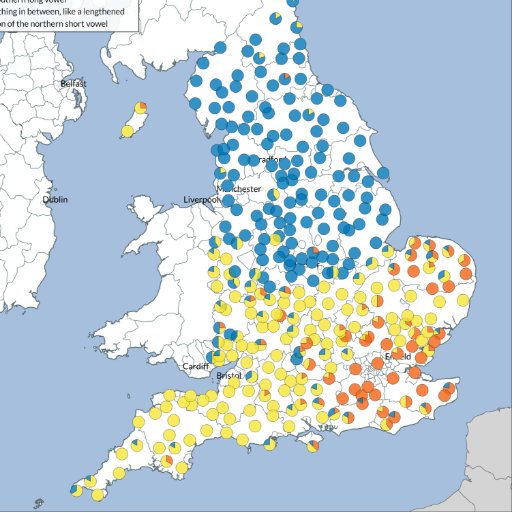
the major division in today's map is between places where this tree was called 'withy' and places it was called 'willow' - in places where 'willow' referred to the tree, 'withy' often referred to cut willow sticks.
0
1
4
How about: FELL for finishing off a piece or a warp (Keighley, 1794) SLAY for an instrument to keep the threads straight. Often linked with HEALD (Beverley 1498; Wombwell 1559; Winsley 1602) TEMPLE for keeping cloth stretched to its proper width on the loom (South Cave 1611)
A selection of weaving tools. DRAVING-IN HOOK for picking the reed and driving the ends through LOOM-KNIFE for picking the cloth YELL-HOOK for putting yarn through yells and reed PICKING PEG for throwing the shuttle We wonder if @QuarryBankNT or @maccmuseums have any of these?
0
2
1
Interesting! We have KELTER for a coarse fabric ( https://t.co/rfAf26LSo0) but KETMENT calls to mind other terms for assorted bits and pieces like HUSTLEMENT ( https://t.co/snlXsrBNVf)
what word would you use for things you throw away? have you ever come across 'rummage', 'ketment' or 'kelter'? #linguistics #englishlanguage #dialect #maps #mapporn #dialectology #dataviz #gis #variation
0
1
3
There were several definitions of STRIKE in Yorkshire too, including painting an image, a bullock or heifer up to 2 years old, and a dry measure of corn/peas - or the vessel holding that amount https://t.co/x2Gz8wVeon
#dialect #yorkshire #language
In A Dictionary of the Kentish Dialect there are several definitions for STRIKE. One is applied to drawing water from a well. "To strike a bucket," was to draw a full bucket towards the side of the well as it hung by the chain of the windlass and land it safely on the well-side.
1
1
1
A kit was a wooden vessel made of hooped staves. Often used for carrying liquid and had a lid. We have references to 'water kyttes'; 'kyttes with salted butter'; and, a 'wheel kitt'. In Beverley in 1596 there was a guild of carpenters and joiners called 'the Kittmakers'.
0
1
1
We have examples of 'leck' in cloth-making: eg. in 1883, describing home manufacture of cloth in Almondbury: 'A large kitful of urine and swine's dung was taken and strained through straw: it was then sprinkled on the cloth ... As they lecked one piece it was laid down ...'
To LECK something is to sprinkle it with water.
1
1
3
📚 Happy #DictionaryDay 📚 We want to know what your favourite #Dictionary is. Ours is the Yorkshire Historical Dictionary - @YorksDictionary - a treasure trove of knowledge about the Yorkshire dialect throughout history! 👉 https://t.co/9yEwjEePoH
0
3
6
The swipple is the part of a flail which strikes the grain during threshing. In 1617, Mr Cholmeley of Brandsby complained that Seth Lazenby had been in his woods 'cuttinge flayle swipples with a knyfe and great whipple' https://t.co/hRbjCfW9kU
#Yorkshire
0
1
5