
TerrACE Project
@TerrACE_ERC
Followers
223
Following
110
Media
166
Statuses
306
On a 5 year mission to better the scientific understanding of the history, use, and sustainability of agriculturally terraced landscapes in Europe. ERC funded.
Tromsø, Norway
Joined November 2019
Join us in Rome on November 3rd for a day of cutting-edge Terrace research! Registration is free so get your spot now!
0
4
5
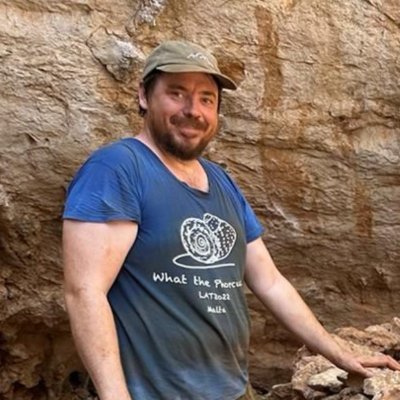
1) Postdoc job opportunities…join my TerraForm ERC project, at the University of Malta. One position for a geoarchaeologist and one in GIS/spatial analysis. The formal advert and application procedure will be out soon (and shared here), so I am releasing this as an early notice
1
41
65
Two days left to apply for this 3.5 year postdoc position at Southampton!

📢3.5 year PDRA opportunity with Dr Zoë Thomas and me at @unisouthampton📢 Involves developing new proxies of wind strength and temperature from South Atlantic peat deposits during global climate tipping points! Deadline 17.07.24. Please share widely! https://t.co/P9utUYBiIB
1
14
15

0
1
8

Together, these results suggest that the dominant controls on SOC stability in colluvial soils differ from those in non-colluvial soils, and the soil accretion rate is the most important control on colluvial SOC stability in agricultural systems.
1
0
0
This changed the mineral matrix of colluvial soil settings and thereby may enhance soil mineral-related SOC stabilisation mechanisms.
1
0
0
Furthermore, accretion rates indirectly affected potential soil respiration by interacting with the degree of weathering of deposited soil.
1
0
0
In contrast, for colluvial soils, the most influential factor for potential soil respiration was the rate of accretion and this was independent of climatic and geochemical context.
1
0
0
Our analysis showed that for non-colluvial soils, climate, cultivation history and weathering degree have significant effects on potential soil respiration.
1
0
0
Topsoil (0–10 cm) and subsoil (30–50 cm) were analysed for SOC fractions, mineral composition, potential soil respiration and radiocarbon content.
1
0
0
Paired soil profiles (non-colluvial versus colluvial) were collected from five sites which differ in climate, soil geochemical background and cultivation history.
1
0
0
In this study, we aim to understand to what extent the main controls on colluvial SOC stability differ from those observed in non-colluvial soils.
1
0
0
New Paper Alert! Although #agricultural colluvial soils are important storage for #soil organic carbon (SOC), the mechanisms underlying colluvial (cumulative soils) SOC stability have received little attention so far.
1
1
1
The terraces are more or less the same size as the ancient steps. The trees found at the terraces are from the original species – basically, the biblical seven species, which includes olives, pomegranates, dates, grapes and figs.
0
0
0
About 35 years ago, at the Sataf Spring, the Jewish National Fund began to reestablish the ancient terraced fields. The organization’s purpose was to preserve the cultural heritage of terracing and to preserve the landscape.
0
0
0
Box fields or patch cultivation denote the natural step-like appearance of the rocky slopes of hills, with thin layers of chalky marl interposed between limestone or dolomite strata.
0
0
0
But how did early people come to consider terracing? For more than 100 years now, some archeologists have been suggesting box fields or patch cultivation may have sparked early attempts at terracing.
0
0
0
In the valleys of the mountains, farmers occasionally had to deal with draining off excess water caused by floods or heavy rains. They did this by extending the terracing deep into the valley. Where necessary, they built drain lines.
0
0
0
When the terrace was wide enough, the farmer worked with a plow. When it was very narrow, the farmer was forced to use a hoe or mattock.
0
0
0