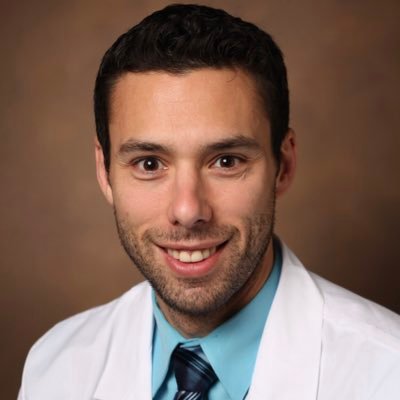
Thomas Cassini, M.D.
@TACGeneMD
Followers
427
Following
1K
Media
71
Statuses
416
Med-Peds Biochemical Geneticist @VUMChealth w/ interest in rare/undiagnosed disease, husband, proud Mexican-American, football fan, he/him, views my own
Nashville, TN
Joined September 2019
Come listen to @DrCaroMontano and I talk with @DrJNurse from @JIMD_Editors about how @UDNconnect and @NIH UDP work to find answers to the most challenging cases and further our scientific understanding of disease #MedTwitter
https://t.co/CBggNgKBv1
3
6
15

Microsoft claims their new AI framework diagnoses 4x better than doctors. I'm a medical doctor and I actually read the paper. Here's my perspective on why this is both impressive AND misleading ... 🧵
277
1K
9K
After this it revised it answer. It is notable that I didn't have to explicitly instruct this to consider the previous penetrance estimates, it did this after the previous prompt
0
0
1
I asked it about the penetrance for BRCA1 pathogenic variants after this
1
0
0
ChatGPT tends to struggle with issues related to penetrance if not directed to consider this. Here is an example. Despite using a "reasoning" model, this just does a simple mathematical calculation and does not use all the information provided.
1
0
0

I find the story of AI and radiology fascinating. Of course, Hinton's prediction was wrong* and tech advances don't automatically and straightforwardly cause job replacement — that's not the interesting part. Radiology has embraced AI enthusiastically, and the labor force is
132
341
2K
This is interesting because if you substitute “medicine” for “software”/“tech” and take “you” to be the plural incorporating yourself, the patient, and the healthcare team, the second paragraph actually well describes practicing medicine
0
0
1
I'm curating genes to add to an inborn errors of immunity panel. o3 did a pretty thoughtful job of explaining why to add some on the 2024 IUI list (not sure yet about FOXI3) I need to look at the rest of the list still to see if any were missed that may have sufficient evidence
0
0
1
Unexplained Progressive Respiratory Insufficiency and Weakness Diagnosed as Late-Onset Pompe Disease Through Biochemical and Molecular Genetic Testing https://t.co/zZ1RcXHhkp

journals.sagepub.com
Late-onset Pompe disease is a rare autosomal recessive lysosomal storage disorder caused by acid α-glucosidase deficiency, resulting in progressive skeletal mus...
0
0
0
I'm grateful for the opportunity to be a part of this work from my radiology colleagues here @VUMChealth
https://t.co/Jfp3frW6aN
0
0
1
Interesting article. The "three performance regimes" subjectively correlate with my practical experience: 1. low-complexity: standard models outperform LRMs 2. medium-complexity: LRMs demonstrate advantage 3. high-complexity: both experience collapse https://t.co/JaO7bWYGkE

machinelearning.apple.com
Recent generations of frontier language models have introduced Large Reasoning Models (LRMs) that generate detailed thinking processes…
0
0
0
There were obviously multiple steps involved in the reasoning. It found the transcript and inserted the duplicated base. Then the smart part! it wrote a translation program that simply translated these codons similar to the way it works in the biological system.
0
0
1
Saw something interesting from ChatGPT today. Asked it to predict the protein sequence for this variant: PARD6B NM_032521.3:c.761dup (p.Asn254LysfsTer17) It got it right (top reading from on the UCSC screenshot), and the way it did it was pretty cool!
1
0
2

These are some issues with classifying CDC42 NM_001791.4:c.556C>T 1. Enough de novo occurrences to apply PS2 at Very High 2. Both over use PS3 when not enough control variants 3. Gemini still uses PP5 4. PM1 seems like an over call here (admittedly this one can be subjective)
0
0
0
ChatGPT o3 + Gemini 2.5 Pro are great for gathering the information needed to classify a genetic variant, but it seems like they tend to struggle applying classification criteria. There is some subjectivity here, but even when guided to ACMG criteria they don't apply accurately
1
0
0
So intuitively it makes sense that the probability of the next token would be more strongly influenced by words than this series of symbols. If anyone who understands LLMs and GPTs better has any insight though I would be interested to hear your take.
0
0
0
I am guessing this is because the HPO terms are in a common format (words) and the symbols used in transcript variants, which are much more commonly seen in other contexts than together in this format (i.e. ">" usually means greater than, not ref to alt)
1
0
0
It started to provide some thoughts on the variant analysis... just one problem. There transcripts don't actually map to those genes. So the variants were essentially made up. Interestingly, those genes do fit the phenotype of the provided HPO terms much better though.
1
0
0
I used to try to just put genetic variants into GPTs and see if it could provide diagnostic insight. I found something interesting when I just put in variants and HPO terms like this prompt
1
0
1
This is a critically important episode for all physicians, not just genetics and metabolism experts. Well done!

Could you manage a metabolic emergency? If you want to improve outcomes in intoxication type IMDs, you need prompt recognition and excellent emergency management. Soundcloud: https://t.co/mDYJKMoot1 Spotify: https://t.co/RPkG4oyDKT
#raredisease #IMD #podcast
0
0
1