
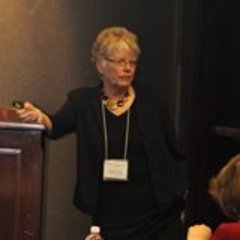
Sebern Fisher
@SebernF
Followers
773
Following
119
Media
193
Statuses
1K
Author, psychotherapist, renowned neurofeedback clinician w/ extensive experience in trauma-informed therapy. International presenter. https://t.co/mzxCwSk9Kh.
Joined October 2014
There's still time to register for the first ever Deep Brain Reorienting Conference, held in Toronto Sept. 13-14. There is also a virtual option to attend. I hope you'll join us for what might well be a paradigm shifting event! https://t.co/Jx4HVNpnnx

deepbrainreorienting.com
Hybrid Conference (virtual and in-person). Join Dr Frank Corrigan and Dr Ruth Lanius and distinguished guest speakers.
0
0
0
Ruth Lanius's new book, “Sensory Pathways to Healing from Trauma: Harnessing the Brain’s Capacity for Change” is available for pre-order. A must-read for sure: get yours now! Available from Guilford Press, or wherever you buy books:
0
0
2
After sharing the recent study on increasing emotional competency in those dealing with alcoholism using neurofeedback, I also wanted to share this, shot at a homeless shelter, where some talk about their histories and treatments, most poignantly NF -SF
0
0
0
Excited to be presenting here this week! For those of you in Australia, there's still time to attend. Info is below! Info here:
training.anfi.org.au
Join us for this live workshop presented by leading experts in neurofeedback, DBR, and clinical trauma treatment, where they share their extensive hands-on experience in addressing CDD.
0
0
1
Coming up in Sydney- I hope you'll join us! Dr. Jessica Christie-Sands, and Dr. Ruth Lanius and I will be sharing in-depth, practical experience in managing and treating CDD. For more information and to register, visit:
training.anfi.org.au
Join us for this live workshop presented by leading experts in neurofeedback, DBR, and clinical trauma treatment, where they share their extensive hands-on experience in addressing CDD.
0
0
0
Every aspect of this model treatment program would be focused on quieting highly reactive nervous systems, (including those of the staff!) It’s amazing what capacities become available when the nervous system quiets its reactivity. But that’s another post. -SF (6/6)
0
0
1
As you know, I think the most important single thing neurofeedback makes possible is affect regulation. It is this nervous systems second chance at regulation making it increasingly available to healthy attachment to people. (5/6)
1
0
1
Borderline personality disorder is a fiction but the wild often impossible behavior is not. The behavior relates directly to the lack of affect regulation. It’s impossible to learn to regulate states without a well enough attuned mother or mother figure. (4/6)
1
0
1
These are the babies that as adolescents I was treating in the residence and many that I treat as adults today. Abuse, although highly relevant clinically, washes out as a predictor of ‘borderline traits’ and suicidality. (3/6)
1
0
1
I am proposing a model treatment center for those people where, as children, those minimal conditions have not been met. The core of developmental trauma is attachment failure (Lyons-Ruth), a pattern characterized as ‘the mother who withdraws and the baby who keeps trying.’ (2/6)
1
0
1
In response to many great points made regarding my recent post on treatment centers, here and on other platforms, I wanted to add another note: I agree that loving parents and caring community are vital. There is no replacement. (1/6)
1
0
2
Group therapy would focus in great part on psycho- education around the brain and the effects of early life trauma. I think people could actually recover from these childhoods. - Sebern (8/8)
0
0
1
and the treatments would include neurofeedback (no one can be better than their brains) DBR to address traumatic shock, Art therapy, psychotherapy, body work and group therapy. (7/8)
1
0
1
If I were able to design a trauma treatment center, the care would include a residential or inpatient component - constraint for these nervous systems is often essential- (6/8)
1
0
1
It seems to be coming back. People are classified by diagnosis almost all of which are tautological and none of which actually guide treatment. The problem is in the brain and it can be addressed in the brain with neurofeedback and Deep Brain Reorientating. (5/8)
1
0
1
Most neuroscience research focuses on changing the conditions that give rise the the electrical signal not, sadly, on the signal itself. It looks at the neurons, the tissue, the chemistry, the DNA for answers to treatment. Hospitals still use electric shock. (4/8)
1
0
1
We had to rely on poorly paid residential staff, psychotropics, restraints and hospitalizations to provide even a semblance of constraint for these nervous systems that endlessly erupt. 40 years later it’s really no different and it could be. (3/8)
1
0
1
For some it was scary, for many it was dangerous, for all of them it meant institutionalization. It’s typically a simple equation: if you can’t control yourself, someone else will control you. Our group homes were in regular neighborhoods and they were not locked. (2/8)
1
0
1