

Communications Biology
@CommsBio
Followers
11K
Following
3K
Media
4K
Statuses
11K
An open access @NaturePortfolio journal publishing high quality primary research, reviews and commentary in all areas of the biological sciences.
Lond/Shangh/Brln/Pune/NYC/Madr
Joined July 2017
Influenza virus and Staphylococcus aureus super-infection disrupts spatially coordinated cellular immunity in the mouse lung: Communications Biology, Published online: 23 November 2025; doi:10.1038/s42003-025-09268-1The authors report a spatial…
nature.com
Communications Biology - The authors report a spatial transcriptomic analysis of mouse lungs following a super-infection of influenza and methicillin-resistant Staphylococcus aureus.
0
0
0
Transcriptome profiling of tumor-infiltrating lymphocyte-mediated cytotoxicity against patient-derived lung cancer organoids: Communications Biology, Published online: 23 November 2025; doi:10.1038/s42003-025-09188-0A patient-derived organoid-TIL…
nature.com
Communications Biology - A patient-derived organoid-TIL co-culture system delineates the clonal and molecular dynamics of effective anti-tumor immune responses in NSCLC.
0
0
1
Metabolic reprogramming and mitochondrial dysfunction underlie β gonia arrest and niche cell dysfunction in sterile triploid oysters: Communications Biology, Published online: 23 November 2025; doi:10.1038/s42003-025-09202-5Integrative spatial and…
nature.com
Communications Biology - Integrative spatial and single-nucleus transcriptomics reveal mitochondrial dysfunction, mitophagy, and disrupted germ-niche signalling underlying germ cell arrest and...
0
0
1
Heterogeneous distribution of toxic arsenic modulates the mutualistic interaction between Pteris vittata and soil microbiota: Communications Biology, Published online: 23 November 2025; doi:10.1038/s42003-025-09233-yThe arsenic hyperaccumulator Pteris…
nature.com
Communications Biology - The arsenic hyperaccumulator Pteris vittata actively forages arsenic by root proliferation and exudate-mediated recruitment of specific microbes, restoring diminished...
0
0
0
Host cell KRT-18 as a non-redox dependent interactor of Cryptosporidium parvum PDI enables parasite infection: Communications Biology, Published online: 23 November 2025; doi:10.1038/s42003-025-09238-7Mechanistic insights into Cryptosporidium parvum…
nature.com
Communications Biology - Mechanistic insights into Cryptosporidium parvum invasion identify a non-canonical role for Protein Disulfide Isomerase through interaction with host keratin 18.
0
0
0
Label-free nonlinear microscopy probes cellular metabolism and myelin dynamics in live tissue: Communications Biology, Published online: 23 November 2025; doi:10.1038/s42003-025-09192-4Multimodal label-free nonlinear microscopy and advanced image…
nature.com
Communications Biology - Multimodal label-free nonlinear microscopy and advanced image analysis map single-cell metabolism and myelin dynamics in live cerebellar tissue during demyelination,...
0
0
0
Structures of Helicobacter pylori C-terminal protease CtpA reveal a new mode of self-contained proteolytic processing: Communications Biology, Published online: 22 November 2025; doi:10.1038/s42003-025-09175-5Structural and biophysical analyses reveal…
nature.com
Communications Biology - Structural and biophysical analyses reveal that Helicobacter pylori CtpA forms a hexamer with asymmetric activation, enabling processive and adaptor-independent proteolysis...
0
0
0
Vicinal disulfide bond modulates A1-GPIbα interaction by altering the force-induced conformational changes of A2 domain: Communications Biology, Published online: 22 November 2025; doi:10.1038/s42003-025-09206-1Vicinal disulfide bond in VWF A2 domain…
nature.com
Communications Biology - Vicinal disulfide bond in VWF A2 domain regulates force-induced conformational changes and A1- GPIbα binding, revealing mechanisms of autoinhibition critical for...
0
0
0
Genomic and spatial heterogeneity of Brucella melitensis underscores latent brucellosis risks in non-endemic zones in Southwest China: Communications Biology, Published online: 22 November 2025; doi:10.1038/s42003-025-09218-xWhole-genome analysis of 103…
nature.com
Communications Biology - Whole-genome analysis of 103 Brucella melitensis isolates, compared to 850 global genomes, reveals a novel lineage in southwest China, with unique evolutionary patterns and...
0
0
0
Arsenic promotes ROS-mediated malignant transformation of bronchial epithelial cells by specifically downregulating TXNL1 expression: Communications Biology, Published online: 22 November 2025; doi:10.1038/s42003-025-09216-zArsenic promotes lung cancer…
nature.com
Communications Biology - Arsenic promotes lung cancer via the DNMT1/USP10 axis, which destabilizes TXNL1, leading to oxidative damage and revealing a prevention target.
0
0
0
The autism-linked gut microbial metabolite p-cresol inhibits host catecholamine biosynthesizing enzymes to elicit social deficits: Communications Biology, Published online: 22 November 2025; doi:10.1038/s42003-025-09207-0The microbial metabolite p-cresol…
nature.com
Communications Biology - The microbial metabolite p-cresol and p-cresol sulfate accumulate in brainstem and inhibit TH and DBH, key enzymes in catecholamine synthesis. This disruption alters brain...
0
0
0
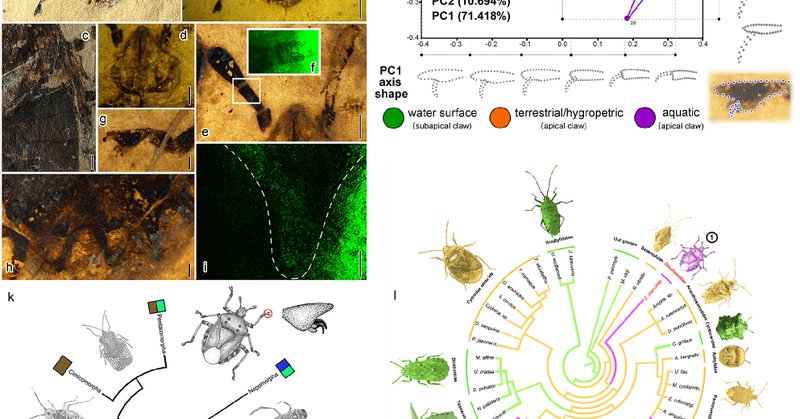
Rare fossil insect (Zekuforma maculata sp. nov) from the Tibetan plateau unveils adaptive innovations and extinction mechanisms: Communications Biology, Published online: 22 November 2025; doi:10.1038/s42003-025-09134-0Miocene fossil evidence of the…
nature.com
Communications Biology - Miocene fossil evidence of the first semi-aquatic Pentatomomorpha insect reveals how natural selection and constraints govern ecological transitions, showing both...
0
0
0
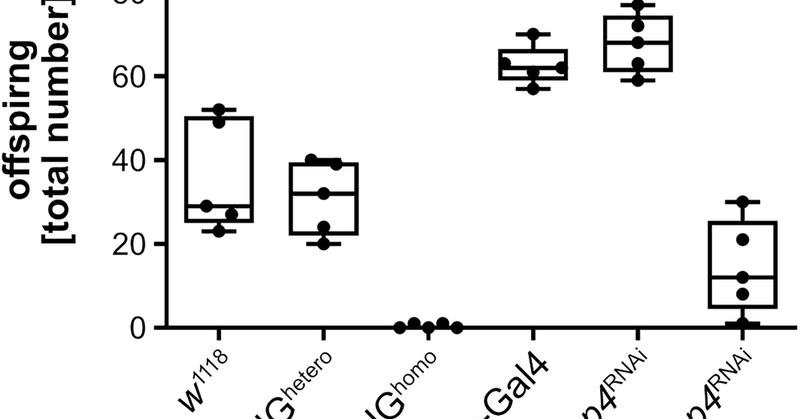
Neprilysin 4 controls acrosome structure and male fertility in Drosophila melanogaster: Communications Biology, Published online: 22 November 2025; doi:10.1038/s42003-025-09186-2Molecular analysis of Neprilysin 4 from Drosophila melanogaster identifies a…
nature.com
Communications Biology - Molecular analysis of Neprilysin 4 from Drosophila melanogaster identifies a new function for the peptidase in controlling acrosome structure and male fertility.
0
0
0
Chronic cold stress induced transcriptomic alterations in multi-metabolically active tissues of pigs: Communications Biology, Published online: 22 November 2025; doi:10.1038/s42003-025-09226-xExposures to different environmental conditions, particularly… https://t.co/jvBOF0lvqI
0
0
0
The pursuit of ultrasensitive phosphoproteomics to unravel signalling in rare cells: Communications Biology, Published online: 22 November 2025; doi:10.1038/s42003-025-09131-3A review of recent innovations driving low-input phosphoproteomics, focusing on…

nature.com
Communications Biology - A review of recent innovations driving low-input phosphoproteomics, focusing on miniaturized workflows, multiplexed labelling, automated enrichment, and advanced...
0
0
0
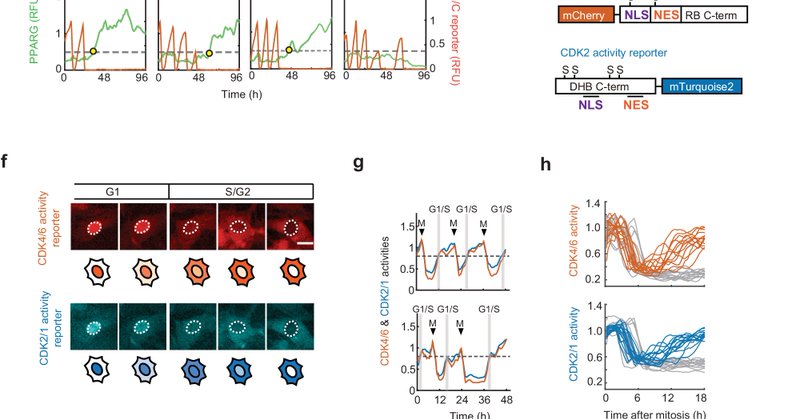
Inactivation of CDK4/6, CDK2, and ERK in G1-phase triggers differentiation commitment: Communications Biology, Published online: 21 November 2025; doi:10.1038/s42003-025-09038-zAnalysis of CDK and ERK signaling activities by live- and fixed-cell…
nature.com
Communications Biology - Analysis of CDK and ERK signaling activities by live- and fixed-cell microscopy assays during adipogenesis provides a mechanistic understanding of sequential events that...
0
0
0
Integrating multi-omics to reveal the molecular mechanism of lipid metabolism regulated by a splice variant of Lysyl-oxidase like-2, LOXL2Δ13: Communications Biology, Published online: 21 November 2025; doi:10.1038/s42003-025-09199-xIntegrating… https://t.co/fuS9ILalii
0
0
0
Telomeric RNA and HP1α form interfacial clusters that stabilize HP1α-DNA condensates: Communications Biology, Published online: 21 November 2025; doi:10.1038/s42003-025-09173-7HP1α forms multiphase condensates with telomeric RNA and DNA, providing new…
nature.com
Communications Biology - HP1α forms multiphase condensates with telomeric RNA and DNA, providing new insights into the role of non-coding RNAs in heterochromatin organization at telomeres.
0
0
0
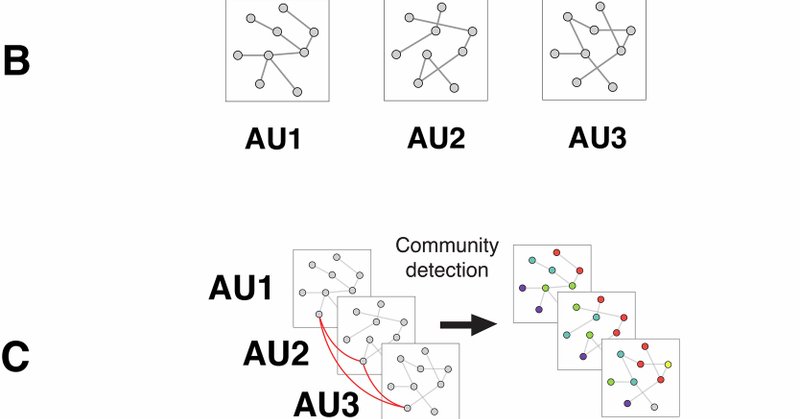
Neural dynamics during the generation and evaluation of creative and non-creative ideas: Communications Biology, Published online: 21 November 2025; doi:10.1038/s42003-025-09018-3Network neuroscience methods shed new light on the neural dynamics related…
nature.com
Communications Biology - Network neuroscience methods shed new light on the neural dynamics related to the generation and evaluation of creative and non-creative ideas—across the executive,...
1
0
0
Network-specific corpus callosum aging and age-moderated cognitive associations using tract-to-region analysis: Communications Biology, Published online: 21 November 2025; doi:10.1038/s42003-025-09219-wNetwork-specific corpus callosum connections show…
nature.com
Communications Biology - Network-specific corpus callosum connections show distinct aging patterns, with accelerated decline in association networks. Brain-behavior links strengthen with age,...
0
1
2