
CICOES
@CICOESresearch
Followers
378
Following
8
Media
12
Statuses
278
The UW's Cooperative Institute for Climate, Ocean, and Ecosystem Studies is an environmental research consortium with the UAF and OSU.
Seattle, WA
Joined October 2013
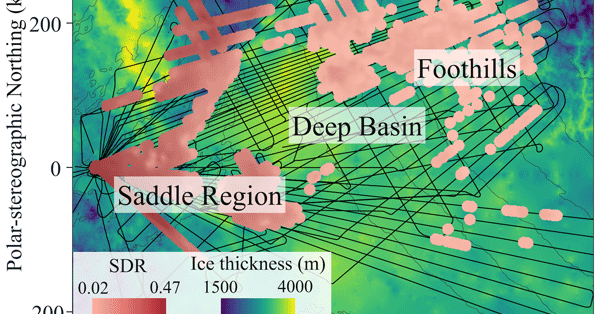
Big shout-out to Sirray S. for winning an award at the NSBP/NSHP conference! As a 2025 CICOES intern under the mentorship of TJ Fudge, she worked to constrain geothermal heat flux in Antarctica using an ice-and-heat flow model. More about her research: https://t.co/i0uOIbCK6r
0
0
1
Congrats to Marc Sailer, former CICOES intern & now a graduate student at UC Boulder, on publishing his first research paper! Congrats also to UW professor T.J. Fudge, who coauthored the paper & served as Marc's internship mentor. Read the paper here: https://t.co/IlWQeliwsR
cp.copernicus.org
Abstract. Obtaining a continuous ice core record to 1.5 Ma (million years), which spans the Mid-Pleistocene Transition (MPT, 1.2 to 0.7 Ma) is a goal of multiple international efforts in Antarctica....
0
0
1
New research led by UW scientists Knut von Salzen, Sarah Doherty, and Robert Wood, shows that reducing air pollution has inadvertently diminished the brightness of marine clouds, which are key regulators of global temperature. Read more at UW News: https://t.co/I464SAGzKP
0
0
0
CICOES researcher Jens Nielsen collaborated on a project led by NOAA scientists Erin Fedewa and Louise Copeman that examined the collapse of the snow crab fishery in the Bering Sea. Read the full story at: https://t.co/wuKbbtsUA9

science.org
After a brutal heat wave, scientists race to predict how Bering Sea snow crabs will cope with climate change
0
1
2
To help communities around Puget Sound respond to ocean acidification, CICOES has announced a new project funded by the Puget Sound Partnership. The project team will build a data-based tool called Puget Sound Acidification and Impacts. Learn more:
0
0
0
Congratulations to Ángel F. Adames Corraliza, a former JISAO/CICOES intern and graduate of the UW Atmospheric Sciences PhD program, on winning a MacArthur "Genius" Award! Learn more about his work here: https://t.co/jLWNddc8jL
0
0
0
NatGeo quoted CICOES scientist Alex Zerbini on his expertise related to the uptick in orca boat rammings in recent years. Read the story here:

nationalgeographic.com
Experts say the whales seem to learn to play with boats from a young age. "Believe me: if they wanted to sink the boats, they'd be sinking the boat."
0
0
0
Did you catch CICOES senior research scientist Yong Wei on CNN after the recent magnitude 8.8 earthquake? https://t.co/Nu3eFFqSMr Learn more about his research into tsunami modeling and forecasting here: https://t.co/4ooST3ZTca

cnn.com
Water levels were recorded above four feet on the north shore of Hawaii’s Oahu Island. University of Washington senior research scientist Yong Wei joins MJ Lee on “Early Start” to discuss.
0
0
1
“That dance of carbon — the interplay between natural and anthropogenic sources, upwelling, and biology — that is what we’re trying to understand and quantify,” said Brendan Carter, a CICOES researcher. Read the full story: https://t.co/SH0mfzVQXZ
0
0
1
New research by CICOES scientist Andy Chiodi & collaborators at NOAA PMEL & US Forest Service. Nightfall no longer offers a reliable reprieve for western US firefighters. Read more: https://t.co/FUBLPeId4Q
0
0
0
CICOES and NOAA scientists captured acoustic recordings of the endangered North Pacific right whale. Learn more about how they did it and why it matters: https://t.co/XH4tjGqI0U
0
0
1
Watch CICOES Director John Horne on the International Council for the Exploration of the Sea's web series Hidden Gems. He discusses a solar-powered acoustic monitoring system that delivers near-real-time data to support sustainable fishing. https://t.co/8NuLSPspf4
0
0
0
Q&A: How rate of CO2 rise can affect a global ocean current https://t.co/WlcWkdPRVV
@CICOESresearch @uwnews #uwenvironment

washington.edu
How fast the level of atmospheric carbon dioxide — and with it, the temperature — goes up matters for the ability of humans and ecosystems to adjust. A slower increase gives humans time to move...
0
2
7
BEARINGS w/Denise Kester: Denise talks about that path that led to her job as a research scientist with CICOES and offers advice for young people interested in a career filled with travel and discovery. https://t.co/EKrpM3cPyG via @YouTube
0
1
1
Here's a mesmerizingly close look at an octopus to celebrate #OctopusFriday. Imagery captured by ROV Deep Discoverer at 3,180 m (2 mi) in Gulf of Alaska. While cool to look at, these close zooms also provide scientists important details & insights.
7
65
214
From the deck to the lab, there’s a lot going on this week on @rvsikuliaq. Using a variety of tools, the team has been working hard to collect, document, & analyze water column animals from the deep waters of the Gulf of #Alaska. https://t.co/XKpxO3flQq
#ocean
0
3
17
How aerosols brighten clouds — and cool the planet (Sarah J. Doherty | TED2024) https://t.co/fu58ADn2F8 via @TEDTalks
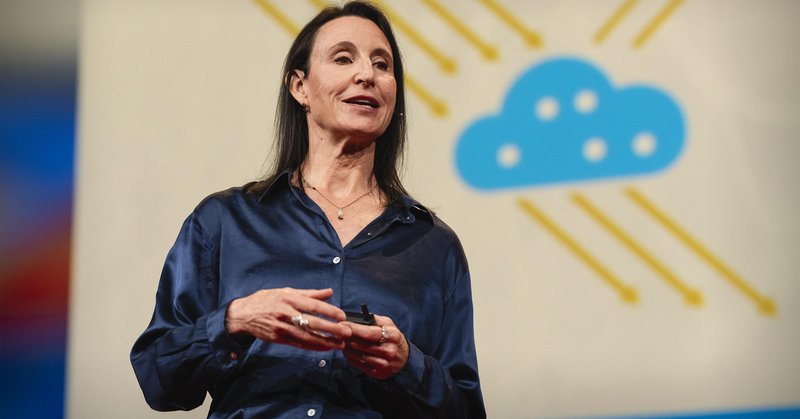
ted.com
Here's a conundrum: the same aerosol pollutants that harm human health also help cool the climate, says atmospheric scientist Sarah J. Doherty. Is there a way to clean up the air without warming the...
0
0
1
Marine Cloud Brightening Program studies clouds, aerosols and pathways to reduce climate risks https://t.co/2mMRcTGPSD via @UWEnvironment
1
0
0
Marine Cloud Brightening Program studies clouds, aerosols and pathways to reduce climate risks https://t.co/2mMRcTGPSD via @UWEnvironment
0
3
3
Meet four women who are committed to improving our ability to understand and predict changes in the Arctic region through conducting, supporting, and expanding scientific research activities.
0
0
1