

Glen
@AutonomicGC
Followers
35
Following
551
Media
20
Statuses
223
Exploring health, diet, neurological disorders, the brain & nervous system. Keen surfer - Student of wellness psychology.
Joined September 2025
Designed by Gloria Willcox, the feeling wheel is a proven visual aid that helps people recognise, talk about, and change their feelings. #Emotions #Feelings
https://t.co/VXL52wz8uy
0
0
3
Something else to add is that the nervous system is a state-dependent learning system. For people with #PEM, this is an important consideration when attempting to increase activity, as the state in which activity occurs shapes how the system adapts.
0
0
2
Thinking, is powerful in any direction. Interesting read on the #neuroscience of positive thinking. There’s growing evidence that #mindset can influence neural pathways, helping explain why it can be a powerful tool in #nervoussystem recovery.
popularmechanics.com
Scientists discerned that a person’s neural and behavioral outcomes shifted when simply vividly imagining a positive experience.
1
0
4
Evidence from network #neuroscience and motor control shows that the #nervoussystem operates in different #functional states, with each state engaging distinct neural circuits and control strategies. In other words: the state in which we move matters. https://t.co/7eAPMO3kLE
3
0
2
And we also see that among people with Long COVID, those with internal tremors and vibrations had different symptom patterns and worse overall health status compared with those without these symptoms, consistent with nervous system dysfunction. https://t.co/Zufe7xyGEE
0
0
0
Recent research in Long COVID suggests possible links to #dysautonomia and small fibre neuropathy.

pmc.ncbi.nlm.nih.gov
Background/Objectives: Internal tremor (IT) is often reported by patients with post-acute sequelae of SARS-CoV-2, also known as Long COVID, as a distressing and disabling symptom. Similarly, physic...
1
0
1
Internal #tremors were the bane of my life - constant and severe for years, worse at night, never stopping. They now come and go. Sometimes I just sit and take in the stillness.
1
0
3
For anyone interested in the physiology of inhibitory interneurons and how they regulate sensory signals, this review gives a good overview:

pmc.ncbi.nlm.nih.gov
In the hippocampus GABAergic local circuit inhibitory interneurons represent only ~10–15% of the total neuronal population; however, their remarkable anatomical and physiological diversity allows...
0
0
1
A dysregulated nervous system can affect many functions. Vision is just one example. When regulation becomes less precise, other senses, #autonomic responses, and state shifts can be disrupted too.
1
0
1
High‑contrast visuals (like white text on a black background) often make this more noticeable. Stronger visual inputs place greater demands on inhibitory #circuits, which may already be under strain.
1
0
1
When the nervous system is #dysregulated - post‑viral, #overstimulated, or under #stress - this balance can shift. Cortical responses can become less tightly controlled, allowing visual signals to linger longer than they normally would, which can produce trailing or persistence.
1
0
1
A key part of this #regulation involves inhibitory interneurons (mainly GABAergic). They shape and suppress visual responses so signals remain brief, precise, and don’t accumulate across movements.
1
0
1
Visual perception isn’t passive. The #brain constantly stabilises what we see using timing, #prediction, and inhibitory control to prevent persistence, smearing, and overlap as the eyes move.
1
0
1
Palinopsia is a visual processing disturbance where images persist, trail, or smear after they move. In my case there was no eye disease or damage, which suggests the issue lies in how the brain processes #visual signals rather than in the eyes themselves.

my.clevelandclinic.org
Palinopsia is the name of a group of symptoms caused by disruptions in how your brain processes vision. Learn what it looks like and what causes it.
1
0
1
I’ve been thinking about #palinopsia - one of my diagnoses - and how it fits into broader #nervoussystem dysfunction. It appeared alongside other symptoms that pointed to neural involvement, and it has eased as those symptoms improved.
1
0
1
If you accept the scientific view that your thoughts are physical parts of your #brain and that changing your thoughts can have an effect on your body, then you've just developed a powerful weapon. #Thoughts #Emotions #FightFlight #Health
https://t.co/x9rDqQRS8B
verywellmind.com
What happens to your body when your brain is thinking? Here's an overview to help you understand more about thinking and how your thoughts and emotions are linked.
1
0
2
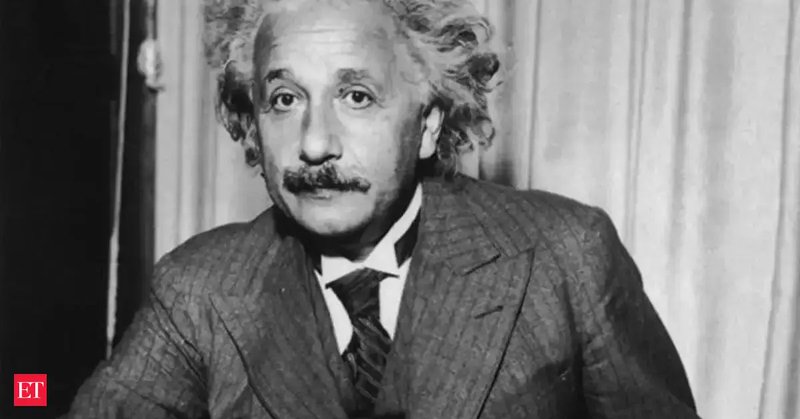
Quote of the day by Albert Einstein: “A person who never made a mistake never......” - The Economic Times Treat mistakes as learning opportunities rather than failures.
economictimes.indiatimes.com
Albert Einstein, a renowned physicist, believed mistakes are vital for progress. His quote highlights that avoiding errors means avoiding new experiences. This principle encourages trying new things,...
0
0
0
Can #caffeine help #nervoussystem dysfunction? Many symptoms are influenced by #attention and #prediction. In some #neurodivergent people, caffeine enhances prefrontal inhibition - the brain’s “brakes” - reducing noise and helping to calm an over-reactive nervous system.
0
0
0
“It’s always useful, when trying to understand a complex system, if you can look at it when it’s behaving a bit unusually.” A great line in this piece on how the brain constructs reality https://t.co/yjRFr8zHMw
popularmechanics.com
Trust us, it’s a good thing.
0
0
0