Animal Navigation
@Anim_Navigation
Followers
282
Following
205
Media
18
Statuses
287
News on animal navigation/movement ecology/migration/magnetic sense/spatial cognition/led by Dmitry Kishkinev/Keele University/ UK/Views my own
Keele, England, UK
Joined June 2017
🕊️ How do birds know when to migrate? Our new Biology Open paper shows that spring migration timing in great reed warblers has a genetic component—linked to fat metabolism genes suggesting that birds that fuel up faster may be ready to leave Africa sooner. Doi 10.1242/bio.062039
0
1
3
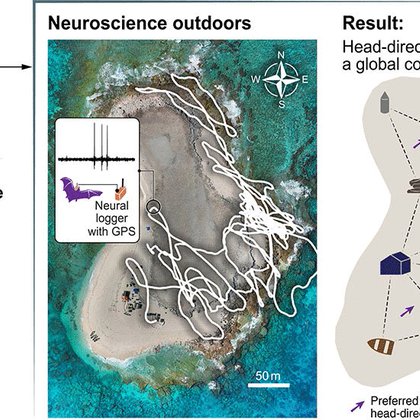
First evidence that free-ranging animals (bats on a small island) do have and use Head Direction Cells in their brain to navigate in real world, not just lab.
science.org
Animals and humans rely on their navigation skills to survive. However, spatial neurons in the brain’s “navigation circuit” had not previously been studied under real-world conditions. We conducted...
0
0
1
An international course for postgraduate students This November (2025) the international PhD course on the Ecology of Animal Migration will run again in Lund Uni. More here
biology.lu.se
Lund University.
0
0
0
Nature study showing that Australian Bogong moths possess a star compass based on Milky Way
nature.com
Nature - Every spring, Bogong moths use the starry night sky as a compass to navigate up to 1,000 km towards their alpine migratory goal.
0
0
0
Our recent exciting results about Red Admirals - Not All Butterflies Are Monarchs: Compass Systems in the Red Admiral (Vanessa atalanta), a European Diurnal Migrant

biorxiv.org
Seasonal migration in animals is a widespread and complex phenomenon, yet the mechanisms underlying orientation and navigation remain poorly understood in many taxa. While significant progress has...
0
0
2
CORRECTION: The offering is primarily for "home" tuition fee paying students (meaning UK / Irish nationals or people in the UK with Indefinite Leave to remain) - 5 out of 8 PhD projects in this call but only one place for international applicants (highly competitive!)
0
0
0
The supervisory team: Dr. Dmitry Kishkinev (ecology) and Pawas Bisht (public communication), both Keele University, UK. Further detail in the root post link. Apply via "Visit institution website" on the link page
1
0
0
Additionally, the student will engage with local communities as part of the societal aspect of the project, which involves exploring the relationship between pollinators and people in rural areas of England, as well as investigating the impact of land-use practices on pollinators
1
0
0
We aim to study the local movements of large pollinators using miniature radio tracking technology and/or through a citizen science approach.
1
0
0
The prj encompasses 2 key aspects: ecological and societal. Primarily field-based, focusing on the movement ecology of pollinators such as butterflies and bumblebees.
1
0
1
This project explores the movement ecology of common pollinators (butterflies and/or bees) in UK rural environments, investigating how community practices influence their movements and survival, using innovative tracking technologies, citizen science, and public engagement.
1
0
1
Both UK and international applicants welcome international would need to finance the difference between UK "home" and international tuition fees (if DM I can explain)
1
0
1
Key details: 4 years as full time (can be also part time). Stipend (£19,237). "Home" (UK) tuition fee is covered. There is a small but secured £10k research funding.
1
0
1
PhD Offering in movement ecology in the UK! Pls spread the word to folks who might be interested. More details in posts and here https://t.co/FdIq0ewGrx
1
5
5

What do pesticides to the honey bee brains? What is the truth about the safety of sub lethal doses? See our new work with MarcoPaoli in @EJNeuroscience on how neonicotinoids affect multiple areas of the bee brain. Necessary for debates on pesticides. https://t.co/3A4twCMtzm
1
18
50
Delayed but link to Royal Soc Blog post about our recent paper Packmor et al. 2024 in Royal Soc P

royalsociety.org
Professor Richard Holland from the School of Environmental and Natural Sciences, Bangor University tells us more about a new study that tested whether Eurasian reed warblers could determine their...
0
0
3
Coverage of our Proc R Soc B paper in New Scientists

newscientist.com
Eurasian reed warblers don’t just get a sense of direction from Earth’s magnetic field – they can also calculate their coordinates on a mental map
0
0
8
Our new paper in Proc. Royal Society B: Migratory Eurasian reed warblers can use magnetic inclination and declination to determine position even when intensity is in conflict with those. It helps further understand the role of magnetic navigation in birds
royalsocietypublishing.org
Abstract. Migratory birds are able to navigate over great distances with remarkable accuracy. The mechanism they use to achieve this feat is thought to inv
0
0
4

Exciting opportunity to join us & Keele University! A 27-month contract through the KTP to develop open conservation tech. Role: Research Associate developing embedded software for satellite avian tags. https://t.co/osn1tObq9h
0
3
2

📢A new job opportunity for embedded software engineers looking to move into a career in conservation technology. Work with @KeeleUniversity and @arribada_i developing tiny biologging tags for birds 🦜 https://t.co/Gi3zPBQCgy
@WILDLABSNET
1
14
27