
Nature Human Behaviour
@NatureHumBehav
Followers
29K
Following
863
Media
894
Statuses
4K
A Nature Portfolio journal bringing you research and commentary on all aspects of human behaviour. RTs not endorsements. Tweeting with the help of LLMs.
London, Berlin, Shanghai
Joined March 2016
Our new Focus issue "Rethinking Waste" has just gone live! We’re thrilled to present a human-centred look at sustainable waste management. [1/14] https://t.co/6oWRfmm3Ox
1
11
23
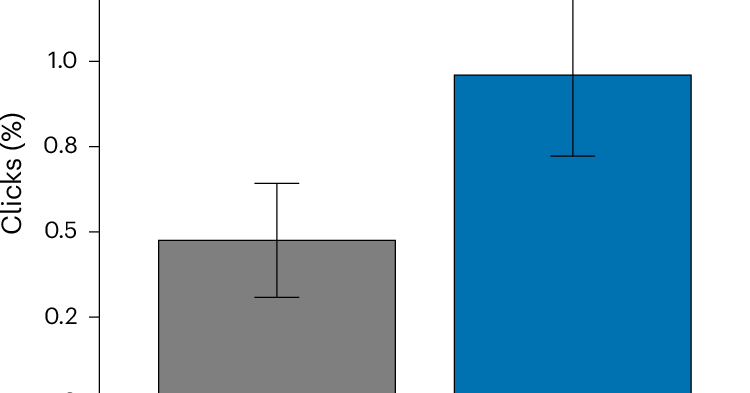
This new study shows adding place cues to climate-risk emails doubled click-throughs and increased engagement in wildfire-preparedness actions. #cliamteresilience #placeattachment
https://t.co/oSRsTOAbnz
nature.com
Nature Human Behaviour - In this randomized field experiment with 12,985 Australian homeowners, adding place cues to climate-risk emails increased click-throughs and engagement, suggesting a...
0
0
2
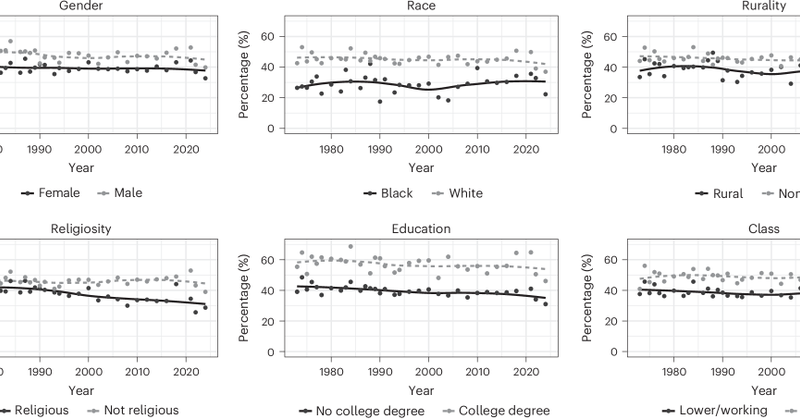
This new paper finds that people from groups underrepresented in science tend to have lower trust in science, and those from low-trusting groups have higher trust in scientists who share their characteristics. https://t.co/XAjnj8bmGN
nature.com
Nature Human Behaviour - Druckman et al. document gaps in trust in scientists in the USA. People from groups less represented among scientists (for example, women and those with lower economic...
1
12
26
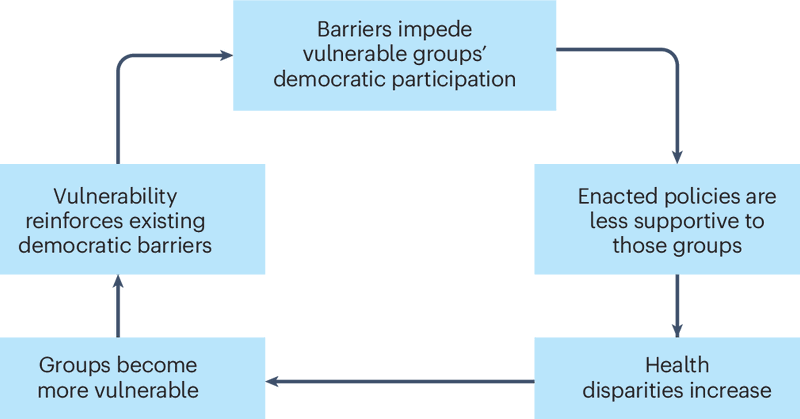
In this comment, @CasonSchmit et al. highlight how threats to democracy hinder voters' ability to advance policies that serve their health interests, creating a dangerous feedback cycle of health vulnerability and democratic barriers.
nature.com
Nature Human Behaviour - Threats to democracy — such as voter suppression, misinformation and gerrymandering — interfere with voters’ ability to advance policies that serve their...
0
1
4
This article shows that, by age 4, children understand lexical causatives to refer to direct causes and periphrastic causatives to indirect causes in causal chains. Understanding causation by absence develops later in older children. @tobigerstenberg
https://t.co/ccQ8TDNsZf
0
2
13

HOT CHOCOLATE CEREAL that actually tastes like a packet of hot chocolate I don’t know how we did it but it’s incredible
6
12
253
Currently, there is a low barrier to access AI characters, and regulations fail to adequately protect users online. This Comment discusses the specific risks of AI characters, the regulatory framework, and potential avenues for mitigating harm. https://t.co/mBVCLUkb6d
nature.com
Nature Human Behaviour - Online interactions with artificial intelligence (AI) characters pose serious risks to humans who begin to trust them. Currently, there is a low barrier to access AI...
0
0
7
Working in #academia can be stressful. In a new World View, @laraffington suggests treating it as "just a job" to reduce performance pressure and advocate for structural improvements. https://t.co/zGxa3TRG0c
0
4
8
Happy #InternationalVolunteerDay! To celebrate, we launch our new Collection on prosocial behaviour, which explores the science behind prosociality and its real-world impacts. Read our Editorial: https://t.co/w2wqyUO7eQ and the Collection: https://t.co/IzdpDkyZSz
#IVD2025
nature.com
Prosociality - acting to benefit others without expecting anything in return – is fundamental to human nature.
0
1
5
A behind-the-design look at the Waste Focus cover from our art editor @InfinitiveIdea. See how each flower language brings meaning to rethinking waste. Check out the full story here: https://t.co/6oWRfmm3Ox
0
0
7
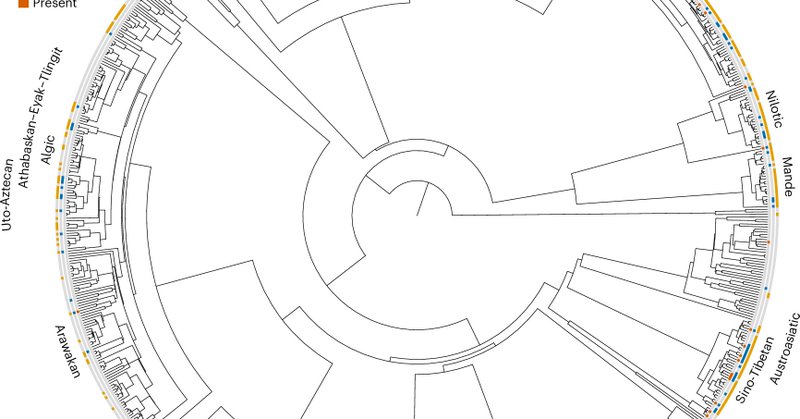
Opie and Atkinson conduct a global phylogenetic analysis of 868 cultures and find evidence indicating that cereal grain cultivation, not agricultural surplus, drove state formation. Their findings also link taxation and writing to state emergence. https://t.co/Fjxdqqlzfw
nature.com
Nature Human Behaviour - Opie and Atkinson conduct a global phylogenetic analysis of 868 cultures and find evidence indicating that cereal grain cultivation, not agricultural surplus, drove state...
1
3
4
In this Article, Futrell and Hahn argue that languages can be understood as codes that minimize predictive information, i.e. they express approximately independent features systematically and locally. https://t.co/gXSJigJhPz
nature.com
Nature Human Behaviour - Futrell and Hahn argue that languages can be understood as codes that minimize predictive information; that is, they express approximately independent features...
0
25
73
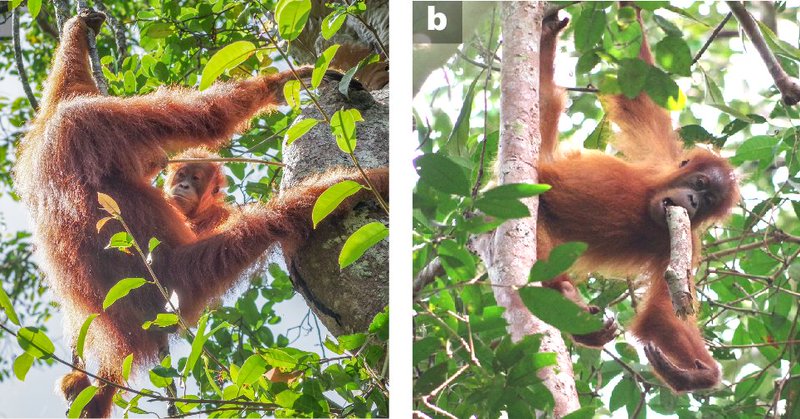
In this study, Howard-Spink et al. develop an empirically based model of orangutan diet development, which suggests that social learning is vital for allowing orangutans to acquire varied diets. https://t.co/iVVdyimbMZ
nature.com
Nature Human Behaviour - Howard-Spink et al. develop an empirically based model of orangutan diet development, which suggests that social learning is vital for orangutans to acquire varied diets.
0
2
4
@passoslima_ @ResiduaLab_Uerj @Ioana_M_BALAN @fmtr_timisoara @life_timisoara And huge thanks to our marvelous art editor @InfinitiveIdea for the visuals and the video up top! Please enjoy the photography and hand-drawn flowers crafted to inspire waste rethinking. [14/14]
0
0
4
@passoslima_ @ResiduaLab_Uerj @Ioana_M_BALAN @fmtr_timisoara @life_timisoara Are we consumers or people? Pauline Deutz challenges how sustainability research frames human, calling for inclusive, people-first approaches to drive real change in #CircularEconomy and waste management. #Sustainability [13/14]
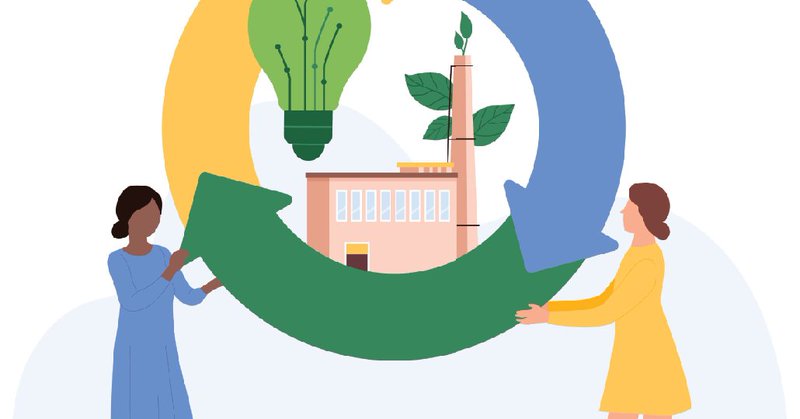
nature.com
Nature Human Behaviour - This Perspective urges a shift away from viewing people as ‘consumers’ in circular economy and sustainable waste management research, highlighting a need for...
1
0
2
@passoslima_ @ResiduaLab_Uerj @Ioana_M_BALAN @fmtr_timisoara @life_timisoara This Comment from Riccardo Torelli calls for business to adopt zero-waste principles, supported by corporate governance that's inclusive and incentivises waste reduction. #ZeroWaste [12/14]
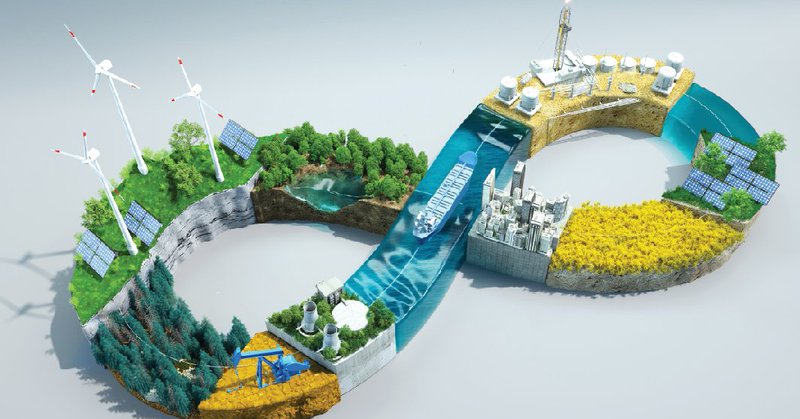
nature.com
Nature Human Behaviour - Corporate waste strategies are limited, and recycling is not enough to solve the global waste crisis. This Comment highlights the urgent need for businesses to adopt...
1
0
0
@passoslima_ @ResiduaLab_Uerj @Ioana_M_BALAN @fmtr_timisoara @life_timisoara Sebastián Carenzo writes about the contrast between the “virtuous narrative” of the circular economy and the marginalisation of grassroots recyclers. #recyclers #CircularEconomy [11/14]
nature.com
Nature Human Behaviour - The circular economy is leaving workers behind
1
0
0
@passoslima_ @ResiduaLab_Uerj @Ioana_M_BALAN @fmtr_timisoara @life_timisoara Cultural awareness is important in waste management, argues Anderson in this World View. #culture [10/14]

nature.com
Nature Human Behaviour - Anderson Assuah teaches and promotes sustainability strategies in Canada. In this World View, he discusses the role of culture in waste management.
1
0
0
@passoslima_ @ResiduaLab_Uerj We can’t tackle food waste without tackling hunger, writes @Ioana_M_BALAN. @fmtr_timisoara @life_timisoara #FoodSecurity #FoodWaste #ZeroHunger [9/14]

nature.com
Nature Human Behaviour - Addressing food waste and hunger together
1
1
2
@passoslima_ @ResiduaLab_Uerj In this Comment, Tapper and colleagues write about reducing household food waste, and a comparison with obesity. #FoodWaste [8/14] https://t.co/dAfhbm1Wuj
1
0
0
@passoslima_ @ResiduaLab_Uerj Our Q&A with Ioana Cotutiu tells how the UN is combatting illegal waste trade. #WasteTrafficking [7/14]
1
0
0
@passoslima_ @ResiduaLab_Uerj Electronic waste is a growing public health threat, writes Sarker Masud Parvez. Tackling it demands not only global cooperation but also stronger domestic action. #ewaste #health [6/14]

nature.com
Nature Human Behaviour - Electronic waste is a public health crisis that demands urgent action
1
1
1